Heat Pump Radiator Upgrades UK (2026)
Heat pump radiator upgrades UK 2026: when existing rads are too small, K2/K3 vs Type 22/33 sizing, scope and cost per room.
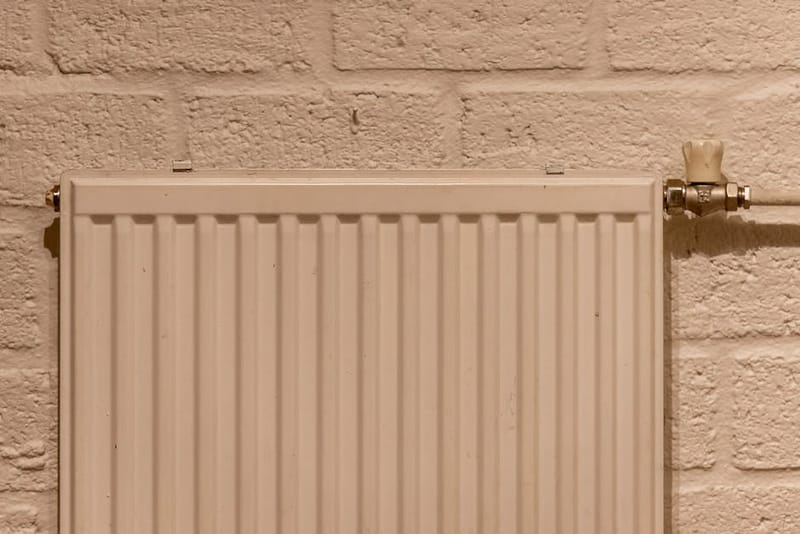
Radiator upgrades are the single most-misunderstood part of a UK heat-pump retrofit. Marketing often emphasises 'you can keep your existing radiators' - which is sometimes true but commonly wrong. The right framing isn't 'do I need new radiators or not?' but 'which radiators in my house are undersized for low-flow-temperature operation, and how much will the upgrade cost?' This guide covers the physics, the typical retrofit scope, the radiator-type choices, and how to verify your installer's recommendation.
Why do heat pumps need bigger radiators?
A radiator's heat output is roughly proportional to the temperature difference between the radiator surface and the room (the 'delta-T' or ΔT). The standard radiator rating you see on a spec sheet (e.g. '1500W' or '5100 BTU/h') is given at ΔT=50°C - meaning the radiator surface is 50°C hotter than the room.
With a gas boiler running at 75°C flow / 65°C return, the average radiator surface temperature is around 70°C - if the room is at 20°C, ΔT = 50°C and you get the rated output.
With a heat pump running at 45°C flow / 40°C return, the average radiator surface is around 42°C - ΔT = 22°C, and the radiator delivers around 0.40-0.45× its rated output. The same radiator that produced 1500W at gas-boiler temperatures delivers ~600-680W at heat-pump temperatures.
That's not a minor difference - it's the entire reason heat-pump retrofits need to think about radiators. Bedrooms typically have the smallest radiators and the largest output gap; lounges typically have larger radiators with more headroom. The MCS heat-loss survey calculates the required output for each room and compares it to the rated output of the existing radiator at the proposed heat-pump flow temperature. Anywhere the calculated output exceeds 90% of the existing radiator's heat-pump-derated output, you'll be sized too tight to maintain comfort on the coldest days.
What does a typical UK radiator retrofit involve?
Exact scope depends on your specific property's existing radiator sizes and heat-loss characteristics. Three rough archetypes for a typical UK semi-detached or terraced house:
- Modern home (built 1990+) with reasonable rads - 0-2 radiator upgrades. Most rooms work at 45°C flow without modification; only the smallest bedroom rads typically need swapping. Total cost: £0-£1,200.
- Late 20th-century home with smaller rads - 3-5 radiator upgrades. Bedrooms commonly need sizing up, bathrooms often need a heated towel rail with reasonable output, lounge usually OK. Total cost: £900-£3,000.
- Period property (Victorian, Edwardian, Georgian) - 5-12+ radiator upgrades. Often need full radiator replacement to support 35-45°C flow temperatures, particularly in high-heat-loss rooms with single-glazed sash windows or solid walls. Total cost: £2,000-£6,000+. Sometimes the right answer is hybrid heat pump or alternative system if the rad cost approaches the install cost - see our hybrid guide.
Cost per radiator depends on whether the pipework needs upsizing too. Standard swap (same pipe diameter) is £150-£350 per rad including labour and small materials. Pipework upgrade (typically 15mm → 22mm for high-output rads) adds £100-£300 per affected radiator. Whole-house pipework re-runs are sometimes needed for properties with very long pipe runs.
Which radiator types matter (K2/K3 vs Type 22/33)?
| Type 11 (existing single-panel) | Type 22 (double-panel + 2 fins) | Type 33 (triple-panel + 3 fins) | K3 / heat-pump-optimised radiators | |
|---|---|---|---|---|
| Construction | Single panel, no fins (lowest output type) | Double panel + 2 convector fins (most common upgrade) | Triple panel + 3 convector fins (maximum output per cm) | Increased surface area + heat-pump-tuned hydraulic design |
| Output at ΔT=50 | Baseline rated value | ~1.6× Type 11 equivalent size | ~2.4× Type 11 equivalent size | ~2.0-2.5× Type 11 equivalent size |
| Output at ΔT=22 (heat pump) | ~0.40× rated | ~0.40× rated (~0.64× Type 11 baseline) | ~0.40× rated (~0.96× Type 11 baseline) | Manufacturer-tuned for the low-ΔT case |
| Heat-pump suitability | Often undersized - common upgrade target | The standard upgrade choice for most rooms | When you need maximum kW in limited wall space | Purpose-designed for ASHP - highest efficiency choice |
| Wall depth | Slim (47mm typical) | 100-110mm typical | 150-165mm typical (deepest - check clearance) | Variable by manufacturer (typically 110-180mm) |
| Cost (replace per rad) | N/A (this is what you're replacing) | £200-£500 incl labour | £300-£600 incl labour | £350-£700 incl labour |
| Best for | Existing fitting where upgrade not needed | Standard rooms where Type 11 is undersized | High-heat-loss rooms with limited wall space | Premium retrofits prioritising heat-pump efficiency |
What should the MCS heat-loss survey actually show?
The foundation of any radiator-upgrade decision is the MCS heat-loss survey. A proper survey produces a room-by-room table with:
- Heat loss in W for each room (calculated from wall/floor/ceiling/glazing U-values + room geometry + design temperatures).
- Existing radiator specification (type, dimensions, manufacturer's rated W at ΔT=50).
- Existing radiator output at proposed flow temperature (rated W × derating factor for the chosen flow temperature, typically 0.40-0.55 for 35-55°C).
- Required radiator output (heat loss + small margin).
- Upgrade recommendation per room - which type and which size.
Any installer that quotes a heat-pump install without producing this table per room is taking shortcuts that will likely result in undersized radiators and a system that struggles on cold days. The room-by-room table is the deliverable to insist on - it's the difference between a competent retrofit and a marginal one. Heat Geek Mastery installers default to producing this; many baseline MCS installers do too but some don't. See our Heat Geek guide for the wider context on installer quality tiers.
How do you decide which radiators to upgrade?
Insist on a room-by-room heat-loss survey before any radiator decisions
Without this, no radiator-upgrade recommendation is defensible. The survey is typically £200-£500 standalone or included in installer quotes. It is the first thing to budget.
Target 45°C flow temperature as the design default
45°C strikes the right balance between heat-pump COP (higher COP at lower flow temps) and radiator-upgrade scope (some upgrades needed but not extreme). Pushing to 35°C maximises COP but typically doubles the radiator upgrade scope; running at 55°C minimises upgrades but loses 10-15% of theoretical COP. 45°C is the modal UK retrofit target.
Upgrade bedroom radiators first
Bedrooms typically have the smallest existing radiators and the largest output gap. They're also the rooms where comfort failure (cold morning, cold evening before bed) is most noticeable. Get the bedrooms right; main living areas typically have more headroom.
Type 22 is the standard upgrade
Unless the existing rad's wall slot is very narrow (Victorian sash-window bay), Type 22 is the right answer for most rooms. Type 33 only when you need maximum output in limited wall space. K3/heat-pump-optimised radiators are premium choices - worth the upgrade if you're already in the £15k+ install bracket and prioritising long-run efficiency.
Check pipework before assuming a swap-and-go
Older properties with 15mm primary pipework may need upsizing to 22mm for high-output radiators. The MCS survey should call this out. Don't accept a quote that swaps radiators without checking the pipework can deliver the increased flow.
Frequently asked questions
Do I really need to upgrade my radiators for a heat pump?
How much does a heat-pump radiator upgrade cost in 2026?
What's the difference between Type 22 and K3 radiators?
Can I upgrade the radiators myself before the heat-pump install?
What if the radiator upgrade cost approaches the heat-pump install cost?
Re-evaluate the project. For period properties where radiator upgrades hit £5,000+ in addition to the £12k heat-pump install, the total project cost (£17k+) may not be supported by the running-cost saving vs gas, and the £7,500 [Boiler Upgrade Scheme](https://www. From 21 July 2026, the grant rises to £9,000 for homes replacing oil or LPG heating (until 31 March 2027) - see our BUS £9,000 uplift guide.gov.uk/apply-boiler-upgrade-scheme) grant covers a smaller percentage of total spend. Two alternatives: (1) hybrid heat pump - keeps gas boiler for peak demand, lets you skip the most expensive rad upgrades; (2) phased approach - upgrade insulation first to lower heat loss, then revisit heat pump in 2-3 years with smaller required upgrade scope. See our hybrid heat pump comparison.

Heat Pump vs Hybrid Heat Pump
Heat Geek Explained
Boiler Upgrade Scheme Explained