Heat Pump Installer Questions UK 2026
Heat pump installer questions UK 2026: MCS / Heat Geek / Trustmark checks, 20 questions at quote stage, sample heat-loss review, red flags.
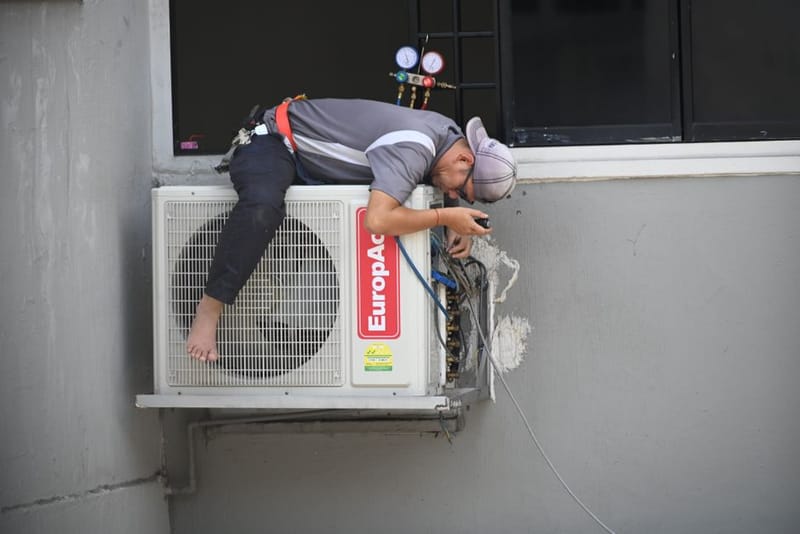
Heat pump install quality drives 60-80% of long-term efficiency - more than the brand or model of the unit. This guide covers the accreditations to verify, 20 questions to ask at quote stage, and the red flags that mean walking away.
Mandatory accreditations - verify before quote
MCS + TrustMark + Gas Safe / G3 are non-negotiable.
Mandatory for BUS-eligible install:
- MCS Certified Installer. Required for BUS grant. Look up on MCS find-an-installer - confirm the company appears + the certification is valid for ASHP installs (not just solar PV, which is a separate cert).
- TrustMark registered. Required for BUS. Confirms membership of an approved Government-endorsed quality scheme. Look up on TrustMark.org.uk.
- Public liability insurance. Ask for current certificate; minimum GBP 2m typical for residential installs. Worth photographing for your records.
- G3 unvented cylinder competency. Required for any install involving unvented hot water cylinder (most modern installs). Verify the specific engineer doing the install holds G3 cert.
- Gas Safe registration (if removing/decommissioning gas boiler). Required for safe disconnection of existing gas boiler.
Useful (not mandatory):
- Heat Geek partnership / training. Subset of MCS installers focused on best-practice low-temperature design. Higher reported SCOPs in independent surveys.
- CIPHE / CIBSE membership. Indicates engineer holds plumbing / building services professional body membership - useful proxy for design quality.
- Manufacturer training certification. Many manufacturers offer brand-specific training (Vaillant aroTHERM advanced, Daikin Altherma certified). Useful but doesn't replace MCS.
20 questions to ask at quote stage
Watch HOW the installer answers - confidence + specificity matter.
Heat-loss calculation + sizing:
- What heat-loss calculation method do you use (MCS spreadsheet vs full thermal modelling)?
- Can you share a sample heat-loss calc from a similar property before I commit?
- What design outdoor temperature do you use (typical UK -3C to -5C)?
- What design indoor temperature do you assume (typical 21C lounge, 18C bedrooms)?
- What flow temperature do you design for (35-45C typical low-temp design; higher = retrofit-pragmatic)?
Unit selection:
- Why this specific heat pump model + capacity for my property?
- What's the manufacturer's quoted SCOP at MY design conditions (not the EER nameplate)?
- What refrigerant (R32, R290, R454B)? R290 is the propane-based latest-gen with lower GWP - prefer when available.
Radiators + emitter design:
- Will my existing radiators work at the designed flow temperature?
- If radiator upgrades needed, which rooms + what type? What's the cost?
- Can the system be commissioned to run lower flow temp after future insulation upgrades?
Hot water cylinder:
- What size cylinder (200L? 250L? 300L?) - why?
- What's the cylinder coil size + de-rated heat transfer rate?
- What anti-Legionella schedule do you commission?
Install + commissioning:
- What weather compensation curve do you commission as default?
- Will you tune the WC curve after first cold snap (typical Dec-Jan visit)?
- What payment schedule do you use? (Avoid >30% upfront deposit.)
Aftercare + warranty:
- What's the install workmanship warranty (typical 2-3 years)?
- What's the unit warranty (typical 5-10 years on unit, but check exchanger coverage specifically)?
- What's your typical response time for any post-install issues?
Reviewing a sample heat-loss calc
What to look for in the spreadsheet.
A good installer will share a sample heat-loss calc from a similar property when asked. Look for:
- Room-by-room breakdown. Each room has its own heat loss calculated based on wall area, U-values, ventilation rate. NOT a single property-wide number.
- Documented U-values per wall type. Should reflect actual construction (solid wall vs cavity, age of build). Generic defaults ("assume 0.45 for all walls") suggest cursory work.
- Glazing accounted for separately. Single, double, triple glazing dramatically different U-values.
- Air infiltration estimated. Old leaky properties vs modern airtight - significant variance.
- Final figure broken down between space + DHW loads. Total heat loss + estimated annual DHW demand both presented.
- Recommended heat pump capacity matches result. Calculator output ~7 kW → installer recommends 7-8 kW unit, not 12 kW.
Red flags - when to walk away
Five patterns that mean choose a different installer.
- Refuses to share sample heat-loss calc. Either cursory design work or attempting to oversize unit (more profit) without justification. Walk away.
- Quotes for an oversized unit without insulation discussion. Property thermal envelope dictates heat pump size; an installer who ignores this is selling a product, not designing a system. Walk away.
- Requires >30% deposit before install start. Typical UK heat pump install needs 10-15% deposit; some companies charge 25% covering specialist parts ordering. >30% is a working capital squeeze, often correlated with poor service quality. Walk away unless company can provide audited financial accounts.
- Won't commit to specific weather compensation curve at commissioning. WC tuning is a basic design output; vague answers ("we'll adjust as needed") often mean post-commission tuning won't happen unless you escalate. Walk away.
- Won't show MCS install certificate after completion. MCS certificate is your BUS grant documentation + warranty proof. Required, not optional. Walk away.
How to compare quotes
Three-quote framework with weighting.
Get 3 quotes minimum from MCS-certified installers. Compare on:
- Total cost net of BUS (50% weight) - obvious but headline figure.
- Quote completeness (15% weight) - does it include cylinder, pipework, radiator upgrades, removal of old boiler, electrical work, commissioning? Beware of "heat pump only" quotes that surprise-charge for everything else.
- Quoted SCOP at design conditions (15% weight) - higher = better. Confidence interval matters ("3.5 typical" vs "3.5 guaranteed minimum").
- Aftercare commitment (10% weight) - WC curve tuning visit; response time; warranty terms.
- Installer track record (10% weight) - years operating, install volume, online reviews focused on POST-install satisfaction (not just sales process).
Don't auto-choose the cheapest quote - install quality variations of 10-15% in upfront cost typically yield 20-30% lifetime SCOP differences (= GBP 200-400/year for 15+ years).