Heat Pump for a 4-Bed Detached UK: Sizing & Picks
How to size a heat pump for a UK 4-bed detached - 10-14kW typical, larger DHW cylinder, two-zone considerations, models that work.
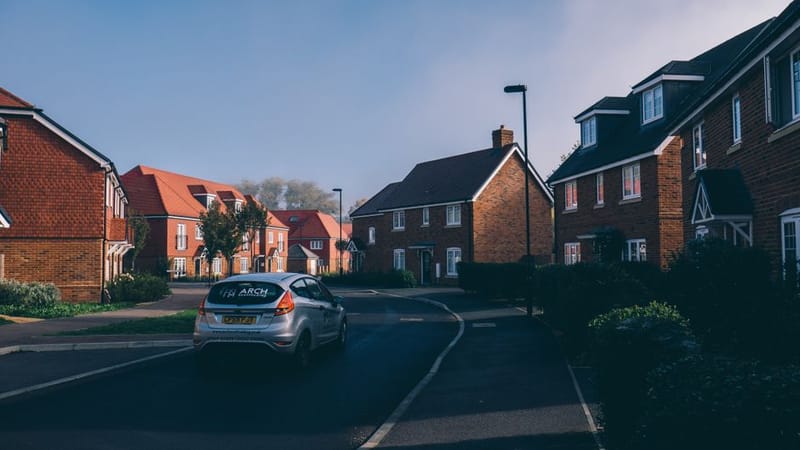
4-bed detached houses are the second-most-common UK heat pump archetype after 3-bed semis - they make up around 9% of the UK housing stock and account for a disproportionate share of high-bill heating customers. The sizing maths is meaningfully different from the smaller 3-bed semi: heat demand scales with both floor area and exposed wall surface, both of which jump on a detached layout. This guide covers the sizing arithmetic, model recommendations at the 10-14 kW size band, and the additional UK-specific considerations (water cylinder, two-zone control, electrical supply) that matter at the larger end of domestic heat pump installations.
How do you size a heat pump for a UK 4-bed detached?
The Microgeneration Certification Scheme (MCS) - the UK industry standard required for BUS grant eligibility - mandates a room-by-room heat loss calculation following BS EN 12831. The designer assesses each room's heat loss based on wall U-values, floor area, exposed wall surface, glazing performance, and the local design external temperature (typically -2°C to -4°C in most of England, -5°C to -6°C in Scotland). Heat losses are summed across the property to get the system kW requirement.
For a 4-bed detached, typical heat loss falls in these ranges after standard fabric upgrades (loft insulation to 300mm, cavity wall insulation where possible, double glazing throughout):
- Pre-1900 solid-wall detached (~150 m²)
- Heat loss 11-15 kW post-IWI → 12-14 kW heat pump; 14-16 kW if no internal wall insulation
- 1900-1944 solid-wall detached (~140 m²)
- Heat loss 10-13 kW post-IWI → 10-12 kW heat pump; 13-16 kW pre-IWI
- 1945-1975 cavity-wall detached (~130 m²)
- Heat loss 8-11 kW → 10-12 kW heat pump
- 1975-1990 cavity-wall detached (~140 m²)
- Heat loss 7-10 kW → 9-12 kW heat pump
- 1990s+ insulated detached (~160 m²)
- Heat loss 6-9 kW → 8-10 kW heat pump
The MCS designer sizes the heat pump to meet 100% of the calculated heat loss at the design external temperature, with no supplementary heating expected. This is different from oil and gas system sizing where the boiler is often deliberately oversized; heat pumps should match the load. Oversizing causes short-cycling, drives down SCOP, and shortens compressor life. See our guide to the heat pump oversizing problem for the detail.
What size hot water cylinder do you need for 4 bedrooms?
4-bed houses have a structural simultaneous-demand problem that smaller properties don't. Two showers running at the same time (one en-suite, one family bathroom) draws around 25-30 litres of hot water per minute combined. A heat pump cannot heat domestic hot water (DHW) instantaneously the way a gas combi can - it heats the cylinder once, you draw from the stored volume, and when the cylinder cools below the setpoint the heat pump cycles back on.
The cylinder sizing rule for heat-pump-served 4-bed detached homes:
- 3-4 occupants, single-bathroom usage: 200-250 litres works
- 4-5 occupants, family bathroom + en-suite: 250-300 litres (the standard recommendation)
- 5+ occupants or back-to-back morning showers: 300-350 litres
- Bath-frequent households (>3 baths/week): add 50 litres to the above brackets - baths use 80-150 litres each
The cylinder physically takes up space (typical 250-litre cylinder is around 1.6m tall × 0.6m diameter). Many UK 4-bed detached properties have an airing cupboard sized for a 150-litre indirect cylinder; replacing with a 300-litre cylinder may require relocating to a utility room, garage, or loft. The plumber will confirm during the survey.
Do you need a two-zone configuration for a 4-bed detached?
For floor plans above 150 m², a two-zone heat pump configuration is often the right call. The system runs as two independent heating circuits (typically ground floor and first floor, or 'living spaces' and 'bedrooms'), each with its own room thermostat, motorised valve, and weather-compensation curve. The benefits at 4-bed detached scale:
- Different setpoints by zone. Bedrooms at 17-18°C overnight, living areas at 21°C during the day, without each zone having to compromise.
- Independent timing. Hallway and bedroom circuit can drop temperature during the day when no-one is upstairs.
- Faster ramp-up. The zone you actually need warm gets there sooner.
- Reduced cycling. The heat pump operates against demand from the zone that needs it, rather than the full house, reducing on-off behaviour.
Two-zone adds £600-1,200 to the install cost (extra motorised valve, control wiring, second thermostat) but typically improves SCOP by 0.2-0.4 over a single-zone configuration on a property this size. Worth it for the larger 1990s+ detached floor plans, especially when bedroom-side and living-side occupancy patterns differ substantially.
One UK-specific consideration: the building regulations are increasingly recommending two-zone control on new-build homes above 100 m². If your 4-bed detached is being retrofitted in conjunction with an extension or significant remodel, the building control inspector will likely flag this.
Which heat pump models work best for 4-bed detached UK installs?
Four models that come up consistently in MCS-installer recommendations for the 10-14 kW size band:
Daikin Altherma 3 H HT (8-16 kW range). The 'HT' is the high-temperature variant, which lets you run on existing 70°C radiator sizing without upsizing - a meaningful capital saving when the existing wet system was designed for a gas boiler. R32 monobloc design, SCOP 3.2-3.6 at 55-60°C flow. The 14 kW version is the workhorse for solid-wall pre-1980 detached homes.
Vaillant aroTHERM plus (10, 12 kW). R290 (propane) refrigerant, achieves higher flow temperatures than R32 alternatives, low sound power rating at 56-60 dB(A). The 12 kW unit fits the cavity-walled 1970s-1990s detached profile cleanly. SCOP 3.7-4.0 at 35°C flow, 3.3-3.6 at 45°C. Vaillant's UK installer network is mature with strong warranty support.
Mitsubishi Ecodan PUZ-WM (8-14 kW). Long-established UK presence with the largest MCS installer network. The PUZ-WM112 (11.2 kW) and PUZ-WM140 (14 kW) cover the typical 4-bed detached range. SCOP 3.5 at 45°C flow. Mitsubishi's FTC6 controller has excellent weather compensation built in, important for solid-wall properties where outdoor temperature changes show up indoors quickly.
NIBE F2120 / F2040 (8-16 kW). Swedish heritage with strong performance in cold UK conditions, excellent SCOP at sub-zero design temperatures. The F2120 is the higher-output variant for the larger 4-bed detached homes. NIBE's controls are more sophisticated than the typical UK installer-bundled controllers, which suits homeowners wanting fine-grained control over zone timing and DHW scheduling.
What about the electrical supply for a 12-14 kW heat pump?
A 10 kW heat pump can usually run on a 32A radial circuit (most UK homes can accommodate this with the standard main fuse). A 12 kW heat pump needs a 40A circuit, and 14 kW typically needs 40A or 50A depending on the model's startup current characteristics.
For most UK 4-bed detached homes the existing main fuse is 60A or 80A. The MCS designer's electrical assessment will confirm that the property can take the additional load. If your main fuse is 60A and you're adding a 12-14 kW heat pump, the household electrical load (EV charger + heat pump + induction hob running together) can exceed the supply capacity. The fix is requesting a fuse upgrade from your DNO (Distribution Network Operator - the regional electricity network company, not your energy supplier) - typically free of charge, 4-12 week lead time.
The DNO upgrade is the single most common UK heat pump install delay at the larger end of domestic systems. If you're considering a heat pump and also a 7 kW EV charger, request the fuse upgrade as soon as you have a quote in hand - the lead time runs in parallel with the install design phase rather than blocking it.
Frequently asked questions
What size heat pump do I need for a 4-bed detached UK?
Will a heat pump heat my 4-bed detached at the same temperature as my gas boiler?
Can I keep my existing radiators or do I need to upsize them?
What SCOP should I expect from a 4-bed detached heat pump?
Do I need planning permission for a heat pump on a detached?
What's the all-in cost for a 4-bed detached heat pump retrofit?
Best Heat Pump for a 3-Bed Semi UK

Heat Pump for a Victorian Terrace UK
Heat Pump Oversizing Problem
Heat Pump SCOP Explained
Need a 4-bed detached heat pump installer?
MCS-certified installers with experience at the 10-14 kW size band handle the cylinder, two-zone, and electrical complexity better than generalists.