Heat Pump Oversizing: The UK Problem Explained
Why oversizing a heat pump kills efficiency and what to do about it - short cycling, SCOP loss, minimum modulation, and 2026 UK sizing guidance.
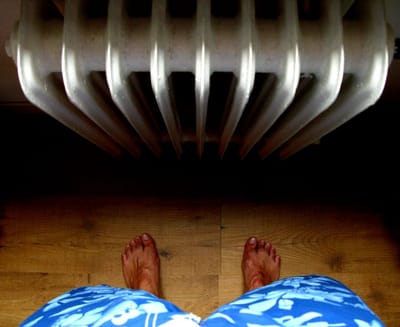
Oversizing is the most common installation mistake on UK heat pump retrofits, and the one that does the most damage to running costs. An oversized unit cannot run steadily at low output for the mild conditions that dominate the British heating season; it cycles on and off instead, losing efficiency on every restart and wearing the compressor down faster than it should.
This guide explains what oversizing actually means, why installers keep doing it, how to spot it in a quote or after install, and what can be done to fix it - including when replacement is the only honest option.
What 'oversizing' actually means
Oversizing is when the heat pump's rated heat output is larger than the design heat loss of the home. The design heat loss is the amount of heat (in kilowatts) needed to hold the house at the target indoor temperature on the coldest day expected at the property's location - typically around –2°C to –4°C external temperature in most of England.
For a well-insulated 3-bed semi, design heat loss is often in the 4–6 kW range. A poorly-insulated Victorian terrace might run 9–12 kW. The right heat pump is the one whose maximum output at the design external temperature comfortably covers that figure - and whose minimum output, when the weather is mild, is low enough to keep running rather than cycling on and off.
That last point is where most oversizing failures actually live. A 9 kW heat pump on a house with 5 kW design heat loss has plenty of capacity on the coldest day, but in March when demand is closer to 2 kW the unit cannot turn down far enough to match it. It runs in short bursts instead.
Why short cycling matters for SCOP
SCOP (Seasonal Coefficient of Performance) is the efficiency figure that determines running cost. A SCOP of 4.0 means the heat pump delivers 4 kWh of heat for every 1 kWh of electricity consumed across an entire heating season. Modern UK heat pumps target a SCOP between 3.5 and 4.5 at typical UK flow temperatures.
The catch is that SCOP is heavily affected by how the unit runs in mild conditions, not just on the coldest days. Heat pumps achieve their highest efficiency when they run for long, steady periods at a low fraction of their rated output. Every restart costs energy - the compressor has to spin up, refrigerant pressures have to stabilise, and the defrost cycle on an air source unit becomes more frequent because the coil never reaches a consistent steady-state temperature.
UK independent measurement work shows that frequent short cycling can drop seasonal efficiency by 10–20% compared to a correctly-sized system on the same property. (Energy Stats UK has a useful breakdown of minimum modulation across common UK models.) On a typical UK home that's the difference between an annual electricity bill of £900 and £1,100 - meaningful money over the 15–20 year life of the system.
Why installers oversize in the first place
Oversizing is rarely malicious. It comes from a small number of structural pressures that consistently push installers toward the larger model:
Rule-of-thumb sizing instead of a heat-loss survey
A proper room-by-room MCS-compliant heat-loss calculation takes 2–4 hours per property. A quick floor-area-times-watts-per-m² estimate takes ten minutes. Under quote pressure, the second method wins - and tends to round up rather than down.
Margin for unmodelled losses
Even with a proper survey, installers often add 10–20% on top to cover thermal bridges, air leakage, and DHW reheats not captured in the room-by-room calculation. Stacked with conservative U-values, the result is a system sized for a heat loss that does not exist.
Limited model range from the chosen manufacturer
Brands typically jump in 2–3 kW steps. If the calculated load is 5.5 kW and the brand only offers 5 kW and 7 kW units, the installer almost always picks the 7 kW for headroom - even though the 5 kW would have run hotter flow temperatures comfortably most of the year.
Defensive sizing against radiator capacity
If the existing radiators are undersized for low-temperature operation, the installer may pick a bigger heat pump to push higher flow temperatures rather than spec radiator upgrades. The customer pays in efficiency forever to avoid a one-off £1,500 radiator-upgrade conversation at quote time.
Customer pressure for guaranteed performance
Customers worried about 'will it actually be warm?' often push installers toward the larger model. Combined with the conservative survey, the result is a system that runs at 30% of its capacity most of the year.
Hot water tank reheat sized as a peak
If the DHW cylinder reheat is treated as a coincident peak rather than a non-coincident demand, the calculated total load comes out 2–3 kW higher than it needs to be. Modern controls schedule DHW outside heating peaks; sizing logic does not always reflect that.
How to spot oversizing in a quote
Before signing a contract, check whether the installer's sizing logic stacks up. The hard numbers to ask for are:
Ask for the room-by-room heat-loss calculation
Every MCS-certified installer must produce one before specifying the system. Ask for the spreadsheet or the MCS-format report - not a one-line 'house heat loss = X kW'. Walk through the room totals and check the design external temperature used.
Compare the heat pump's nominal output at A2/W35 to the design heat loss
Manufacturers publish output curves at standard test conditions. The nominal output at the design external temperature (often A2 or A-7 for the UK) should be only modestly above the design heat loss - 10–15% headroom is normal; 50%+ headroom is oversizing.
Ask the installer for the unit's minimum modulating output
Most modern inverter-driven heat pumps can turn down to 30–50% of rated output. If your design heat loss is 5 kW and the chosen unit's minimum is 3.5 kW, the pump will cycle whenever outdoor temperatures are above about 8°C - most of the UK heating season.
Cross-reference with independent UK performance data
Real-world SCOP figures from publicly-shared monitoring data (e.g. openenergymonitor.org, Heat Geek case studies) on similar properties give a sanity check on whether the proposed sizing tends to over- or under-deliver.
Check the flow temperature design
An installer specifying 50–55°C flow as standard often does so to make undersized radiators work. Modern weather-compensated systems should target 35–45°C average flow on most UK homes; sizing the heat pump for high flow temperatures both wastes efficiency and tends to push pump sizing upward.
How to fix oversizing after install
If the system is already installed and is short-cycling, replacement is expensive and the Boiler Upgrade Scheme grant cannot be claimed twice. Several mitigations can recover meaningful efficiency without changing the unit:
Weather compensation tuned aggressively
A properly-set weather compensation curve drops flow temperature as outdoor temperature rises, lowering the required heat output and reducing cycling. Many UK installers leave the default curve in place - re-tuning to a steeper slope often cuts cycling by 30–50% on its own.
Increase system volume with a buffer tank
A volumiser or buffer tank gives the heat pump more thermal mass to dump heat into during each cycle, so it runs longer per cycle. This does not fix the root cause but extends compressor life and recovers some of the efficiency loss. Sizing rule of thumb: 12–20 litres per kW of rated heat pump output.
Increase radiator surface area
Larger radiators or low-temperature emitters let the system run at lower flow temperatures, which both improves SCOP and reduces the temperature differential the heat pump must achieve per cycle. Often the highest-ROI retrofit fix.
Re-examine controls and zoning
Smart zoning that demands heat from too few rooms at a time effectively shrinks the served load and worsens cycling. For an oversized heat pump, single-zone operation (all rads on, room-by-room flow control via TRVs) often performs better than aggressive zoning.
Check minimum-modulation behaviour in the controller
Some manufacturers expose a minimum modulation parameter or a 'mild weather' algorithm. Tuning these (carefully, and ideally with installer support) can extend the runtime per cycle.
Replace the unit only as a last resort
Only worth considering if the property is unsuitable for the above mitigations, the existing unit is early in its life, and the running-cost penalty is documented from energy monitoring data. A new unit is rarely cost-effective inside the first 5 years even on a severely oversized system.
MCS 023 and the move toward EN12831
MCS standards govern UK heat pump installation. MCS 023 is the standard for system sizing, and recent revisions push installers toward stricter use of the EN12831-1:2017 calculation method - the same method used in the building regulations Part L calculations for new builds.
EN12831 produces a more granular room-by-room heat loss figure than the older simplified methods, but only if the installer measures the property carefully. Garbage-in still produces garbage-out: an installer who guesses U-values rather than measuring or referencing the building's age band will still over- or under-size. The standard is a floor, not a ceiling - and the discipline that comes from doing the measurement, not just running the spreadsheet, is what produces well-sized systems.
For homeowners, the practical guidance is to ask whether the installer's heat-loss calculation follows EN12831-1:2017 and what U-value assumptions they used. Reputable installers welcome the question; less-careful ones tend to deflect.
How oversizing interacts with the grant route
The Boiler Upgrade Scheme pays £7,500 toward a heat pump install (£7,500 for ground source as well). The grant is paid once per property - replacing an oversized unit later is not eligible for a second grant. That makes the upfront sizing decision more consequential than it would be otherwise: the household has effectively one shot at a subsidised retrofit, and oversizing means living with the efficiency penalty for the system's full life. From 21 July 2026, an enhanced £9,000 grant applies where the heat pump replaces oil or LPG heating in an off-gas-grid home (England and Wales).
The grant does not currently require the installer to demonstrate that the unit's minimum modulation is appropriate for the design heat loss - only that the system is correctly sized for peak demand. This is a structural gap; homeowners filling it themselves by asking the questions above is the most reliable mitigation.
Frequently asked questions
How much does oversizing cost me on running bills?
Is a small amount of oversizing a problem?
How can I tell if my installed unit is short-cycling?
Does a buffer tank fix oversizing?
Why doesn't the heat pump just modulate lower?
Are some manufacturers more prone to oversizing problems than others?
What is the right heat-loss number for a typical UK home?
Get a proper heat-loss survey before you sign
The single best protection against oversizing is choosing an installer who runs a room-by-room MCS-compliant survey and shows you the numbers.