Is My Home Suitable for a Heat Pump? UK Guide 2026
Insulation, heat-loss surveys, radiators, hot water, outdoor space, planning rules and noise — the honest UK suitability checklist for 2026.
The Energy Saving Trust's summary of the question is direct: "Air source heat pumps are suitable for almost all types of home." The honest, slightly longer answer is that the suitability question is mostly about what work the install requires, not whether a heat pump can technically be made to work. In almost every UK property a heat pump can be made to work; in a meaningful minority of properties the work required to get there is significant enough to change the decision. This guide is the honest checklist — what to look at in your specific home, what an installer is checking, and the cases where the right answer is genuinely "not yet" or "not for this property."
This is a top-of-funnel guide. Once you've worked through the suitability question, our BOXT vs Heatable installer comparison and the broader heat pump section cover how to actually buy. Last reviewed: 12 May 2026.
1. Insulation — what actually matters (and what doesn't)
The biggest myth in UK heat-pump suitability discourse is that you need a very-well-insulated home before a heat pump will work. The Energy Saving Trust is direct on this: "Installing more insulation in walls and roofs isn't necessary for having a heat pump – they still work well in homes with less insulation." The mechanism is that under-insulated homes can still be heated by a heat pump — they just need larger radiators to deliver the same warmth at the lower flow temperatures heat pumps run at.
What does change with insulation level is two specific things:
- The £7,500 Boiler Upgrade Scheme grant requires a valid Energy Performance Certificate with no outstanding recommendations for cavity-wall or loft insulation, or evidence to show why those measures aren't possible. This is a grant-eligibility rule, not a technical-suitability rule. If you have unfilled recommendations, fill them (or evidence why they cannot be filled) before the BUS application.
- Running costs depend on insulation level. A heat pump in a poorly-insulated home works fine; it just uses more electricity to do it. Topping up insulation before the install will reduce ongoing [running costs](/blog/heat-pump-running-cost-vs-gas-boiler/) in roughly proportion to how much heat is being lost.
The pragmatic order: get the BUS-blocking insulation done; do the rest on an economic-payback basis rather than as a pre-heat-pump requirement.
2. The heat-loss survey — what installers actually check
The most consequential document in any heat-pump install is the heat-loss survey. A qualified heating engineer measures every room's heat loss in watts at the local design temperature (typically -2°C to -4°C across the UK, varies by location), totals it to a whole-house kW figure, and uses that to size both the heat pump unit and the radiators.
For a typical UK 3-bed semi-detached home, the resulting figure is usually in the 6 kW to 9 kW range. A larger detached property might be 10-14 kW; a small flat or terraced house might be 4-6 kW. The heat-loss survey output should be a written design document with: per-room heat-loss figures, the proposed heat-pump model and rated output, radiator sizing recommendations for each room, the design flow temperature, and the proposed pipework / control strategy.
What to insist on:
- A room-by-room heat-loss calculation, not a whole-house guess. The MCS standard (MIS 3005-D) requires per-room calculations. A quote that doesn't include this is not properly engineered.
- Realistic design flow temperature — typically 45°C or 55°C for retrofit. Lower flow temperatures (35°C) deliver better efficiency but require bigger radiators or underfloor heating.
- SCOP figures based on the design flow temperature, not the manufacturer's optimal-condition headline. A pump quoted as SCOP 5.1 in marketing materials will typically deliver SCOP 3.5-4.5 in a real UK retrofit at 45-55°C flow.
Heat Geek and the major MCS-certified installer networks all publish heat-loss methodology documentation. If your installer's survey is a tickbox spreadsheet rather than a written design document, push back or get a second quote.
3. Radiators — what 90% of UK homes actually need
Heat pumps run at substantially lower flow temperatures than gas boilers — 35-45°C for high efficiency, up to 55°C for retrofit — versus 55-75°C for typical gas boilers. To deliver the same heat output at lower temperature, radiators need to be larger. Industry guidance is that radiators for a heat pump need to be 1.5 to 2 times larger than the equivalent gas-boiler radiator.
The honest scale of this work, from a 2025 research analysis: at a 55°C maximum flow temperature, approximately 90% of UK dwellings need at least some radiators upgraded to deliver peak heat-pump load. At 45°C the figure rises to about 99%. A more permissive recent analysis suggests around 31% of dwellings could operate with a 16 kW or smaller low-temperature heat pump (LTHP) without any radiator changes, but that population is dominated by newer, smaller, well-insulated homes.
Practical translation:
- Budget for radiator upgrades as part of the install cost. Typical cost is £200-£400 per radiator replacement; a whole-house upgrade typically lands in the £500-£1,500 range depending on how many radiators and how accessible the pipework is.
- The kitchen and the largest living-area radiator are the most-replaced. Bedrooms and bathrooms often pass at existing size because they're smaller rooms with lower heat-loss figures.
- Underfloor heating is genuinely better than larger radiators — it operates at very low flow temperatures (~30°C) and is far more efficient. But retrofitting underfloor heating to an existing UK home is typically £80-£150/m² and disruptive enough that it's rarely worth doing solely for a heat-pump upgrade.
A typical living room (around 4m × 5m) in a moderately-insulated UK home needs a radiator output of 2,000-2,500 watts at a 30°C delta T. A smaller bedroom (3m × 3m) might be fine with 1,000-1,500 watts. Your heat-loss survey will give you the per-room numbers.
4. Hot water cylinder — the combi-boiler conversion question
Heat pumps cannot heat water on demand the way a combi boiler can. If you currently have a combi boiler, switching to a heat pump means adding a hot water cylinder to your home. This is the single biggest physical-space requirement of a heat-pump install for combi-boiler households.
Cylinder sizing depends on household hot-water demand:
- 1-2 people, modest demand: 150-200 L cylinder.
- 3-4 people, normal demand: 200-250 L cylinder (most common UK heat-pump install).
- 4-5 people or high demand (multiple daily showers, baths, large family): 250-300 L cylinder.
- Very large households or high simultaneous demand: 300-400 L cylinder or twin cylinders.
A typical 200-250 L cylinder is about 1.7 m tall and 55-65 cm in diameter. Most installs locate it in an airing cupboard, a utility room, or (less ideally) a corner of a bedroom. If your current home was designed around a combi boiler with no provision for a cylinder, this is the single most likely source of "I have nowhere to put it" suitability problems.
For households previously on a regular (boiler + cylinder) or system boiler setup, the existing cylinder is rarely directly reusable — heat-pump cylinders need a larger heat-exchange coil for the lower flow temperatures, so a replacement is usually part of the work. Budget £700-£1,500 for the cylinder itself plus install labour.
5. Outdoor space, planning permission, and the unit itself
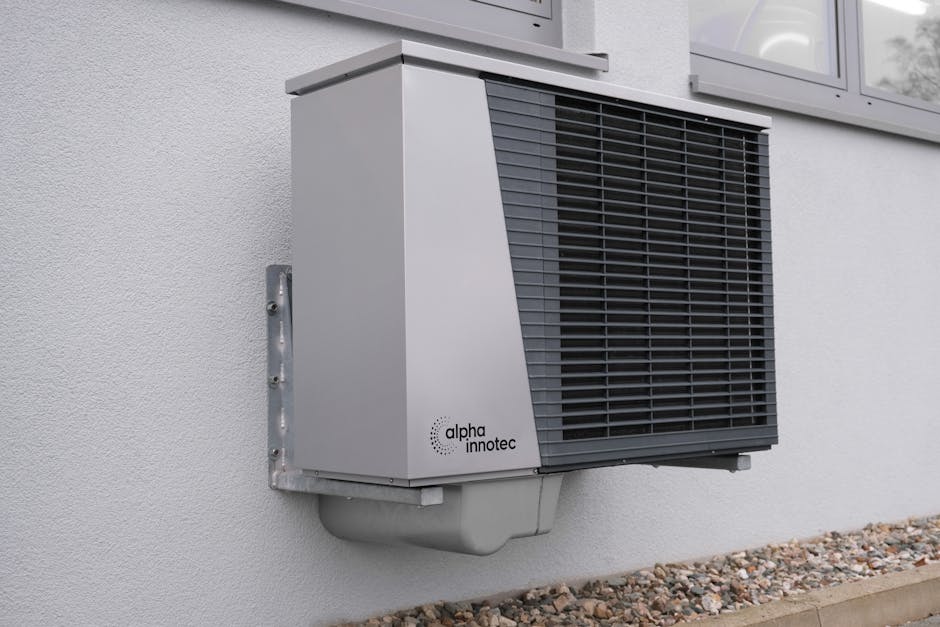
The outdoor unit of an air-source heat pump is roughly the size of a small wheelie bin: typically 70-90 cm tall, 80-110 cm wide, 30-40 cm deep, with a fan that exhausts air outward. It needs to sit somewhere on or near your house with adequate clearance for airflow and serviceable access.
Space requirements
- Wall-mounted or ground-standing — both are normal. Ground-standing is more common in UK retrofits where wall space is constrained.
- Clearance: typically 1 m clearance to the front (where the fan blows), 30-50 cm to the sides, 20-30 cm above. The exact figures are in the manufacturer's manual.
- Not on the front of your house (planning rule — see below).
- Avoid enclosed spaces — passageways, small courtyards, recessed alcoves. The unit needs airflow.
Planning permission
Air-source heat pumps are permitted development in most UK domestic settings, meaning no planning application is required, provided the install meets a specific set of conditions. The rules were eased on 29 May 2025, making installs in most settings considerably simpler than before:
- The outdoor unit must not exceed 0.6 m³ in volume.
- Only one heat pump per property without additional permission.
- The unit must not be on the front of the house, or visible from the road.
- The unit must be installed on the ground or a flat roof, not a sloping roof.
- The unit must not be located within 1 metre of the property boundary in some circumstances (post-29 May 2025 rules eased this in most cases — check the current GOV.UK guidance for your specific situation).
Listed buildings always require listed building consent regardless of permitted development scope. Conservation Areas and AONBs may have additional restrictions. The 2024-2025 Defra review into heat-pump noise complaints found a low rate of actual complaints versus permitted installs, which was a key driver of the 2025 easing.
6. Noise — the regulation and the reality
Heat-pump noise is the second-most-asked question after running cost. The regulatory limit is a hard one: the heat pump must not produce more than 42 dB(A) when measured 1 metre from the nearest neighbouring property's habitable room window. Habitable rooms include bedrooms, living rooms and dining rooms — not bathrooms, hallways or garages.
42 dB(A) is quiet. For reference: a refrigerator hum is around 40 dB(A); a quiet office around 45 dB(A); a normal conversation around 60 dB(A). Modern heat pumps under typical UK loads operate at 40-55 dB(A) at 1 metre from the unit itself, which by the time the sound reaches the neighbour's window has typically dropped below the 42 dB(A) threshold. The Nesta data-driven FAQ notes that complaint rates in the UK have been low.
The practical noise considerations:
- Listen to a running heat pump in person before buying if you're noise-sensitive. Most installers can arrange this. Datasheet figures are accurate but don't capture the character of the sound (low-frequency hum vs higher fan whoosh).
- The unit is noisier in cold weather (the compressor works harder) and during defrost cycles (brief louder periods every 1-2 hours in sub-zero conditions).
- Anti-vibration mounting matters — the noise transmitted through the wall into the house can be worse than the airborne noise if the unit isn't isolated properly.
- Sound-reduction enclosures exist but typically reduce efficiency. The right answer is usually correct siting + a quiet unit, not enclosing a noisy one.
The Quiet Mark certification scheme covers some heat pumps and is a useful sign of low operational noise; not every quiet pump is certified, so absence of the mark is not disqualifying.
7. When a heat pump is NOT the right answer
The honest counterweight to "almost all UK homes are suitable" — a few categories where the suitability answer is genuinely "not yet" or "not for this property."
- Flats with no exclusive outdoor space. If your flat doesn't have its own balcony or wall section facing outdoor air, the unit has nowhere to go. Communal heat-pump systems exist but they're a building-level decision, not a flat-level one. Renters in particular should treat this as out of scope unless the freeholder is also engaged.
- Listed buildings with hard heritage constraints. A listed Grade I property where neither the front nor the side garden is permitted for an outdoor unit, and where pipework routes through historically-protected walls, can fail the suitability test. Listed-building consent is non-negotiable here — get pre-application advice from your local conservation officer before any spend.
- Off-grid properties using oil or LPG. Heat pumps usually beat oil/LPG on running cost (electricity is cheaper per kWh of delivered heat than either oil or LPG given heat-pump efficiency). But the install cost is higher because the existing oil tank doesn't help, and the BUS grant calculation is the same regardless. For some off-grid properties the right answer is biomass or a hybrid system; do the maths case by case.
- Very high-temperature heat demand properties. Edwardian solid-wall homes with no insulation potential (heritage windows, party walls, etc.) and very large rooms can need design flow temperatures above 55°C to be comfortable. "High-temperature heat pumps" exist that run up to 70°C, but efficiency at that flow temp is much lower (SCOP 2.5-3.0 vs 3.5-4.5) — the install works, but the running-cost case is weaker.
- Properties due for major works imminently. If you're planning a loft conversion, extension, or full retrofit in the next 18 months, defer the heat pump until after — sizing the system around your future not your current floorplan saves replacing radiators twice and avoids pipework routing through walls about to be moved.
For all of these, the honest answer isn't "never" — it's "the maths and the engineering need more attention than a standard install, and you should commission the heat-loss survey before committing."
What real-world performance actually looks like
One final reality-check. The manufacturer-marketed SCOP figures (typically 4.5-5.1 for premium units) describe optimal-condition performance, not real UK winter performance. Nesta's monitoring of UK heat-pump installations finds real-world SCOP averaging around 3.9 across hundreds of monitored systems — meaningfully below the marketing figure, but still substantially more efficient than the ~85-90% efficiency of a condensing gas boiler.
The same Nesta user survey found that 73% of UK heat-pump owners are as satisfied or more satisfied with their heat pump compared to their previous heating system. That figure has been stable across several survey rounds. It's not 100% — heat pumps have a real failure mode where bad install, oversized unit, or under-sized radiators produce poor comfort and high bills — but the failure modes are mostly install-quality issues, not technology-fundamental ones.
The pragmatic summary: get a proper heat-loss survey, hold the installer to a written design document, budget for radiator upgrades, and the heat pump will work in most UK homes.
Frequently asked questions
Does my home need to be well-insulated for a heat pump to work?
What size heat pump do I need for a typical UK home?
Do I need to replace all my radiators?
Where does the outdoor unit go?
Do I need planning permission for a heat pump?
Are heat pumps actually noisy?
Will my hot water work the same way?
How long does a heat pump last and what is the maintenance burden?
What if my home is genuinely unsuitable?
Got the suitability box ticked? Pick an installer next
BOXT vs Heatable is the comparison most UK buyers face. Fixed-price online quotes vs surveyor-led multi-brand. Our installer comparison walks through the trade-off in detail.