Heat Pump: Underfloor Heating vs Radiators UK 2026
Underfloor heating (35-40°C) vs upgraded radiators (50°C) - costs, SCOP gain, and when each makes sense for a UK heat pump retrofit.
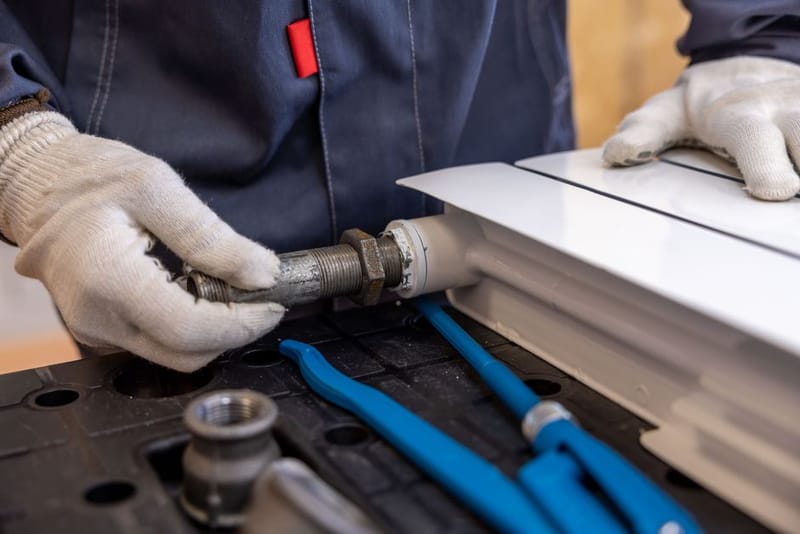
The single biggest design decision in a UK heat pump retrofit is what to do with the existing heating emitters. Underfloor heating wants the heat pump to run at 35-40°C flow temperature; upgraded radiators run at 45-50°C; existing gas-boiler radiators typically run at 70°C. The flow temperature drives SCOP, and SCOP drives running costs - so the emitter choice is also the running-cost choice. This guide covers the practical retrofit decision for UK homes.
How does underfloor heating compare to radiators with a heat pump?
Underfloor heating works particularly well with heat pumps because it operates at low flow temperature by design. The large surface area (the entire floor) means each square metre only needs to dissipate 50-70 W of heat, which it does effectively at 35°C surface temperature. Radiators, by contrast, are physically small relative to their heat output - a panel radiator needs to dissipate 600-1500 W from a 1 m² panel, which requires either high surface temperature (the gas-boiler way) or a much larger radiator area.
The practical comparison:
- Underfloor heating with heat pump: flow temperature 35-40°C, SCOP 3.8-4.2 typical. Even temperature distribution across the room. No visible radiators. Slower response time (the screed buffers heat).
- Upgraded (larger) radiators with heat pump: flow temperature 45-50°C, SCOP 3.5-3.8 typical. Existing radiator positions kept (or relocated). Radiators run cooler to touch but for longer. Faster response time.
- Existing radiators with high-temperature heat pump: flow temperature 55-65°C, SCOP 2.8-3.2 typical. Visible radiators stay the same. No radiator works. Higher running cost.
- Existing radiators with low-temperature heat pump (without upgrade): system undersized at low flow temperatures - rooms won't reach setpoint on cold days. Avoid this combination; pick one of the three above instead.
What does underfloor heating retrofit cost in a UK property?
Underfloor heating retrofit costs depend on whether you're working on a ground-floor concrete slab or suspended timber floors:
Ground floor on a solid concrete slab (most UK 1970s+ ground floors): £80-£120/m² for a wet-screed retrofit (pipes laid on insulation, covered with 60-75mm liquid screed). For a typical 4-bed detached ground floor of 80 m², total cost £6,400-£9,600 including labour. Adds 75-100mm to the floor build-up, requiring door rehanging and sometimes step adjustments at thresholds.
Ground floor with suspended timber (most pre-1970s ground floors): £100-£150/m² for an under-floor retrofit (pipes laid between joists from below, with reflective insulation). The work happens from above (lifting boards) or below (from a cellar/crawl space). Typical 4-bed cost £8,000-£12,000. Doesn't change floor levels - the pipes sit within the existing joist void.
First-floor underfloor heating retrofit: typically not cost-effective in a retrofit. First-floor underfloor heating works in new builds but requires lifting all upstairs floor coverings, which is rarely worth the £15,000-£25,000 retrofit cost. Most UK heat pump systems use underfloor downstairs and upgraded radiators upstairs.
Underfloor heating in a new-build extension: £40-£60/m². Substantially cheaper than retrofit because the screed and floor construction are happening anyway - the underfloor heating just adds the pipes and manifold.
What does radiator upgrading cost?
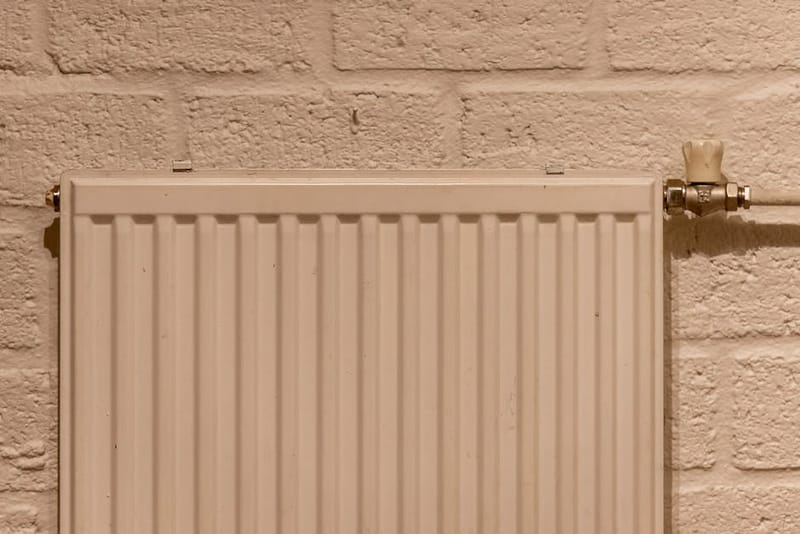
Radiator upgrading for a heat pump means replacing existing radiators with larger, higher-output panel radiators - typically going from a single-panel to a double-panel, or upsizing from a 600x1000mm to a 600x1400mm. Some installs add fan-assisted radiators (Jaga Strada, Myson FanXpert) for rooms with limited wall space.
Typical 2026 UK costs:
- Standard panel radiator upsize: £80-£150 per radiator including pipework adjustment. Single-panel-to-double-panel: £100-£180. Larger overall dimensions: £150-£280.
- Full-house radiator upgrade for a 3-bed semi (8-10 radiators): £1,200-£2,500
- Full-house radiator upgrade for a 4-bed detached (10-14 radiators): £1,800-£3,800
- Fan-assisted radiators (Jaga, Myson): £300-£600 per unit. Useful for rooms where wall space is constrained or you specifically want low-temperature operation in a small footprint.
Radiator upgrading also typically requires adjustments to the existing pipework. UK heat pumps work best with 22mm pipework on the main flow-and-return runs and 15mm pipework at the radiators; older UK systems with 10mm microbore pipe between manifold and radiators often need pipework replacement to avoid flow restriction. Budget an extra £500-£1,500 for microbore pipe replacement if your existing system has it.
When does underfloor heating make sense vs radiators?
Practical decision factors for a UK heat pump retrofit:
Underfloor heating downstairs makes sense when:
- You're doing extensive ground-floor renovation anyway (kitchen extension, open-plan reconfiguration, new flooring throughout)
- You have a concrete slab and the ceiling height to absorb a 75-100mm floor build-up
- You're planning a long ownership (10+ years) and the SCOP delta matters cumulatively
- You have rooms (kitchen-diner, large hallway) where radiator placement would be awkward
- You're aesthetic-conscious about radiator visibility
Larger radiators make sense when:
- You don't want to lift floors or change door heights
- You're optimising for retrofit speed and minimum disruption
- You have suspended timber floors and don't have access from below
- Your budget is constrained and you'd rather put the saved money into insulation or solar PV
- Your ownership horizon is shorter (5-7 years) - the SCOP cumulative gain matters less
Mixed underfloor + radiators makes sense when:
- You have a concrete-slab ground floor amenable to underfloor heating, but suspended-timber first floor
- You have one or two rooms downstairs (open-plan kitchen, large lounge) where underfloor is a clear win, but other rooms where radiator upgrade is simpler
- You want to phase the retrofit - radiators now, underfloor heating in a future extension
Frequently asked questions
Is underfloor heating worth it with a heat pump in the UK?
Can I keep my existing radiators with a heat pump?
How long does underfloor heating take to warm up with a heat pump?
Do I need to add radiator upgrades on top of underfloor heating?
Does a wet-screed underfloor heating retrofit affect ceiling height?
What SCOP can I expect with underfloor heating in a UK home?
Heat Pump Radiator Upgrades UK

Heat Pump SCOP Explained

Is My Home Suitable for a Heat Pump?

Heat Pump Running Cost vs Gas Boiler
Need an installer with underfloor retrofit experience?
Underfloor heating retrofit is meaningfully different from radiator-swap retrofit. An installer with screed and floor-build-up experience is worth seeking out.