Heat Pump: Park Home vs Static Caravan UK 2026
Heat pump for UK park homes vs static caravans vs lodges 2026: site-owner consent, electrical supply, BUS eligibility nuances, what works where.
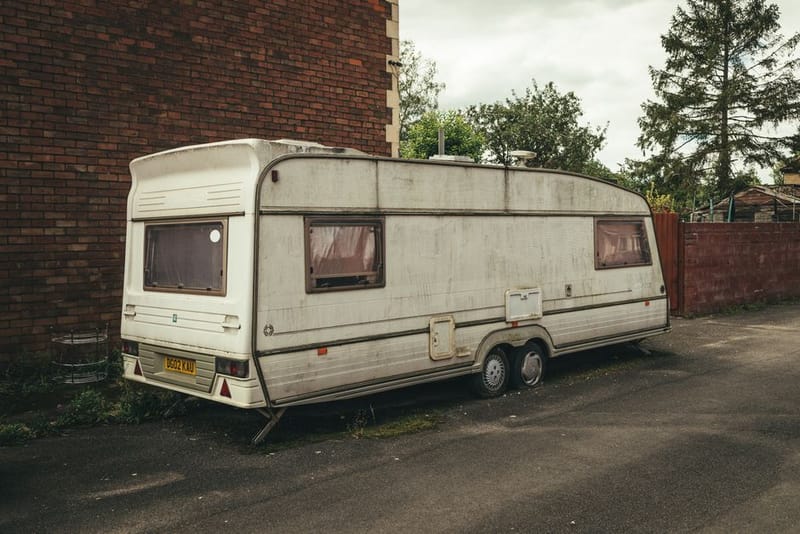
UK 'park home' and 'static caravan' are often used interchangeably - but they're distinct property types with different planning, regulatory, and heat pump install treatments. This guide unpacks the differences across park homes, static caravans, and lodges + what heating each can support.
What's the difference?
Three property types with overlapping vocabulary.
Park home (residential): permanently-sited, year-round residential use under the Mobile Homes Act 1983. Council tax paid; full utility bills; classified as 'domestic' for most regulatory purposes. Typical lifespan 30-50 years; modern park homes are 60-80 m² floor area + comparable to a small bungalow.
Static caravan (holiday): sited on a holiday park or touring caravan site, typically with annual license rather than residential occupancy. May only be occupied 11 months/year (most holiday parks require 1 month closed period). Smaller floor area (40-60 m² typical) + thinner construction than park homes. Cannot be primary residence under most site licenses.
Lodge (luxury holiday): larger holiday-park accommodation, typically log-cabin or timber-frame construction, 60-120 m² floor area. Better insulation + larger living space than static caravans. Year-round use sometimes permitted depending on site license.
BUS grant eligibility per property type
Three distinct treatments under Ofgem rules.
Park homes (residential): typically qualify for the £7,500 BUS grant. Ofgem treats permanently-sited park homes with full council tax + utility bills as 'domestic buildings'. Confirm with your installer + Ofgem before signing - some edge cases (annual-license park homes, holiday-park park homes) may not qualify.
Static caravans (holiday): typically DO NOT qualify for BUS. Ofgem treats them as non-residential structures, similar to touring caravans. Some owners explore air-to-air heat pumps under the ECO4 / Heat Pump grant (£2,500, income-conditional), which has more flexible property classification.
Lodges (luxury holiday): generally don't qualify for BUS but edge cases exist - lodges occupied year-round as primary residence with permanent utility supply may qualify. Confirm via installer + Ofgem before committing.
What heating works on each
Three property types, three realistic heat pump configurations.
Park homes (residential):
- Air-to-water heat pump (5-7kW typical) + indoor cylinder works similarly to bricks-and-mortar property.
- Existing radiator system typically upgradable; underfloor heating works in newer park homes.
- Annual heat demand ~6,000-9,000 kWh (smaller than 3-bed semi due to floor area + improved insulation).
- £7,500 BUS grant + ~GBP 3,500-7,000 net install cost typical.
Static caravans (holiday):
- Air-to-water typically impractical - smaller floor area + thinner walls + limited cylinder space.
- Air-to-air mini-split (2.5-3.5kW) is the practical option. Separate electric immersion for hot water.
- Annual heat demand ~3,000-5,000 kWh (assuming 6-8 month occupancy).
- ECO4 grant (£2,500) may apply for income-eligible owners. No BUS.
Lodges (luxury holiday):
- Air-to-water can work for year-round-occupied lodges with bespoke siting - 4-6kW unit + smaller cylinder (100-150L).
- Air-to-air is the simpler choice for shorter-occupancy lodges (similar to static caravan approach).
- BUS grant eligibility depends on usage classification - confirm with installer + Ofgem.
Electrical supply constraints
Site-shared supplies vs dedicated property supplies.
The biggest practical constraint for all three property types is electrical supply:
- Park homes: typically have dedicated 60-100A single-phase supply to the property. Most can handle heat pump load directly; older park homes may need a fuse upgrade (~GBP 200-400 via DNO).
- Static caravans + lodges: often share a site-wide electrical supply. The site operator + DNO must approve any significant load addition. Some site supplies are too constrained to support multiple heat pump installs on the same park.
- Off-grid sites: some rural holiday parks have site-generation (diesel generators or solar arrays) rather than grid connection. Heat pumps may not be supported on these sites at all.
Site infrastructure varies significantly; what works for one property on a park may not work for the next-door equivalent property. Always engage the site electrical contractor early in the design process.
Insurance + warranty considerations
Manufacturer warranties differ for non-standard property types.
Manufacturer warranties for heat pumps on park homes / statics / lodges:
- Park homes: treated similarly to standard residential property by most manufacturers. Full 5-10 year warranty applies.
- Static caravans + lodges: some manufacturers explicitly exclude non-permanent / mobile / temporary structures from warranty coverage. Confirm with the manufacturer before install - if warranty is excluded, the install economics change significantly.
Insurance: confirm with your property insurer that the heat pump install doesn't affect coverage. Some specialist holiday-home insurers have specific requirements (drainage pan + heat-traced drain, frost protection mode configured) for heat pump installs.