Heat Pump for Park Home / Mobile Home UK 2026
Heat pump for a UK park home or static caravan: small unit sizing, site-owner consent, insulation realities, grant eligibility caveats.
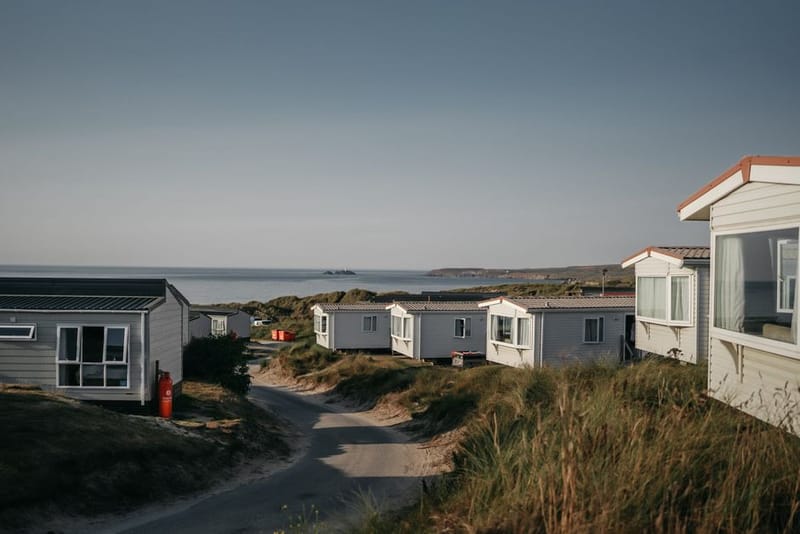
UK park homes + static caravans are an under-served part of the heat-pump market - typically older construction, thinner walls, often heated by oil, LPG, or expensive electric night-storage. This guide covers the practical install realities specific to park homes + what's actually achievable in 2026.
The insulation reality for park homes
Heat loss is structurally high - this is the binding constraint.
Park homes are typically built to lower thermal-performance standards than UK residential bricks-and-mortar properties:
- Wall construction: usually thin (~75-100mm) timber-frame + minimal insulation. Older units (pre-2005) may have no cavity insulation at all.
- Roof: often single-skin metal or low-grade composite with limited insulation depth.
- Floor: chassis-mounted, often with minimal under-floor insulation - significant heat loss to the ventilated underside.
- Windows: older units retain single-glazed windows; newer units have basic double-glazing.
The result: a 60 m² park home can have similar total heat loss to a 100 m² bricks-and-mortar 3-bed semi. Sizing a heat pump for the actual heat loss often produces a kW number that looks oversized for the floor area but is correct for the physics.
Insulation upgrades make the heat pump economics work; sizing without them produces an undersized system that runs at peak output constantly. Practical pre-install upgrades: under-floor insulation (~GBP 1,500-2,500), roof insulation upgrade (~GBP 800-1,500), double-glazing (~GBP 3,000-5,000 for a whole park home).
Sizing for park homes
5-7 kW typical - smaller models are the right pick.
Most UK park homes (45-65 m² typical) take a 5-7 kW heat pump - smaller than a typical residential install. The product options at this size:
- Vaillant aroTHERM plus 5kW / 7kW - most common UK install at this size.
- Octopus Cosy 6 (6 kW) - fits the small-to-mid range well.
- Daikin Altherma 3 R 4kW / 6kW - smallest UK-spec options.
- Mitsubishi Ecodan 5kW / 6kW - alternative with good UK service network.
The outdoor unit footprint is similar to a residential install (~1m × 0.5m), but siting matters more for park homes - you need a level concrete pad + clearance from the home's structure + neighbour considerations. Many park homes don't have a suitable adjacent area; some installs use ground-mounted units on a dedicated concrete pad 2-5m from the home with a longer refrigerant line.
BUS grant eligibility for park homes
Uncertain - check current scheme rules before committing.
The Boiler Upgrade Scheme rules don't explicitly cover park homes, mobile homes, or static caravans - the eligibility criteria reference 'domestic buildings' which is ambiguous for permanently-sited park homes. Current position:
- Permanently-sited park homes with full council tax + utility bills typically DO qualify (treated as domestic residential property by Ofgem assessors).
- Mobile homes / touring caravans do NOT qualify (not domestic buildings in the relevant sense).
- Borderline cases (annual-licence park homes, holiday-park static caravans) may need individual confirmation from the installer + Ofgem.
Get this confirmed in writing from the installer before signing - UK gov BUS page for current rules. If grant ineligibility is confirmed, the heat-pump economics become much harder - typical install costs GBP 8-13k without the grant.
When a heat pump isn't the answer
Alternative paths for park-home heating cost reduction.
For many park-home owners, the practical alternatives to heat pump are worth considering first:
- Insulation upgrade + smart electric tariff. Bringing under-floor + roof insulation up to standard + moving from standard electricity to Intelligent Octopus Go (off-peak rates for night-storage heater charging) can cut heating cost 40-60% for half the capital outlay of a heat pump install. Best fit for park homes already on electric heating.
- Replace existing oil/LPG boiler with a more efficient model. Modern condensing oil/LPG boilers are ~92-95% efficient vs older units at ~70-80%. ~GBP 4,000-5,500 install + immediate ~20-25% fuel saving. No grant available (not a heat-pump path) but the economics are simpler.
- Air-to-air heat pump (mini-split) for single-zone heating. Cheaper than air-to-water (~GBP 2,500-4,000 per zone) + doesn't need a hydronic system. Better for small park homes with simple heating needs. Lower BUS grant eligibility but lower capital outlay.
For a park-home owner whose primary goal is bill reduction, air-to-air mini-splits or insulation + smart tariff often beats a full air-to-water heat pump on capital efficiency.
Practical install considerations
Five things that differ from a bricks-and-mortar install.
1. Electrical supply. Park-home electrical connections are sometimes shared site-supply (not dedicated property supply) + may have capacity constraints. Confirm with the site owner + electrician that a 32A dedicated circuit can be added without overloading the site infrastructure.
2. Hot water storage. Many park homes don't have space for a 200-300L hot water cylinder. Some installs use a smaller (150L) cylinder or an instant electric hot water heater for the cold-tap-furthest taps.
3. Distribution. Park homes typically have basic radiator systems or electric heaters. Adding new radiators or upgrading existing ones is straightforward but takes more space than in a residential property.
4. Servicing access. Annual heat pump servicing is easier for residential properties with permanent address. Park-home installs need service-contract arrangements that account for the site's rules + access timing.
5. Moving the home. If you move the park home (sale, site change), the heat pump install is property-tied + may need to be decommissioned + reinstalled. Plan around this if you expect a move within 5-7 years.