Heat Pump Anti-Cycling + Short-Cycling Fixes UK 2026
Heat pump short-cycling diagnosis UK 2026: 5 root causes, WC tuning, anti-cycle settings, buffer tank decision, when oversized unit is the problem.
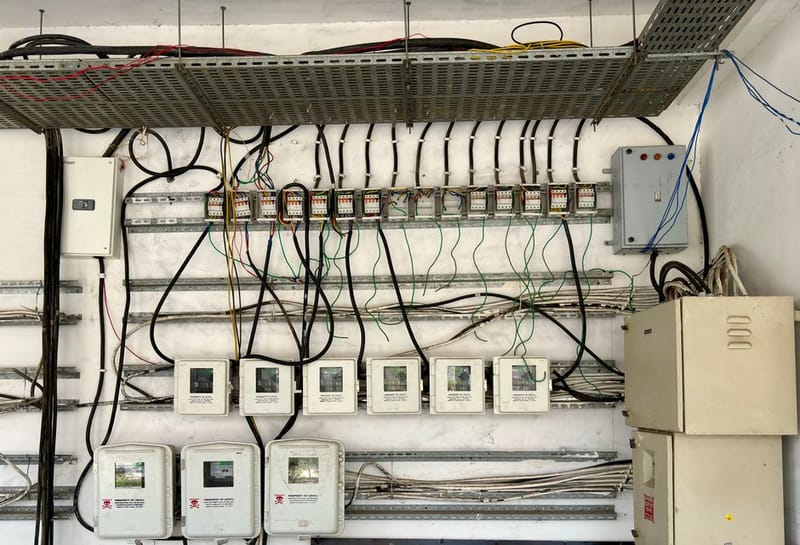
Heat pump short-cycling reduces efficiency, wears the compressor faster, and causes discomfort. This guide covers the 5 root causes + fixes in order of effort, plus the diagnostic checks to identify which fix applies.
What healthy vs short-cycling looks like
The numbers that matter.
Healthy heat pump operation:
- Cold weather (0 to -5C): heat pump runs continuously (1-3 cycles per hour, 20-40 min per cycle).
- Mild weather (+5 to +10C): 2-4 cycles per hour, 10-30 min per cycle.
- Warm weather (+15C+): 0-2 cycles per hour during DHW reheat only.
Short-cycling signs:
- 4+ cycles per hour at any outdoor temperature.
- Cycle duration under 10 minutes consistently.
- Audible compressor on-off-on within 5-10 minutes.
- Manufacturer app showing cycles + run-time data deviating from above.
Why short-cycling matters:
- SCOP drops 10-20%. Start-up + shut-down cycles use more electricity than steady-state operation.
- Compressor wear accelerates. Compressor lifetime measured in 'starts' as much as 'hours' - more starts = shorter life.
- Comfort degrades. Cycling causes temperature swings; rooms feel less consistently warm.
- Indoor noise. Heat pump pump cycling on + off audibly multiple times per hour.
Root cause 1: heat pump oversized
Most common cause in retrofit installs.
Heat pumps have a minimum modulation level - below ~30-40% of nameplate output, the compressor can't run continuously + cycles to deliver lower average output.
Why oversizing happens:
- Installer chose unit size conservatively (heat-loss calc rounded up + added safety margin).
- Property's actual heat demand lower than calculated (better insulation than assumed).
- Post-install insulation upgrades reduced heat demand below original sizing.
Diagnostic check:
- Heat-loss calc heat demand at +10C outdoor (mild) vs heat pump minimum modulation (typically 30-40% of nameplate).
- Example: 9 kW heat pump has minimum modulation ~3 kW. If property needs only 2 kW at +10C = will short-cycle.
- Check manufacturer datasheet for unit's minimum modulation.
Fixes for oversized heat pump:
- Buffer tank install: increases thermal mass in hydronic circuit; smooths cycling. Cost ~GBP 800-1,500.
- Increase property heat demand: ironic but works - schedule DHW reheat for the same period as space heating; combined demand keeps heat pump running.
- Aggressive zoning: heating fewer rooms at a time increases per-zone demand vs available output.
- Replace with smaller heat pump: last resort. Cost GBP 6,000-10,000 net of any partial unit refund. Justified only if other fixes fail.
Root cause 2: weather compensation too high
Heat pump overheats system + shuts off quickly.
Weather comp curve too high = heat pump delivers flow temp higher than needed for property's heat demand at current conditions. Result: room thermostat satisfies quickly + heat pump shuts off; room cools back below setpoint + heat pump restarts; cycle repeats every 10-20 minutes.
Symptoms:
- Short cycling concentrated in mild weather (+5 to +12C outdoor).
- Room temperatures overshooting setpoint by 0.5-1C.
- Flow temp visibly higher than needed.
Fix:
- Reduce WC curve gradient by 0.1 step (see our WC tuning guide).
- Run for 3-5 days; check cycle duration improves.
- Repeat until cycles smooth out OR rooms struggle to reach setpoint.
Cost: free (just controller adjustment). 30 min to tune; 3-5 days per iteration to evaluate.
Root cause 3: anti-cycle delay too short
Controller setting that may need increase.
Heat pump controllers include an 'anti-cycle delay' setting that enforces minimum time between cycles. Default typically 5-10 minutes; can be increased to 15-30 minutes.
Symptoms requiring this fix:
- Heat pump cycles on + off within 5-10 minutes despite other settings being correct.
- Mild weather conditions causing rapid cycling.
- WC curve already tuned + buffer tank installed but cycling continues.
How to adjust:
- Vaillant aroTHERM (Multimatic): Settings > Heating > Anti-cycle / Minimum Off Time.
- Daikin Altherma: Installer Settings > Anti-cycle Setting.
- Octopus Cosy 6: Advanced Settings > Cycle Protection.
- NIBE: Settings > Climate System > Minimum Operating Time.
Increase from default 5 min to 15 min typical. Don't go above 30 min (may compromise comfort during transitions). Cost: free.
Root cause 4: hydronic circuit too small
Insufficient water volume to absorb heat output.
Heat pumps deliver heat at moderate flow temp via large water volume. If hydronic circuit has insufficient water volume, the entire circuit reaches setpoint quickly + heat pump shuts off before completing a meaningful cycle.
Symptoms:
- Small property (less than 100m2 floor area) with heat pump.
- Limited radiators in heat pump's primary circuit.
- Heat-loss calc shows borderline-undersize property for the heat pump.
Calculation:
- Heat pump primary circuit volume = radiator water + pipework water (typically 2-4L per kW of heat output).
- 9 kW heat pump needs ~20-35L primary circuit volume minimum.
- Below this threshold, buffer tank addition essential.
Fixes:
- Buffer tank addition (50-100L typical): adds thermal mass + circuit volume. GBP 800-1,500 install.
- Larger radiators in heat pump's primary zone: more water volume + better emitter output.
- Reduced zoning: more radiators in the heat pump's primary loop = more water volume.
Root cause 5: faulty thermostat or sensor
Less common but worth checking.
Faulty room thermostat or temperature sensor can cause false setpoint switching - thermostat reads room as hotter than it is + tells heat pump to stop; cool reading triggers restart. Cycle repeats.
Symptoms:
- Cycling happens at ALL outdoor temperatures (not just mild weather).
- Room temperature swings visibly between cycles (1-2C variation).
- Other heat pump diagnostics show no fault codes but cycling persists.
Diagnostic check:
- Verify room thermostat positioned correctly (not in direct sunlight, not near radiator, not in draft).
- Cross-check thermostat reading against second thermometer in same room.
- If smart thermostat, check controller battery + software updates.
Fix:
- Reposition thermostat to better location (no install cost).
- Replace faulty thermostat (~GBP 100-300 + install).
- Replace faulty heat pump sensor (~GBP 200-500 via installer warranty call).
Diagnostic check flow
Sequential approach to identify root cause.
- Confirm short-cycling exists. Check manufacturer app for cycles per hour + average cycle duration. >4 cycles/hour or <10 min cycles = problem.
- Note when cycling occurs. Mild weather only? All weather? Specific times of day?
- WC curve check. Tune down by 0.1 + run 3-5 days. If cycling reduces = WC was too high.
- Anti-cycle delay check. If WC tuning insufficient, increase anti-cycle from 5 min default to 15 min.
- Hydronic volume check. Small property + small radiator complement + heat pump 7 kW+ = consider buffer tank.
- Sensor check. If cycling at all temperatures, suspect thermostat or sensor fault.
- Oversize confirmation. If buffer tank + WC tuning insufficient, heat pump may be oversized for property. Heat-loss calc review needed.
Most short-cycling issues resolve at steps 3-4 (WC + anti-cycle) - 80% of fixes are free controller adjustments.