Heat Pump Weather Compensation Curve Setup UK 2026
Heat pump weather compensation curve setup UK 2026: step-by-step tuning for Vaillant, Daikin, Octopus, common mistakes to avoid.
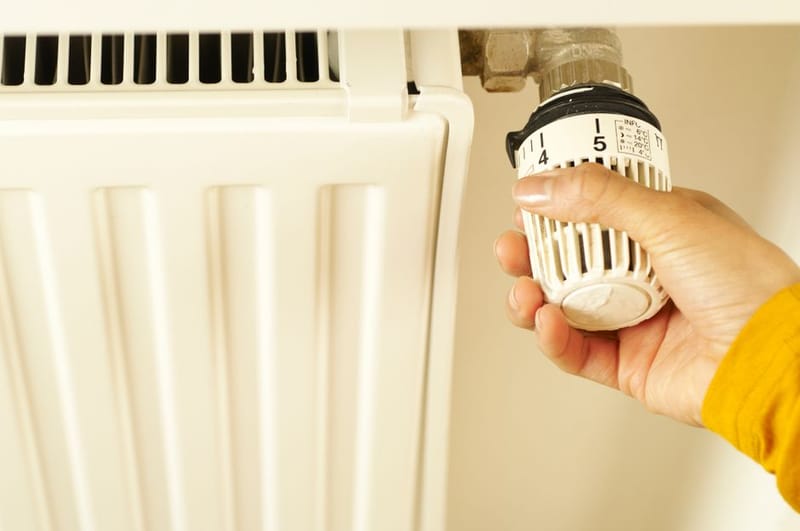
Weather compensation tuning is the single highest-impact heat pump efficiency lever. Most UK heat pumps run at higher flow temp than necessary because installers commission conservatively. This guide covers the WC curve concept, step-by-step tuning, and common mistakes for the major UK heat pump brands.
What weather compensation does
Why it matters for SCOP.
Weather compensation automatically adjusts the heat pump's flow temperature (water leaving the heat pump to your radiators / UFH) based on the outdoor temperature:
- Cold outdoor: property needs more heat, so flow temp goes UP (45-55C).
- Mild outdoor: property needs less heat, so flow temp goes DOWN (28-38C).
The relationship between outdoor temp + flow temp is the weather compensation curve - a linear or piecewise line plotting flow temp vs outdoor temp.
Why this matters for SCOP:
- Heat pump COP improves significantly at lower flow temp (~2% per 1C lower).
- A heat pump running at 35C average flow vs 50C average = ~30% higher SCOP.
- Running at lowest flow temp that maintains comfort = optimal efficiency.
Default vs optimised curves:
- Installer default: typically ~5C higher than necessary (commissioned conservatively to avoid complaints).
- Optimised curve: delivers same comfort at lower flow temp = significantly better SCOP.
Reading + adjusting your WC curve
Per-brand instructions for major UK heat pump models.
Vaillant aroTHERM (Multimatic VRC700 controller + Vaillant Connect app):
- Controller menu: Settings > Heating Circuit > Heat Curve.
- Curve value: numeric 0.2-1.6 (lower = flatter, higher = steeper).
- Offset: +/-3C absolute shift.
- Tuning: reduce curve by 0.1; run 3-5 days; repeat.
- App access: Vaillant Connect (cloud) shows curve graphically + allows remote tuning.
Daikin Altherma R (Onecta app, installer settings access required):
- Some Daikin units restrict WC access to installer; ask for installer code at commissioning.
- Controller menu: User Settings > Space Heating > Weather Compensation > Slope + Offset.
- Slope: numeric value (lower = flatter); Offset: +/-5C.
- Tuning: reduce slope by 0.05 increments; run 3-5 days; repeat.
Octopus Cosy 6 (Octopus app):
- Octopus app > Cosy 6 > Settings > Heating Curve.
- Curve presets: 'Eco', 'Standard', 'Boost' + custom mode.
- Tuning: switch from Standard to Eco; monitor 3-5 days; further reduce via custom curve.
Mitsubishi Ecodan (MELCloud app):
- MELCloud > Settings > Flow Temperature Control > Weather Compensation.
- Curve points: editable at -10C, +5C, +10C, +15C, +20C outdoor.
- Tuning: reduce each curve point by 1C; run 3-5 days; repeat.
NIBE F2120 / S2125 (myUplink app):
- myUplink > Settings > Heating > Climate System > Curve.
- Curve: 1-15 (higher = steeper).
- Offset: -10 to +10 (1C increments).
- Tuning: reduce curve by 1; run 3-5 days; repeat.
Step-by-step tuning process
Five-step framework that works for all UK heat pump brands.
- Note current curve settings. Screenshot from app or controller. Record gradient + offset values.
- Verify current operation. Note current SCOP from app (rolling 7-day) + current room temperatures + aux heater hours.
- Make a single small adjustment. Reduce curve gradient by 0.1 (or equivalent 1C flow temp reduction). Don't change multiple parameters simultaneously.
- Wait 3-5 days. Heat pump needs time to settle at new flow temp + property thermal mass needs to equilibrate. Don't judge after 24 hours.
- Evaluate:
- Rooms still reach setpoint comfortably? Continue to next reduction.
- Rooms struggling to reach setpoint? Back off 0.1 + STOP - you've reached the optimal point.
- Aux heater hours increased? Back off 0.1; aux heater firing means heat pump can't meet demand at current curve.
Typical UK 3-bed reaches optimal curve after 3-5 reduction cycles = ~3-5 weeks of tuning during a cold spell. Final SCOP improvement: 0.2-0.4 points = GBP 100-200/year saving.
Common mistakes
Six patterns that ruin WC tuning.
- Tuning during mild weather only. Curve reduction shows no impact at +10C; reveals comfort problems at -3C. Tune during winter.
- Changing too fast. Multiple adjustments per week prevent proper evaluation. Single 0.1 reduction per 3-5 days minimum.
- Ignoring aux heater hours. Best efficiency metric - aux heater firing more often = WC curve too aggressive. Watch this number closely.
- Confusing room thermostat with WC curve. Room thermostat sets target temperature (typically 19-21C); WC curve controls FLOW temp at the heat pump (28-55C range). Both contribute to efficiency; different controls.
- Tuning when system has other issues. If radiators are undersized OR insulation is poor, WC tuning won't compensate. Address underlying issues first.
- Not maintaining records. Always note before/after settings + 7-day SCOP comparison. Allows revert if a change makes things worse + builds knowledge over multiple tuning cycles.
When professional WC tuning service is worth it
Cost-benefit for paid retune.
Some installers + specialists offer paid WC tuning visits (~GBP 150-300/visit):
- Worth it when: heat pump SCOP currently 2.5-3.0 (significant room for improvement); homeowner uncomfortable adjusting controller; multi-zone or hybrid system complexity beyond DIY tuning.
- Not worth it when: heat pump SCOP already 3.5+ (limited remaining improvement); homeowner comfortable with manufacturer app + 3-5 day evaluation cycles; standard single-zone install.
What professional retune delivers:
- Comprehensive WC curve optimisation across multiple outdoor temperatures.
- Multiple-zone curve coordination (if multi-zone install).
- DHW priority + Legionella scheduling review.
- Anti-cycling settings + minimum runtime tuning.
- Aux heater suppression configuration.
- Written commissioning report.
Typical SCOP improvement from professional retune: 0.4-0.7 points on poorly-tuned starting points = GBP 200-400/year saving = payback within 1-2 years.