Heat Pump for 1960s/70s Ex-Council UK 2026
Heat pump for UK 1960s-70s ex-council 2026: system-build construction, typical heat loss, modernisation pathway, install considerations.
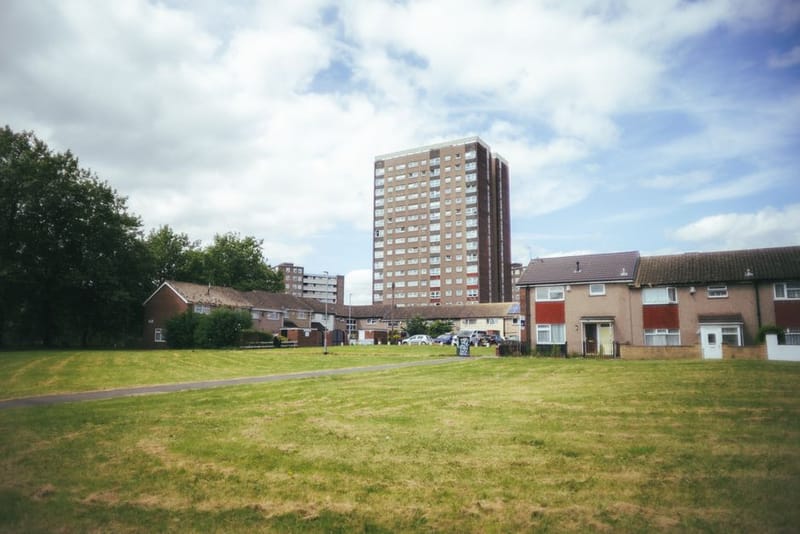
UK 1960s-70s ex-council houses face distinctive heat pump install considerations - non-standard construction, original aluminum windows, flat roofs, often-undersized radiators. This guide covers the modernisation pathway + cost framework for these ~1.5 million UK properties.
Typical 1960s-70s UK ex-council construction
What makes this stock distinctive.
UK 1960s-70s council-built houses share construction features that affect heat pump install:
- Concrete or steel frame with cavity brick infill walls. Cavity often 50mm + uninsulated originally.
- Suspended concrete floors ground floor (not timber suspended as 1930s) - retrofit floor insulation more invasive.
- Flat or low-pitch roof often with poor insulation (50-100mm original). Hard to retrofit to 270mm without raised structure.
- Large picture windows with original aluminum frames (very high U-value 5-7 W/m2K). Often replaced 1990s+ with UPVC.
- Non-standard system builds in some areas (Wimpey No-Fines, Easiform, Reema, Sectra). These need specialist insulation approach - standard cavity fill may not apply.
- Original heating typically warm air central heating or panel radiators sized for 70-80C flow temp.
Maintenance state varies massively - some ex-council properties extensively modernised 1990s+ (cavity fill, double glazing, modern radiators); others largely original. Survey at install time identifies actual condition.
System-built properties - special considerations
Wimpey No-Fines, Easiform, Reema.
Some 1960s-70s council properties were built using system-build methods designed for fast construction at scale:
- Wimpey No-Fines: concrete-poured walls (no aggregate fines). Difficult cavity wall insulation; external wall insulation often the only practical option.
- Easiform: in-situ concrete with timber-framed cavity. Cavity insulation possible but requires specialist surveyor + careful method selection.
- Reema: reinforced concrete + asbestos cement panels (older variants). Asbestos handling required for any structural work.
- Sectra: precast concrete panel system. External wall insulation works; internal cavity work problematic.
If property is system-built:
- Get specialist surveyor BEFORE assuming standard insulation upgrade works.
- External wall insulation (EWI) typically the practical upgrade option - GBP 8,000-15,000 for typical 3-bed (more expensive than cavity fill but works on system-built).
- Heat pump install economics may be marginal without insulation upgrade.
- Some system-built properties have local authority retrofit programmes - check with council before private install.
Windows + glazing - the high-impact upgrade
Original aluminum frames are heat-loss disasters.
1960s-70s council properties typically had aluminum-framed windows with single glazing - high U-value (5-7 W/m2K) + significant thermal bridging through metal frames.
State of windows in current ex-council properties:
- Original aluminum single-glazed: ~15% of ex-council stock; rare survivors today. High heat-loss source.
- 1980s-1990s aluminum double-glazing: ~25%. Still significant thermal bridging via frames.
- 1990s-2010s UPVC double-glazing: ~40%. Adequate; heat pump install doesn't require upgrade.
- 2010s+ modern A-rated UPVC: ~20%. Excellent; supports low-temp heat pump operation.
Window upgrade economics:
- If still aluminum: replace BEFORE heat pump install (heat-loss reduces by 2-4 kW typical, saving GBP 1,500-3,000 on heat pump unit + ongoing running cost).
- If 1990s UPVC: marginal upgrade case; depends on condition.
- If modern UPVC: no action needed.
Cost: GBP 4,000-10,000 typical 3-bed replacement. ECO4 funding may cover for eligible households.
Flat / low-pitch roof considerations
Insulation strategy differs from pitched.
Many 1960s-70s ex-council properties have flat or low-pitch roofs (vs pitched roofs of earlier + later UK stock):
- Flat roof insulation install: warm-roof or cold-roof methods. Warm roof: rigid insulation board on top of existing roof + new waterproof membrane (GBP 4,000-10,000 for typical 3-bed). Cold roof: insulation between/below roof joists internally (GBP 2,000-5,000).
- Low-pitch roof (15-30 degrees): standard loft insulation possible but ceiling void often shallow. Insulation upgrade to 270mm may require raised joists or fitting between rafters (warm roof).
- U-value impact: uninsulated flat roof ~3.0-4.0 W/m2K (very poor); upgraded warm roof ~0.18 W/m2K (excellent).
- Heat demand reduction: ~1.5-2.5 kW for typical 3-bed = heat pump sizing reduction of 1-2 kW + significant running cost saving.
Flat roof insulation upgrade often the highest-value single intervention for 1960s-70s ex-council properties.
Radiator + heating system upgrades
Replace undersized + outdated systems.
Original 1960s-70s council heating systems often involved warm air central heating (now obsolete) or panel radiators sized for 70-80C flow temp.
- Warm air central heating (Sonex, Wesco, original British Gas): incompatible with heat pump. Requires full hydronic system install (pipework + radiators) = significant additional cost (GBP 3,000-6,000 typical).
- 1970s-1980s panel radiators: sized for high flow temp; 30-50% output at heat pump 35-45C flow. Replace with oversized K2 double-panel + fins typically required.
- 1990s+ replacement radiators: may be adequately sized; assess room-by-room via heat-loss calc.
For ex-council properties with warm air heating, the full heating system retrofit (pipework + radiators + cylinder + heat pump) effectively means a new heating install from scratch - cost framework GBP 12,000-18,000 pre-BUS, GBP 4,500-10,500 net.
ECO4 funding pathway
Often available for ex-council properties on EPC D-G.
ECO4 (Energy Company Obligation, runs through 2026) is a particularly good fit for 1960s-70s ex-council properties:
- Eligibility criteria favour this stock: EPC D-G (most ex-council properties hit this); fuel poverty / qualifying benefits (Universal Credit, Pension Credit, etc.); some local authority partnerships for ex-council areas.
- Combined funding: ECO4 can cover insulation upgrades + heat pump install for eligible households at no cost to homeowner.
- Local authority partnerships: some councils have specific ex-council retrofit programmes via ECO4 Flex.
- Application via approved installer: ECO4-registered installer assesses eligibility + handles funding application.
For non-eligible owner-occupiers of ex-council properties: standard BUS grant (GBP 7,500) for heat pump install + Great British Insulation Scheme for insulation. Combined private cost typically GBP 4,500-11,500 net.
Modernisation pathway
Sequence of upgrades for best outcome.
- Surveys first: EPC assessment, cavity wall inspection (or system-build identification), asbestos survey, glazing condition.
- Envelope upgrades: cavity wall fill (or EWI for system-built), flat roof insulation upgrade, glazing replacement (if still original or 1980s aluminum).
- Heating system review: assess existing radiators + check if warm air central heating present.
- Heat-loss calc: MCS-certified survey after envelope upgrades.
- Heat pump install: sized to upgraded property; radiator upgrades as needed.
- Smart tariff + ongoing optimisation: Octopus Cosy + WC curve tuning post-commissioning.
Total project timeline: 6-12 months from initial survey to commissioned heat pump. Bundle into ECO4 funding application where eligible.