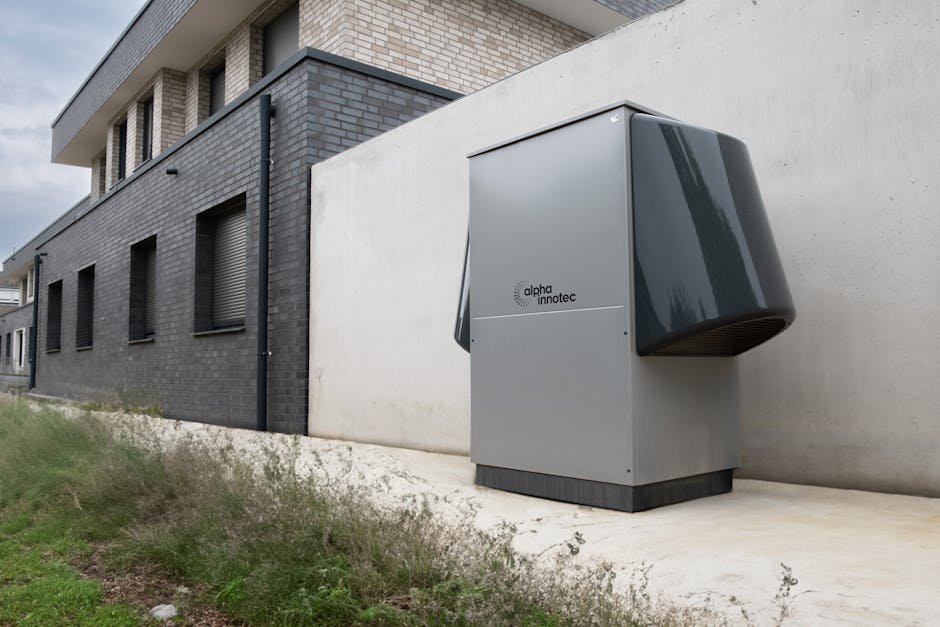
Boiler Upgrade Scheme 2026: Complete UK Grant Guide
How the £7,500 BUS grant works in 2026, who qualifies, what changed under v5 on 28 April, and the £9,000 oil/LPG uplift expected from July.
If you are thinking about replacing a gas, oil, LPG or direct-electric heating system with a [heat pump](/blog/heat-pump-cost-uk-2026/), the Boiler Upgrade Scheme is the main UK grant you will encounter. It has been running since 23 May 2022, and 2026 is the year it gets its largest set of changes since launch — bigger grants for off-gas-grid homes, looser eligibility, and a longer runway. This guide pulls together what the rules actually look like today, where they differ from what older guides describe, and what to confirm before you commission an installer.
We focus on what is in the official Ofgem guidance and what DESNZ has formally announced, and we flag everything that is currently expected but not yet legally in force. Last reviewed: 8 May 2026.
What is the Boiler Upgrade Scheme?
The headline grant, who runs it, and what it covers
The Boiler Upgrade Scheme (BUS) is a UK government grant that subsidises the up-front cost of low-carbon heating in England and Wales. It is administered by Ofgem, with policy and legislation owned by the Department for Energy Security and Net Zero (DESNZ). The scheme opened on 23 May 2022 and has so far processed tens of thousands of voucher applications.
BUS is what the UK government uses to nudge homeowners off fossil-fuel heating without paying the full cost of replacement. The grant goes to your installer as an upfront discount on the quote and invoice, not to you as a cheque after the fact — that point trips up a lot of first-time applicants, and we cover the implications later in this guide.
BUS covers four heat pump and biomass technologies: air-to-water heat pumps, ground-source heat pumps, water-source heat pumps, and (from 28 April 2026) air-to-air heat pumps and exhaust-air heat pumps. Biomass boilers are eligible too, but only in rural homes that are not connected to the gas grid.
How much you can get in 2026
Grant amounts by technology
BUS grants are flat amounts per qualifying installation, not means-tested and not capped on income. They are the same whether you live in a £200,000 terrace or a listed manor — what matters is the property type, the technology, and (for biomass) the location.
BUS grant amounts as of 8 May 2026
| Specification | Value |
|---|---|
| Air-to-water heat pump | £7,500 |
| Ground-source heat pump | £7,500 |
| Water-source heat pump | £7,500 |
| Air-to-air heat pump (residential only) | £2,500 — added 28 April 2026 |
| Exhaust-air heat pump | Eligible — added 28 April 2026 |
| Biomass boiler | £5,000 — rural, off-gas-grid only |
| £9,000 uplift for oil/LPG homes | Expected July 2026 — see caveat below |
Who qualifies for the BUS
Property type, location, and technology eligibility
BUS eligibility hinges on three things: where the property is, what kind of property it is, and what your existing heating system is. None of them depends on your income.
Scotland, Wales-only, and Northern Ireland have separate schemes — see the section below. Welsh residents can use BUS or the Welsh Nest programme; Scottish and NI residents cannot apply for BUS at all.
Owner-occupied homes, private rentals (with the property owner applying), and small commercial buildings are all in scope. New-build homes are excluded with narrow exceptions.
Replacing gas, oil, LPG, coal, or direct-electric heating is fine. Replacing an existing heat pump or biomass boiler is not — BUS funds first-time low-carbon heating, not upgrades.
If a previous owner already claimed BUS or a predecessor scheme on the same property, you cannot claim again.
The Microgeneration Certification Scheme is the gating credential. v5 of the BUS guidance writes this into the definition of 'installer' explicitly.
Both the brand/model and the installer must be on MCS's certified lists when the work is commissioned.
Where a valid EPC exists it must still be submitted with the application; where one does not, your installer provides alternative evidence such as a recent utility bill or property survey.
What changed on 28 April 2026 (v5 guidance)
BUS guidance v5 vs v4.1 — the practical differences
Ofgem refreshes the BUS scheme guidance periodically as DESNZ tweaks the regulations. Version 4.1 had been the live document since 9 April 2025; version 5 came into force on 28 April 2026 and now governs every application that is 'properly made' on or after that date. Older guides that quote v4.1 rules — particularly around EPCs and air-to-air eligibility — are out of date.
'Properly made' is Ofgem's term of art: an application is only properly made once Ofgem has received all the required information and the homeowner has provided consent and identity verification. The properly-made date, not the date you signed the installer's quote, is what determines which version of the guidance applies.
Under v4.1, applications failed without a valid EPC. Under v5, where no EPC exists the installer can submit alternative evidence; if you do have one, it must still be included.
Residential properties only. Air-to-air units cannot do hot water on their own, so they suit specific use cases — typically homes already running a separate hot-water source.
A niche category that uses warm extract air as a heat source. Eligible from 28 April under v5.
DESNZ extended BUS as part of the Warm Homes Plan. The GOV.UK 'Find a grant' page still lists 31 December 2027 as a closing date — that reflects the original regulatory window, not the extension. The 2030 commitment is a policy statement; check Ofgem for the regulated end date that applies to your application.
Installers can no longer present BUS as a refund or rebate that the homeowner sees separately. The grant is a line on the customer-facing paperwork.
v5 codifies 'installer' as a person certified by MCS. There is no informal qualification route.
How to apply: the installer-claimed model
BUS does not work like a tax credit — your installer drives the paperwork
One of the most common misconceptions about BUS is that homeowners apply, get approved, and then go shopping. That is not how it works. BUS is an installer-claimed grant: the [MCS-certified installer](/blog/best-heat-pump-installers-uk-2026/) applies on your behalf, takes the £7,500 (or £2,500 for air-to-air, or £5,000 for biomass) off the price, and recovers the money from Ofgem after the work is done. Your role is to choose the right installer and provide consent.
That has practical implications. You cannot lock in a grant before you have an installer. You cannot use BUS as a deposit. And you cannot apply for BUS yourself if your installer is not MCS-certified — even if the kit they want to fit is on the MCS product list.
Get a survey from at least two MCS-certified installers
Quotes for heat pumps vary widely because the up-front design work — heat-loss calculation, radiator sizing, hot-water cylinder spec — is doing most of the work. Two or three quotes is the floor, not the ceiling.
Confirm the BUS line on the quote
v5 requires the grant to appear as an upfront discount on the customer-facing quote and invoice. If you cannot see a £7,500 (or £2,500/£5,000) line item, ask why.
Provide consent and identity verification
The installer's BUS application is only 'properly made' once Ofgem has all the required data and your verified consent. The properly-made date sets which version of the rules apply to you.
Schedule the installation within the voucher window
BUS vouchers have a finite validity. Confirm the deadline with your installer and pin the install date to it.
Sign off on commissioning paperwork
The installer registers the work with MCS and submits the final claim to Ofgem. The grant is then paid to the installer (which is why it has already been deducted from your bill).
Outside England and Wales? Use the right scheme
Scotland, Northern Ireland, and the Welsh-only Nest programme
BUS is one of four UK heat-pump funding programmes. The other three are devolved or regional. If you live outside England (or you live in Wales but qualify for income-tested support), the right starting point is not BUS.
Scotland — Home Energy Scotland
Up to £7,500 grant matching BUS, plus an optional interest-free loan up to £7,500, plus a £1,500 rural-and-island uplift. Funding is first-come, first-served, and you have nine months from offer to complete the install. Scottish residents are not eligible for BUS.
Home Energy ScotlandWales — Nest (Warm Homes)
Welsh Government programme delivering free heat pumps, insulation, and other energy improvements to eligible low-income households. Means-tested, unlike BUS. Welsh residents can choose between Nest (if eligible) and BUS — usually Nest if you qualify, BUS otherwise.
GOV.WALES — NestNorthern Ireland — NISEP
Funded by a Public Service Obligation on electricity bills, delivered by 11 Scheme Managers regulated by the Utility Regulator. At least 80% of funding is reserved for vulnerable or 'priority' customers. First-come, first-served. NI residents are not eligible for BUS.
Utility Regulator NIWhat 'extended to 2030' actually means
Funding commitments vs the regulatory end date
You will see two different end dates for BUS in circulation right now. The GOV.UK 'Find a grant' service still lists a closing date of 31 December 2027 — that reflects the regulatory window written into the original BUS regulations. Coverage of the [v5](/blog/bus-guidance-v5-changes/) changes describes the scheme as 'extended to 2030' under DESNZ's Warm Homes Plan.
Both can be true at once. The 2030 commitment is a funding and policy statement — it tells installers and the supply chain that the grant will continue, which underwrites investment in MCS certification and product development. The 31 December 2027 date is what currently appears on the regulator-facing pages and is the date Ofgem will use until the regulations are formally amended to reflect the extension.
For a homeowner deciding whether to install in 2026 or wait, the practical implication is small: there is no scenario in the next eighteen months where the grant disappears. There may be scenarios where the grant amount changes (the £9,000 oil/LPG uplift is the obvious one), and there may be scenarios where eligibility tightens, but the headline £7,500 is the most stable feature of UK heat-pump policy right now.
Frequently asked questions
Do I apply for the Boiler Upgrade Scheme myself?
Is the £9,000 BUS grant available now?
Do I still need a valid EPC to apply for BUS?
Can I get BUS for an air-to-air heat pump?
Can I get BUS for a hybrid heat pump?
Does BUS cover the full cost of a heat pump?
Can landlords use BUS for rental properties?
What happens if my installer goes out of business mid-job?
Related guides
BUS guidance v5: what changed on 28 April 2026
A line-by-line comparison of v4.1 vs v5, including EPC rule removal, air-to-air eligibility, MCS language tightening, and the upfront-discount requirement.
The £9,000 BUS uplift for oil and LPG homes
Who qualifies, when it starts, what 'subject to formal DESNZ notice' means in practice, and how it interacts with the standard £7,500 grant.
How to find an MCS-certified heat pump installer
What to look for in a quote, how the MCS Data Dashboard works, and the questions to ask before you sign.
BUS vs HES vs Nest: which UK heat pump grant fits your situation
Side-by-side comparison of the four UK schemes — England/Wales BUS, Scotland HES, Welsh Nest, Northern Ireland NISEP — with worked examples.
Sources: Ofgem Boiler Upgrade Scheme overview and Property Owner Guidance (v5, in force from 28 April 2026); GOV.UK Find a Grant; DESNZ press briefing reported 21 April 2026; Home Energy Scotland Grant and Loan terms; GOV.WALES Nest Warm Homes programme; Utility Regulator Northern Ireland NISEP scheme list. Last reviewed 8 May 2026. Grant amounts and rules can change — always confirm current figures with Ofgem and your MCS-certified installer before committing to an installation.