Octopus Cosy 6 Review 2026: Cheapest UK Heat Pump?
The Cosy 6 is the obvious pick for typical 1–4 bed UK homes that have already had a heat-loss survey come back under 5.6kW: pricing is genuinely transparent, R290 refrigerant is the right choice for the next decade of F-gas regulation, and the 8-year warranty plus single-supplier accountability are genuinely valuable. The reservation is the SCOP at 65°C flow - older, draughtier homes that haven't done insulation upgrades will run on running costs noticeably higher than published figures suggest. Score 4.3/5.
Strengths
- All-in installed price from around £3,818 after the £7,500 BUS grant (July 2026) - among the most price-transparent UK heat pump packages on sale
- R290 refrigerant (GWP of 3) - future-proof against tightening F-gas regulation that will hit R32 alternatives
- 8-year product warranty plus 5-year labour, both backed by Octopus directly
Watch outs
- SCOP 3.4 at 50°C flow / 2.8 at 65°C flow - properties that can't run on low-flow temperatures will see materially higher running costs than headline figures suggest
- Capacity caps at properties with measured heat loss below 5.6kW - many UK semis and detached homes need the Cosy 9 or Cosy 12
- Hardware is Octopus-install-only - independent installers cannot fit one for you
- Heating capacity 6kW nominal (homes with heat loss <5.6kW)
- Refrigerant R290 (propane, GWP of 3)
- SCOP at 50°C flow 3.4
- SCOP at 65°C flow 2.8
- Sound power level 58–60 [dB](/blog/heat-pump-noise-levels-uk-2026/)(A) LWA
- Outdoor unit dimensions 855mm W × 1125mm H
We may earn a commission if you buy through this link - it never changes the price you pay or our editorial verdict.
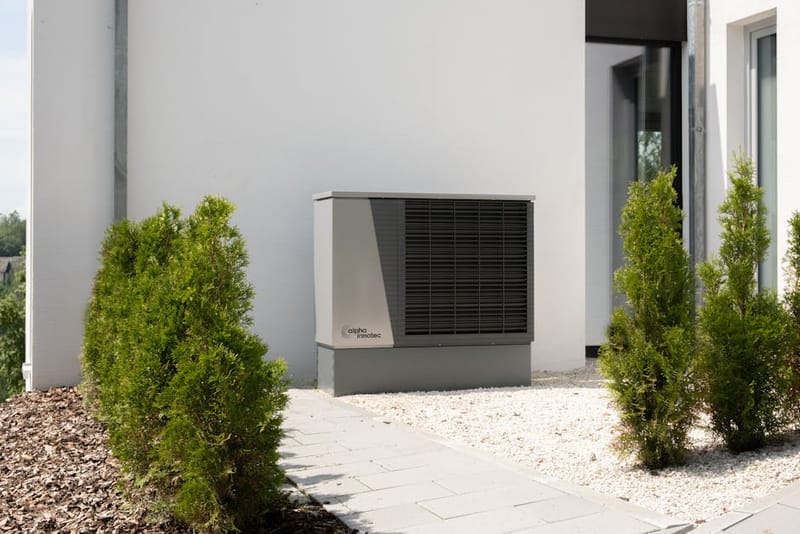
The Octopus Cosy 6 is the UK's most price-transparent air source heat pump in 2026: a 6kW R290-refrigerant unit, fully installed including hot water cylinder and Cosy Pod sensors, for a net price starting from around £3,818 after the £7,500 Boiler Upgrade Scheme grant (pricing as of July 2026). That headline figure is unusually clean by UK heat pump standards - most installers quote within a £6,000–£12,000 pre-grant range and only firm up after a survey. This review covers what the Cosy 6 actually delivers, where the SCOP figures need scrutiny, and how it compares to the Cosy 9 and Cosy 12 within the same range. From 21 July 2026, an enhanced £9,000 grant applies where the heat pump replaces oil or LPG heating in an off-gas-grid home (England and Wales).
Who the Cosy 6 Is For
The headline constraint is the heat-loss number, not the bedroom count. Octopus markets the Cosy 6 as suitable for properties with measured heat loss below 5.6kW. In practice that lines up with:
- Modern 3-bed semis (post-2010 build) with double glazing and 270mm loft insulation, regardless of whether the loft is converted
- Older 2-bed terraces with at least one floor of insulation upgrades - typically loft + EWI or solid-wall internal insulation
- Well-insulated 4-bed detached homes - possible, but a survey often pushes these into Cosy 9 territory
The properties that fall outside the Cosy 6's envelope are the ones most likely to be expensive surprises: pre-1990s detached houses without cavity wall insulation, listed buildings, large period semis with original sash windows, anywhere the heat-loss survey returns 6.5kW+. Octopus's surveyor will route you to the Cosy 9 (heat loss up to ~9kW) or Cosy 12 (up to ~12kW) - both at materially higher fitted prices.
Hardware: What You Get
The R290 refrigerant choice is significant. Most current UK heat pumps use R32 (GWP of 675) or older R410A (GWP of 2088). R290 is propane - a natural refrigerant with a GWP of 3, vanishingly small. The EU's F-gas regulation tightens through the late 2020s; UK regulation is on a similar track. Heat pumps installed today on R32 will likely face servicing-cost penalties later in the 2030s as recovered refrigerant becomes harder and more expensive to replace; R290 systems will not. This is a useful 10-year-cost differential that's easy to miss on the day-one price comparison.
The 8-year warranty is also generous for the UK heat pump market, where standard manufacturer warranties typically run 3–7 years (often with extensions available through paid service plans, and sometimes only when the unit is fitted by an accredited installer). Octopus's 8-year-product-plus-5-year-labour combination, both supported directly by Octopus rather than via a third-party installer, is a meaningful piece of the value proposition. Always confirm specific competitor warranty terms on the manufacturer's own site - they vary by model and change year-to-year.
Running Costs: The SCOP Caveat
Octopus publishes the Cosy 6's SCOP as 3.4 at 50°C flow temperature and 2.8 at 65°C. SCOP (Seasonal Coefficient of Performance) is the average ratio of heat output to electricity input across a heating season - a SCOP of 3.4 means the unit delivers 3.4kWh of heat for every 1kWh of electricity drawn. Higher is better.
The catch: which figure applies to your home depends on what flow temperature your radiators were sized for. A traditional gas boiler runs at 70–80°C flow; radiators in older homes were sized assuming this. To run a heat pump at 50°C flow on those same radiators, the heating output drops by roughly 35%. There are two solutions: upsize the radiators (and accept the cost), or run the heat pump at higher flow (and accept the lower SCOP).
Realistic running cost on a 12,000kWh/year heating demand household:
- Cosy 6 at SCOP 3.4 (50°C flow, well-matched radiators): 3,529kWh of electricity per year. On the Cosy Octopus tariff with super-cheap windows, around £600–£800/year.
- Cosy 6 at SCOP 2.8 (65°C flow, original radiators): 4,286kWh of electricity per year. Same tariff, around £750–£1,000/year.
Both still beat a gas boiler at current 7p/kWh-equivalent gas prices for the same heat output, but the gap is much smaller in the high-flow scenario. The honest position: the Cosy 6 needs the radiators that suit it. Octopus's surveyor will tell you which radiators need upsizing - listen to that part of the quote carefully.
The Cosy Octopus Tariff Pairing
The Cosy 6 is sold heavily as a pair with the Cosy Octopus tariff - a heat-pump-friendly tariff with three super-cheap windows daily:
- 04:00–07:00
- 13:00–16:00
- 22:00–00:00
Plus a peak window (16:00–19:00) where rates lift above the standard daytime rate. The super-cheap rates are roughly 51% below the day rate. Octopus estimates households on the tariff save around £82/year versus its OctopusFixed standard product when running a typical heat pump.
The tariff is not exclusive to Octopus heat pump customers - air source, ground source, electric boiler, and electric radiator households all qualify, provided you have a SMETS2 (or one of Octopus's supported SMETS1) smart meter. So if you've already got a competitor's heat pump installed, you can still take this tariff. The reverse - a Cosy 6 owner not on Cosy Octopus - works fine but leaves the tariff savings on the table.
Where the Cosy 6 Falls Short
Three issues come up often enough to flag.
You can't independently install one. Octopus does not sell Cosy 6 hardware to third-party installers, plumbers, or DIY buyers. If you have a preferred local installer, they cannot fit a Cosy 6 - only Octopus's own engineering team can. That's fine for buyers who want the Octopus accountability, but it eliminates the option of getting competitive install quotes once you've decided on the hardware.
Service plan is a separate £9/month. Octopus recommends an annual service for warranty validity. The standard package is £9/month (£108/year), which adds 2.4% to the lifetime cost over 10 years. Some competitors include the first-year service free; some have similar paid service plans; either way, factor it in to total cost-of-ownership comparisons.
Cosy Pods are not a smart-thermostat replacement. The Cosy Pods are room-by-room temperature and humidity sensors - they tell the heat pump's controller what each room is doing. They are not a Honeywell evohome or tado° equivalent that gives you full per-room scheduling control. If you want zone-by-zone scheduling, you'll need to layer compatible smart TRVs on top, which Octopus's design assumes.
Cosy 6 vs the Larger Cosy 9 and Cosy 12
The Cosy 9 (9kW capacity, SCOP 3.6 @ 50°C / 3.0 @ 65°C) and Cosy 12 (12kW capacity, SCOP 3.9 @ 50°C / 3.3 @ 65°C) are the next steps up. The interesting pattern: each step up the range is more efficient at both flow temperatures, not just bigger. This reflects modulation behaviour - larger heat pumps run lower duty cycles in mild weather and reach higher seasonal averages.
If your heat-loss survey comes back at the boundary - say 5.4kW or 5.6kW - the Cosy 9 may be the smarter long-term buy even though it's more expensive day-one. The improved SCOP saves running cost over the unit's life, and you have headroom for a winter cold-snap year. If your heat loss is genuinely 4–5kW in a well-insulated home, the Cosy 6 is the right call and there's nothing gained from upsizing.
How the Buying Process Works
Postcode + property check
Octopus's online form asks for your postcode and property type. This routes you into the Cosy survey queue and confirms your eligibility for the £7,500 Boiler Upgrade Scheme grant. See our BUS grant guide for full eligibility detail.
Heat-loss survey
An Octopus surveyor visits to measure heat loss room-by-room, document existing radiator sizes, photograph the consumer unit, and check pipe routes. The survey is free if you proceed; some packages charge if you don't. The output is a fixed-price quote - no estimates, no 'subject to' clauses.
Quote and BUS grant pre-approval
The fixed-price quote includes the BUS grant pre-applied - Octopus claims the £7,500 from MCS on your behalf, you pay the net figure. The quote details which radiators (if any) need upsizing and the cost of doing so.
Install scheduling
Lead time runs 4–12 weeks depending on regional installer load. Most installs complete in 2–3 days; complex jobs (e.g. ground works for cylinder relocation) up to 5 days.
Commissioning and Cosy Octopus switch
Installer commissions the unit, registers the warranty, and walks you through the Cosy Pod controls. If you want the Cosy Octopus tariff, the switch is in-app and goes live within one billing cycle.
Frequently Asked Questions
Is the Cosy 6 really around £3,818 fully installed?
How long does the Cosy 6 last?
Will the Cosy 6 work with my existing radiators?
Can I use the Cosy Octopus tariff with a different heat pump?
How does the Cosy 6 compare to a Daikin or Vaillant?
What happens if Octopus stops doing heat pumps?
Bottom Line
The Cosy 6 is a strong recommendation for typical 1–4 bed UK homes that match its heat-loss envelope. The pricing is transparent in a market where transparency is rare, the R290 refrigerant choice is the right one for the next decade of regulation, and the warranty + single-supplier accountability are real advantages. Pair it with the Cosy Octopus tariff and you get coordinated hardware-and-tariff economics that are hard to assemble from independent suppliers.
The honest reservation is the SCOP at 65°C flow. If your home is older, draughtier, and has radiators sized for a gas boiler, listen carefully to the surveyor's radiator-upgrade recommendations. The headline running cost only holds if the install is set up to run at low flow. The £7,500 BUS grant detail is covered in our Boiler Upgrade Scheme 2026 guide - read it before booking the survey.
Get a fixed-price Cosy 6 quote
Octopus's survey is free if you proceed. Includes BUS grant pre-application and fixed-price quote - no estimates.