Vaillant vs Viessmann Heat Pump UK 2026
Vaillant vs Viessmann heat pumps UK 2026: engineering, range, warranty, installer network, pricing - which German major fits your install.
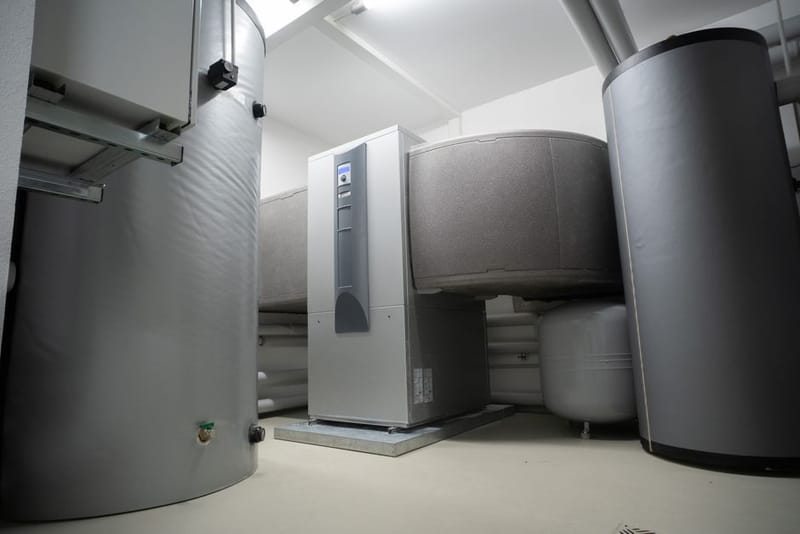
Vaillant and Viessmann are the two German heat pump brands UK households compare most often. Both have multi-decade UK presence, both offer R290-refrigerant 2026 units, both are reliable choices. This guide unpacks the meaningful differences across engineering philosophy, range, warranty, installer network + pricing so you can pick the right one for your install.
Brand positioning + engineering philosophy
Mid-market mass-engineering vs premium-build.
Vaillant is a German heating manufacturer focused on competitive mass-market installs. Across both gas boilers + heat pumps, the brand's identity is reliable engineering at competitive pricing - not the cheapest, not the most premium. The aroTHERM range is designed for high-volume MCS-installer deployment; design choices favour serviceability + installer familiarity.
Viessmann is a German heating manufacturer focused on premium build quality + long-service-life economics. The Vitocal range emphasises engineering quality (stainless steel internals, sophisticated controls, robust outdoor unit construction) that tends to outlast cheaper competitors. Purchase price is correspondingly higher, but operational reliability and service life typically follow.
This shows up in install experience: a Vaillant install is the most-installed UK option, with hundreds of MCS-certified Advance partners; a Viessmann install is rarer but typically commissioned by a dedicated Trained Installer with deeper product-specific knowledge.
Product range comparison
What sizes + refrigerant options each brand offers in UK 2026.
Vaillant aroTHERM (UK 2026 range):
- aroTHERM plus 3.5kW / 5kW / 7kW / 10kW / 12kW (R32 refrigerant; mass-market mainstay)
- aroTHERM SR 5kW / 7kW / 10kW (R290 refrigerant; premium variant with better cold-weather performance)
- aroTHERM split 5kW / 7kW / 10kW (split-system for new-build / major retrofit)
Viessmann Vitocal (UK 2026 range):
- Vitocal 100-A 4kW / 6kW / 8kW / 10kW (R32; entry tier)
- Vitocal 150-A 7kW / 10kW (R32; mid-tier with enhanced controls)
- Vitocal 200-A 4kW / 6kW / 8kW / 10kW / 14kW (R290; premium with stainless steel internals)
- Vitocal 250-A 10kW / 14kW (R290; high-output for larger properties)
Both brands cover the typical UK 3-bed sweet spot (5-10kW). Viessmann's Vitocal 200-A R290 is the brand's flagship for mainstream UK installs; Vaillant's aroTHERM SR R290 is the equivalent. Both compete head-to-head on SCOP + cold-weather performance.
Warranty + service comparison
Vaillant marginally edges Viessmann on baseline warranty length.
Vaillant warranty (UK 2026): 7 years on heat pump units when installed by a Vaillant Advance partner + annual service condition met. The 7-year baseline is one of the strongest in the UK market for any heat pump brand.
Viessmann warranty (UK 2026): 5 years baseline + extendable to 10 years via Viessmann Trained Installer service contract. The 10-year extended cover is more comprehensive than Vaillant's 7-year but requires the ongoing service-contract commitment.
Both manufacturers require annual servicing by a brand-trained engineer as a warranty condition (universal across UK heat pump brands - see our servicing guide for the full picture).
Service network depth: Vaillant has more UK Advance partners (~600+ active MCS-installer partnerships) vs Viessmann's ~200 Trained Installers. For rural locations, this matters - Vaillant typically has an Advance partner within 30 minutes; Viessmann coverage can require driving further.
Pricing comparison (UK 2026 installed)
Vaillant runs 8-15% cheaper installed for equivalent capacity.
Typical UK 2026 installed prices for an 8 kW heat pump (typical 3-bed semi heat demand) before BUS grant:
- Vaillant aroTHERM plus 7kW (R32) installed: GBP 10,500-12,500
- Vaillant aroTHERM SR 7kW (R290) installed: GBP 11,500-13,500
- Viessmann Vitocal 150-A 7kW (R32) installed: GBP 11,500-13,000
- Viessmann Vitocal 200-A 8kW (R290) installed: GBP 12,500-15,500
After the £7,500 BUS grant, net cost ranges: From 21 July 2026, an enhanced £9,000 grant applies where the heat pump replaces oil or LPG heating in an off-gas-grid home (England and Wales).
- Vaillant aroTHERM plus: ~GBP 3,000-5,000 net
- Vaillant aroTHERM SR: ~GBP 4,000-6,000 net
- Viessmann Vitocal 150-A: ~GBP 4,000-5,500 net
- Viessmann Vitocal 200-A: ~GBP 5,000-8,000 net
Premium-tier Viessmann (200-A R290) runs ~GBP 1,500-2,500 above premium-tier Vaillant (aroTHERM SR R290) for equivalent capacity. Whether that's worth it depends on whether the build-quality + extended-warranty pay back over the unit's service life.
Smart-home + control comparison
Both offer manufacturer apps; Viessmann's controls go deeper.
Vaillant myVAILLANT app: covers the standard smart-home features (scheduling, weather compensation, holiday mode, basic energy monitoring). Solid mobile UX, well-integrated with Vaillant's broader product range (gas boilers, ventilation).
Viessmann ViCare app: similar core feature set + slightly deeper energy monitoring + multi-device dashboarding. Viessmann's hardware controls (proprietary control unit + RGB display panel) are noticeably more sophisticated than Vaillant's, which matters for users who want to fine-tune operation directly at the unit rather than via app.
For Home Assistant + Modbus integration (Tier 3 of our smart home guide), both brands have well-maintained community integrations. Neither has a clear advantage at the deep-integration tier.
Which to pick: decision framework
Three scenarios, three answers.
Pick Vaillant if:
- You want the best installer coverage in your area (~600 Advance partners UK-wide).
- You're cost-sensitive on upfront price - Vaillant runs 8-15% cheaper installed for equivalent capacity.
- You prefer the simpler 7-year flat warranty over an extendable service-contract structure.
- You're going for mid-market R32 (aroTHERM plus) - Vaillant dominates this tier in the UK.
Pick Viessmann if:
- You want premium build quality + the extended 10-year warranty option.
- You're comfortable with a slightly narrower service network (~200 Trained Installers - still solid coverage in cities).
- You want deeper control sophistication (proprietary control unit + advanced energy monitoring).
- You're going for the flagship R290 Vitocal 200-A and the build-quality difference is worth the price premium.
Skip both and look at alternatives if:
- Neither has an installer within 60 minutes of your postcode - consider Octopus Cosy 6, Mitsubishi Ecodan, or Daikin Altherma instead.
- You want the most-integrated UK smart-home + tariff option - Octopus Cosy 6 wins on that axis.