Heat Pump Weather Compensation Explained UK 2026
Heat pump weather compensation UK 2026: how curves work, slope + offset adjustments, when to tune yourself vs leave to installer, common misconfigurations.
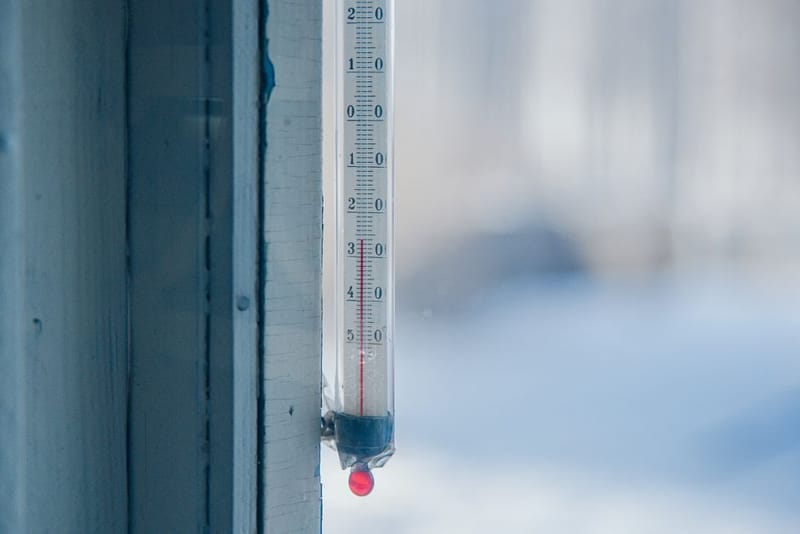
'Weather compensation' is heat pump jargon for one of the most-impactful efficiency settings - but UK households often leave it on installer defaults + miss 10-20% of available SCOP. This guide explains how the curve works, what slope + offset mean, when to tune yourself vs leave to the installer, and the common misconfigurations that cost real money.
What weather compensation does
Auto-adjusts flow temperature based on outdoor conditions.
Heat pumps deliver heat to your property at a specific flow temperature (the temperature of the water leaving the heat pump + entering radiators or UFH). The right flow temperature varies by outdoor temperature:
- Mild day (+10°C outdoor): low flow temp (25-30°C) is enough - minimal heat loss from property.
- Cold day (-5°C outdoor): higher flow temp (40-50°C) needed - more heat loss requires more delivered heat per square metre of emitter.
Without weather compensation, the heat pump runs at a constant flow temperature regardless of conditions - typically the highest needed for worst-case cold, which is wasteful in mild conditions + drops SCOP significantly.
With weather compensation, the heat pump's controller auto-adjusts flow temperature using a 'compensation curve' - a graph mapping outdoor temperature to required flow temperature. The result: continuously-optimised flow temperature, maximised SCOP, no manual schedule intervention needed for normal operation.
Slope + offset: the two parameters that matter
Steepness of curve + vertical shift across all outdoor temps.
The compensation curve is described by two parameters:
Slope (or 'gradient'): how steeply flow temperature rises as outdoor temperature drops.
- Steep slope (1.0-1.5): flow temp rises quickly with cold weather. Best for properties with high heat loss (older walls, large windows, tight radiators).
- Medium slope (0.5-1.0): typical UK retrofit. Suits properties with reasonable insulation + standard radiators.
- Shallow slope (0.3-0.5): flow temp rises slowly with cold weather. Best for well-insulated properties with underfloor heating.
Offset (or 'parallel shift'): shifts the entire curve up or down by a constant amount.
- Positive offset (+1 to +5°C): flow temp uniformly higher - use if the property runs persistently too cool.
- Negative offset (-1 to -5°C): flow temp uniformly lower - use if the property runs persistently too warm or you want lower running cost (with monitoring for comfort).
Most manufacturer controllers expose both as numeric settings. Vaillant uses 'heating curve' + 'parallel offset'; Mitsubishi uses 'heat curve' + 'shift'; Daikin uses 'WC slope' + 'shift'.
When to tune (and when not to)
Tune after 2-3 weeks of real performance, not before.
Wait before tuning if:
- The heat pump was commissioned less than 2-3 weeks ago. The property's thermal mass needs time to stabilise; first-week behaviour isn't representative.
- You haven't experienced a representative range of outdoor temperatures yet (need at least one cold spell + some mild days to compare curve behaviour at different points).
- The system is currently delivering acceptable comfort + the bills are reasonable. Don't fix what isn't broken.
Tune when:
- Rooms persistently too cool / warm despite the schedule looking correct.
- Heat pump runs constantly without reaching target temperature (slope likely too shallow OR property heat loss exceeds installer's estimate).
- Heat pump short-cycles (turns on/off frequently) in mild weather (slope too steep OR property over-heating then shutting down).
- Bills are higher than installer's payback estimate - check whether weather comp is actually active (some installers forget to enable it during commissioning).
Common misconfigurations + their symptoms
Four wrong-curve patterns + how to identify each.
1. Curve too steep (slope too high):
- Symptoms: rooms over-heat in mild weather + outdoor unit cycles on/off frequently in mild weather. Indoor temperature swings.
- Fix: reduce slope by 0.1-0.2. Re-observe over a week.
2. Curve too shallow (slope too low):
- Symptoms: rooms cold in extreme cold weather + heat pump runs constantly but can't catch up. Auxiliary electric heating activates.
- Fix: increase slope by 0.1-0.2. Re-observe over a week.
3. Offset too low:
- Symptoms: rooms uniformly cooler than thermostat setting across all weather conditions.
- Fix: increase offset by 1-2°C. Re-observe over a week.
4. Weather compensation not enabled at all:
- Symptoms: heat pump runs at constant flow temperature regardless of weather. Bills significantly higher than expected. Manufacturer app shows flat-line flow temp.
- Fix: enable weather compensation mode in controller settings. This single change can improve SCOP by 10-20%.
If multiple symptoms compound (cold rooms + short-cycling + high bills) - the install may have a more-fundamental sizing or commissioning issue. Call the original installer for an investigation visit.
Practical tuning approach
Three-step iterative process over 3-4 weeks.
Week 1-2: observe baseline. Note indoor temperature in each room at different times of day + outdoor temperatures. Don't change controller settings. Build a sense of where comfort + efficiency are vs where they should be.
Week 3: make one adjustment. Identify the most-meaningful symptom (e.g. 'lounge runs cool in evening cold weather'). Adjust the curve slightly (±0.1 slope OR ±1°C offset). Document the change + date.
Week 4+: observe + iterate. Allow at least one week for the property to settle into the new curve. Re-check symptoms. Make another small adjustment if needed.
Don't change multiple parameters at once - you won't be able to attribute outcome to specific changes. Patience + iteration produce better results than aggressive single-shot tuning.