Heat Pump + Underfloor Heating Retrofit UK 2026
Heat pump + underfloor heating retrofit UK 2026: lift-the-floor vs overlay vs wet-vs-dry options, room-by-room costs, when UFH is worth retrofitting.
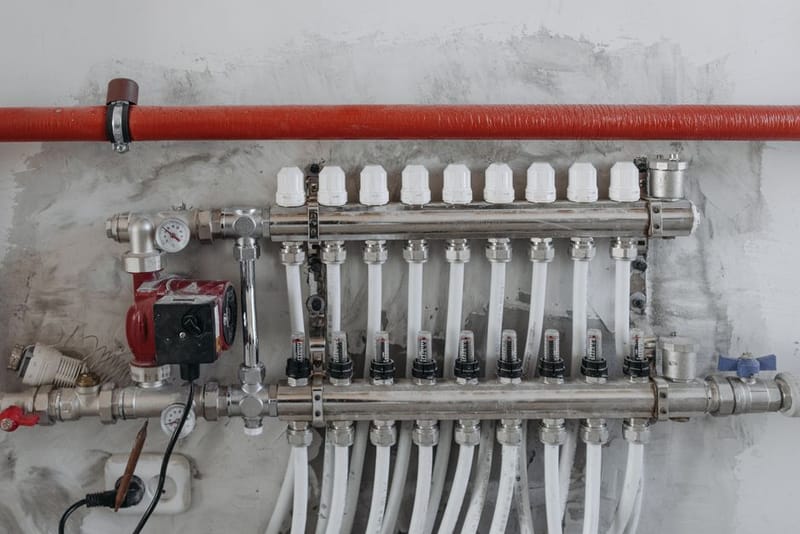
UFH is the gold-standard heat pump distribution but most UK retrofits stick with radiators because UFH retrofit is invasive + expensive. This guide covers the install approaches, where UFH retrofit is worth the cost, and where to stick with radiators.
Why UFH pairs better with heat pumps
Larger emitter surface = lower flow temperature = higher SCOP.
UFH systems deliver heat across the entire floor surface area (typically 8-15 m² per room) rather than the small radiator surface area (typically 0.5-1.5 m² per room). The much larger emitter surface enables:
- Low flow temperatures (28-38°C) rather than 45-55°C for radiators. Lower flow temp → higher SCOP at every operating point.
- More even heat distribution: no cold spots near windows; radiant warmth at occupant level.
- Quiet operation: no convection-driven air currents.
SCOP improvement: properties with UFH typically run 10-20% higher SCOP than radiator-equivalent installs. On a typical UK 3-bed at 4,000 kWh electricity/year, that's ~GBP 100-200/year savings.
Three UFH install approaches
Wet lift-the-floor, wet overlay, electric dry UFH.
1. Wet lift-the-floor UFH (gold standard):
- Existing floor is lifted; insulation, UFH pipes (PEX, 16mm) clipped to insulation, screed poured on top.
- Finished floor (tile, engineered wood, vinyl) laid on top of screed.
- Pipe spacing: 150-200mm typical for heat pump installs.
- Cost: GBP 80-120 per m² install + GBP 60-100 per m² screed + floor finish. Total ~GBP 140-220 per m².
- Disruption: 1-3 weeks per room (lift floor, install, screed cure, lay finish).
- Best fit: major renovation, ground floor extensions, kitchen/bathroom refresh.
2. Wet overlay UFH (low-disruption):
- 20-25mm pre-routed insulation boards laid OVER existing floor.
- PEX pipes laid in routed channels.
- Thin layer of self-levelling screed (or no screed) + finished floor on top.
- Cost: GBP 100-140 per m² for board + pipes + install.
- Disruption: typically 2-5 days per room.
- Raises floor height ~30-40mm - doors may need trimming, skirting may need adjustment.
- Best fit: room-by-room retrofit where lifting the floor is impractical.
3. Electric UFH (dry):
- Element mats laid under floor finish (typically tile / vinyl, not engineered wood).
- Direct grid electricity heating - heat pump NOT involved.
- Cost: GBP 40-70 per m² install + minimal disruption.
- Running cost MUCH higher than heat-pump-driven UFH (4-5x electricity per heat unit).
- Best fit: small areas needing supplementary heat (bathroom underfloor warmth) where running the heat pump UFH circuit isn't practical.
Per-room retrofit cost framework
Realistic UK 2026 cost for typical room sizes.
For a typical UK 3-bed semi (rooms 12-20 m² typical):
- Living room (20 m²) wet lift-the-floor: GBP 2,800-4,400 install
- Kitchen (15 m²) wet lift-the-floor: GBP 2,100-3,300 install
- Bathroom (8 m²) wet lift-the-floor: GBP 1,200-1,800 install + waterproof membrane
- Bedroom (12 m²) wet overlay: GBP 1,200-1,800 install
- Hallway (6 m²) wet overlay: GBP 600-900 install
Full house retrofit (typical UK 3-bed, ~80 m² total): GBP 12,000-18,000 on top of standard radiator-based heat pump install cost. Adds ~30-50% to total install cost but unlocks the 10-20% SCOP improvement + comfort benefits.
When to retrofit UFH (worth-the-cost scenarios)
Four contexts where UFH retrofit pays back.
- Major renovation / new flooring planned anyway. If you're replacing the floor regardless, the marginal UFH cost is just the pipes + screed (~GBP 80-100 per m²) - pays back via SCOP improvement within 5-7 years.
- Ground-floor rooms with cold-spot complaints. UFH heats the floor surface uniformly; radiators leave cold spots near windows + external walls. If comfort is the complaint, UFH addresses it directly.
- Property has good insulation + low flow-temperature potential. Well-insulated properties can run UFH at 28-32°C flow temp, delivering exceptional SCOP. The investment pays back faster on these properties.
- Long-term ownership horizon (10+ years). UFH improvements add ~1% to house value (smaller than heat pump itself, but still positive) + the running cost savings accumulate. 10-year window justifies the upfront cost.
Where to skip UFH retrofit
Three contexts where radiators are the better choice.
- Upstairs bedrooms. Bedrooms benefit less from UFH (you're typically warm under bedding regardless). Radiator alternative is much cheaper + equally effective for sleeping comfort.
- Rooms with engineered wood + UFH-incompatible underlays. Some flooring systems can't tolerate UFH heat without warping. Confirm with flooring manufacturer before committing.
- Properties with planned sale within 5 years. UFH retrofit cost typically takes 5-7 years to pay back via SCOP improvement. Properties for shorter-term sale should stick with cheaper radiator upgrades.