Heat Pump and Home Battery UK 2026
Heat pump + home battery UK 2026: sizing, cost-benefit, time-of-use arbitrage, load shifting, payback framework.
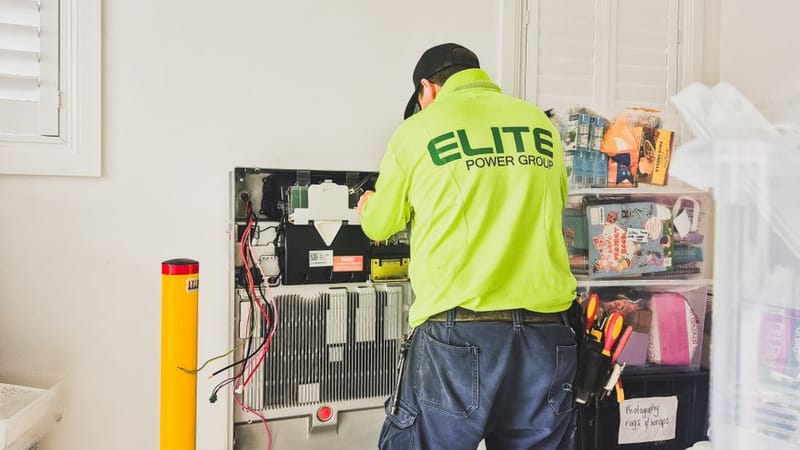
Home batteries make economic sense for UK heat pump households only on specific tariffs + with specific use cases. This guide covers the 2026 sizing, cost-benefit + payback framework.
Why heat pump + battery matters
Smart tariff arbitrage.
UK time-of-use tariffs offer significant price differentials between cheap-rate windows + peak rate:
- Octopus Cosy: cheap ~10.5p/kWh in windows (04:00-07:00, 13:00-16:00, 22:00-00:00); peak ~37p/kWh (16:00-19:00).
- Octopus Intelligent: cheap ~7p/kWh (23:30-05:30); standard ~26p rest.
- Octopus Agile: half-hourly variable, capped 1-100p; typical 5-10p in cheap windows, 30-100p in peak.
For heat pump households consuming 4,500 kWh/year for heating + DHW, peak-rate consumption costs ~3-4x cheap-rate. Battery enables peak-window heat pump operation on stored cheap-rate electricity.
Sizing the battery for heat pump operation
kWh + power output framework.
Heat pump electric demand profile (typical UK 3-bed):
- Winter peak hour: 2-3 kW draw (compressor at full + cylinder reheat).
- Winter typical operating: 1-2 kW (running for heating).
- Shoulder seasons: 0.5-1 kW running.
- Summer DHW-only: 0.5-1 kW for 1-2 hrs/day.
To cover peak window (16:00-19:00 = 3 hrs):
- Demand: 1.5 kW average × 3 hrs = 4.5 kWh.
- Battery needs 4.5 kWh available capacity.
- Accounting for 90% round-trip efficiency + 80% discharge depth: 5-6 kWh battery sized.
Common UK battery sizes for heat pump use:
- 5 kWh (Tesla Powerwall 5, Givenergy 5.2): covers 3-hour peak window comfortably.
- 10 kWh (Tesla Powerwall 10, Givenergy 9.5, Sunsynk 10.5): full daily heat pump + light household coverage.
- 13.5 kWh (Tesla Powerwall 2/3): heat pump + EV charging + household.
Power output rating (kW continuous):
- Must equal or exceed peak draw: 3 kW typical minimum for heat pump.
- 5 kW models (most current generations) comfortable.
- For combined EV charging: 7 kW+ rating needed.
Cost-benefit analysis - UK 2026
Payback calculation.
Typical install cost (10 kWh battery only):
- Battery unit: GBP 5,500-9,000 (Tesla Powerwall 10 ~GBP 9,000; Givenergy 9.5 ~GBP 5,500; Sunsynk 10.5 ~GBP 6,500).
- Inverter / smart-energy router: GBP 1,500-2,500.
- Install: GBP 1,200-2,000.
- Total: GBP 8,200-13,500.
Annual saving on Octopus Cosy (heat pump household):
- Without battery: ~GBP 1,000-1,200/year on heating + DHW.
- With battery (10 kWh, full peak avoidance): ~GBP 700-880/year.
- Annual saving: GBP 250-450/year.
Payback:
- Battery only: 18-30 years.
- Battery + solar PV (4 kW): 8-12 years (solar offsets battery cost in benefit calc).
- Battery + solar + EV (combined smart-energy): 6-9 years.
Smart-energy router recommendation
Coordination between heat pump + solar + battery + EV.
For combined systems (heat pump + battery + solar + EV), a smart-energy router orchestrates everything:
- SolarEdge Energy Hub: optimises solar production + battery charging + heat pump operation + EV charging. ~GBP 2,000-3,000.
- Solax X3 Pro: 3-phase home energy management. ~GBP 1,800-2,500.
- Givenergy Gen 3 Inverter: with battery + solar + heat pump integration. ~GBP 1,500-2,200.
- Sunsynk Sun-X: hybrid inverter for solar+battery; integrates well with heat pumps via load-management. ~GBP 1,400-2,000.
Heat pump compatibility:
- Most heat pumps don't directly speak to smart-energy routers (they take grid input via standard CT clamp + smart meter).
- Router monitors grid + battery state-of-charge + solar production.
- Heat pump runs against scheduled cheap-rate windows (set via heat pump's own thermostat / scheduler).
- Coordination is via tariff timing + battery dispatch, not direct heat pump control.
When NOT to invest in a home battery
5 anti-patterns.
- Standard variable tariff: no peak/off-peak spread = no arbitrage opportunity. Battery saves 0.
- Single-occupant low-electricity household: peak-window demand too low to amortise battery cost. Payback >25 years.
- Frequent trips / second home: battery sits idle when nobody home. Cost-benefit weaker than always-occupied home.
- Already cheap energy supplier: e.g. Octopus Tracker (no time-of-use spread). Battery doesn't help.
- No solar PV + limited budget: solar PV first (GBP 6,000 typical 4 kW system) generates electricity vs battery just storing it. ROI on solar 8-12 years vs battery 18-30 years.
Recommended battery models UK 2026
Heat-pump-compatible options.
- Tesla Powerwall 5 (10.5 kWh capacity, 5 kW continuous): GBP 9,000-11,000 install. Premium tier; 10-year warranty; aesthetic + reliable.
- Givenergy Giv-Battery 9.5 (9.5 kWh, 5 kW continuous): GBP 5,500-7,000 install. Strong value; UK manufacturer support; 12-year warranty.
- Sunsynk 10.5 kWh: GBP 6,500-8,500. Good for combined solar+battery hybrid systems.
- Solax X3 Pro 10kW + 11.6 kWh battery: GBP 8,000-11,000. 3-phase compatible (rare for UK domestic, useful for high-load homes).
- Tesla Powerwall 13.5: GBP 10,500-13,500 install. Larger; good for heat pump + EV charging households.