Heat Pump + EV Charging Combined Tariff UK 2026
Heat pump + EV charging tariff UK 2026: Octopus Cosy vs Intelligent Go vs Flux for combined households, smart-tariff arithmetic, GBP savings range.
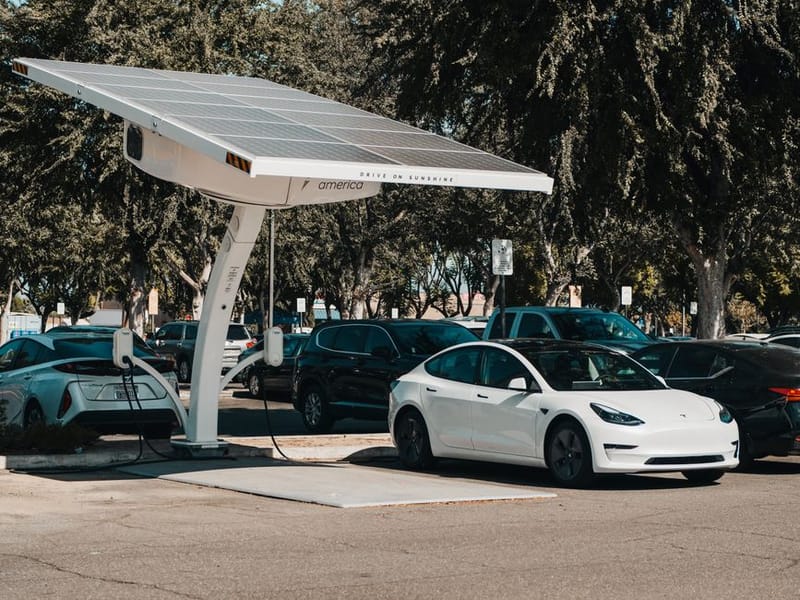
UK households running both a heat pump + an EV face a real tariff decision. Wrong choice can cost GBP 500-1,500/year. This guide compares Octopus Cosy vs Intelligent Go vs Flux for combined households, with realistic arithmetic + practical recommendation framework.
Why combined households need a different tariff
Heat pump + EV = significant peak / off-peak shift potential.
Typical UK household electricity usage = ~3,000-4,000 kWh/year (lighting, appliances, cooking). Adding:
- Heat pump: ~3,500-5,500 kWh/year (typical UK 3-bed semi).
- EV (10,000 miles/year, 3.5 mi/kWh): ~2,900 kWh/year.
- Combined total: ~9,400-12,400 kWh/year - roughly 3x baseline.
With this much usage, optimising for tariff matters dramatically:
- Standard variable tariff at 27p/kWh weighted: ~GBP 2,800-3,400/year.
- Smart tariff with 50%+ usage on off-peak: ~GBP 1,800-2,400/year - GBP 1,000+ saving.
The arithmetic depends on which times you can shift demand to. Combined households have flexibility in BOTH heat pump cycles + EV charging - the goal is to capture as much off-peak as possible.
Octopus Cosy in detail
6-hour multi-window off-peak, best for heat pump.
Octopus Cosy (designed specifically for heat pump households):
- Off-peak windows: 4am-7am + 1pm-4pm + 10pm-midnight (6 hours/day total).
- Off-peak rate: ~13p/kWh.
- Standard rate: ~19p/kWh.
- Peak rate: ~24p/kWh (4pm-7pm).
Why Cosy works for heat pumps:
- Heat pumps run continuously across multiple cycles per day.
- The 3-window structure (early morning + midday + late evening) aligns well with the heat pump's natural reheat cycles + DHW peaks.
- Most heat pumps can be configured to PRIORITISE the off-peak windows (boost flow temperature + DHW reheat during 4am-7am, coast during peak hours).
- EV charging can fit into ANY of the 3 windows (typical 7 kWh per 5-hour off-peak slot).
Cosy combined-household economics (typical 3-bed):
- Heat pump 50% off-peak / 30% standard / 20% peak: ~GBP 700-900/year.
- EV charging 100% off-peak: ~GBP 380/year.
- Baseline usage 60% standard / 40% peak: ~GBP 800-1,000/year.
- Total estimate: GBP 1,880-2,280/year vs ~GBP 2,800-3,400 standard tariff = GBP 920-1,520 saving.
Octopus Intelligent Go in detail
6-hour night-window off-peak, best for EV-dominated profile.
Octopus Intelligent Go:
- Off-peak window: 11:30pm-5:30am (6 hours).
- Off-peak rate: ~7.5p/kWh - cheapest available UK rate.
- Standard rate: ~30p/kWh (everything outside off-peak).
- Smart-charger integration: Octopus app can shift charging windows automatically based on EV battery + grid state - extending off-peak rate beyond the 11:30-5:30 window when grid demand permits.
Why Intelligent Go suits EV-dominated profile:
- EVs can charge 30-50 kWh per 6-hour window at standard 7 kW charger - covers most weekly mileage.
- App-driven charging windows extend cheap rate when smart-charger compatible.
- Cheapest off-peak rate in market (7.5p vs Cosy 13p).
Intelligent Go combined-household economics (typical 3-bed):
- Heat pump runs mostly at 30p peak (since heat pump usage spreads across day, not concentrated 11:30pm-5:30am): ~GBP 1,200-1,500/year.
- EV charging 100% off-peak via smart-charger: ~GBP 220/year.
- Baseline usage 100% standard: ~GBP 1,000-1,200/year.
- Total estimate: GBP 2,420-2,920/year vs ~GBP 2,800-3,400 standard = GBP 380-980 saving.
Note: lower saving than Cosy unless EV is high-mileage (the EV saving is what justifies Intelligent Go vs Cosy in many cases).
Octopus Flux for solar + EV households
3-zone tariff with export bonus.
Octopus Flux (designed for solar PV households):
- Off-peak window: 2am-5am (3 hours).
- Off-peak rate: ~14p/kWh.
- Standard rate: ~25p/kWh (5am-4pm + 7pm-2am).
- Peak rate: ~36p/kWh (4pm-7pm).
- Export bonus: 40p/kWh during peak hours (4pm-7pm), 22p outside.
Why Flux works for solar + EV + heat pump:
- Households with battery storage can store cheap solar generation + sell back during peak hours at premium rate.
- Heat pump runs primarily on solar (or cheap night rate) - low electricity cost.
- Export bonus during peak hours can make solar households genuinely cash-positive on electricity in summer.
Flux economics depend hugely on solar generation profile. A 4kWp solar system in southern UK generating ~3,800 kWh/year, half exported during peak hours: ~GBP 700-1,000/year export income. Combined with heat pump + EV usage on smart tariff: total electricity bill can be near-zero in summer + GBP 1,200-1,800 in winter, averaging GBP 800-1,200/year - the lowest of the three tariffs IF you have solar.
Decision framework - which tariff fits your situation
Pick based on heat pump : EV : solar usage profile.
- Heat-pump-dominated + flexible EV charging windows → Cosy. Best for typical UK households with EV used mostly evenings + weekends. GBP 920-1,520 saving.
- EV-dominated (heavy mileage 12,000+) + standard heat pump usage → Intelligent Go. Cheapest EV charging rate at 7.5p/kWh + smart-charger integration extends savings. Heat pump pays peak rate but EV saving compensates. GBP 380-980 saving.
- Solar PV + battery + heat pump + EV → Flux. Export bonus during peak hours makes solar economics outstanding. Bill can be near-zero summer + GBP 1,200-1,800 winter. Annual saving GBP 1,000-1,500+.
- None of the above (standard heat pump + EV + no solar) → Cosy as default. Most universal of the three; saves ~GBP 800 even without solar.
Review actual usage data after 6-12 months + switch if a different tariff would save more (Octopus allows tariff switching without penalty for first-year customers; check terms).