Heat Pump End-of-Life Disposal + Recycling UK 2026
Heat pump end-of-life UK 2026: decommissioning process, refrigerant recovery (F-gas regs), recycling pathway, environmental considerations.
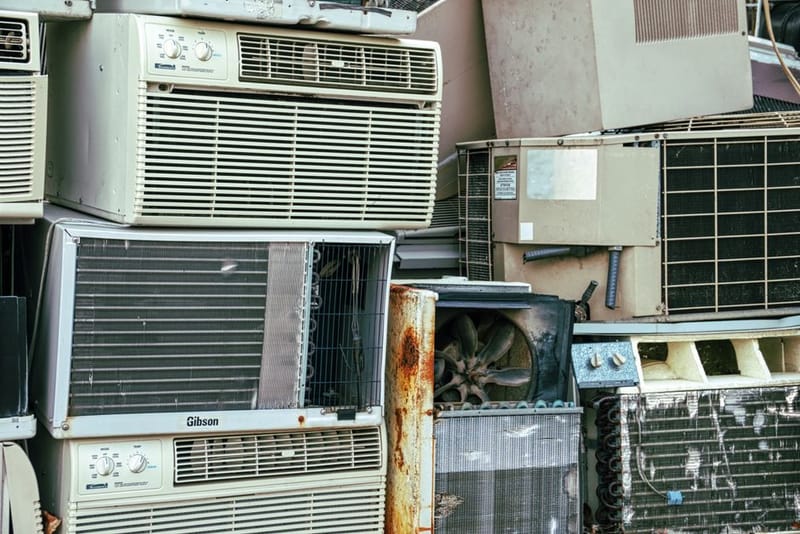
UK heat pumps reach end-of-life after 15-20 years. Decommissioning is regulated under F-gas regulations + requires certified engineers - not a DIY job. This guide covers the decommissioning process, refrigerant recovery rules, recycling pathway, and replacement planning.
When does a heat pump reach end-of-life
Three triggers for decommissioning.
- Compressor failure (most common, year 12-18). The compressor is the main wear part; modern UK heat pumps typically deliver 15-20 years before compressor needs replacement. Replacement compressor often costs more than full heat pump replacement, making end-of-life economically rational.
- Refrigerant migration to lower-GWP alternatives. EU + UK regulations progressively phase out higher-GWP refrigerants. R32 (GWP 675) phased down through 2026-2030; R290 (GWP 3) is the modern replacement. End-of-life R32 units may be hard to recharge in late life.
- Property change (sale, demolition, conversion). Some property changes (extension, decommissioning of one wing, conversion to other use) trigger heat pump removal independent of unit lifespan.
Less common: refrigerant leak >50% of charge typically triggers economic write-off (recharge cost approaches replacement); structural damage (lightning, falling object); functional obsolescence (newer model significantly more efficient).
F-gas regulations - what they require
Why decommissioning needs certified engineer.
UK F-gas regulations (Fluorinated Greenhouse Gases Regulations 2015, retained post-Brexit) cover all refrigerants used in heat pumps + air conditioning. Key requirements:
- Recovery of refrigerant at decommissioning - must be done by F-gas certified technician (Category 1 or 2 cert holders). DIY venting is illegal.
- Logbook + record-keeping required for units with >5 kg CO2-equivalent charge (typical 5-12 kW residential units around 1-3 kg refrigerant = 5-15 kg CO2e for R32; <1 kg CO2e for R290).
- Refrigerant disposal only via approved waste handlers - typically the engineer recovering the gas handles this.
- Fines for non-compliance: up to GBP 5,000 for residential cases, up to GBP 200,000 for businesses + criminal liability.
Find an F-gas certified engineer: via REFCOM or RAC News certified installer directory. Cost typically GBP 300-600 for residential decommissioning.
Step-by-step decommissioning process
Three-step typical residential decommissioning.
Step 1: Book F-gas certified engineer for refrigerant recovery + decommissioning.
- Engineer recovers refrigerant using approved recovery equipment.
- Isolates electrical supply + disconnects controller.
- Provides written certificate confirming refrigerant recovery (keep for records).
- Cost: GBP 300-600 typical residential, GBP 600-1,500 commercial (larger units, more refrigerant).
Step 2: Remove outdoor unit + arrange WEEE disposal.
- Once refrigerant is recovered, the unit is safe to physically remove.
- Outdoor unit weight: 50-80 kg typical. Requires 2-person lift; possibly crane access for difficult sites.
- WEEE pathway: local authority recycling centre (free for residential) OR specialist recycler (GBP 50-150 commercial).
- Cost: GBP 100-300 for removal labour.
Step 3: Remove indoor cylinder + pipework.
- Standard plumber decommissions cylinder + caps off pipework.
- Hot water cylinder weight 50-150 kg typical (need to drain first).
- Pipework typically left in walls (cap + isolate) unless full removal needed for renovation.
- Cost: GBP 200-400 typical.
Total decommissioning cost typical UK residential: GBP 600-1,300 (refrigerant recovery + outdoor unit removal + indoor cylinder removal).
WEEE recycling - where the unit goes
UK waste electrical pathway.
Heat pumps are classified under WEEE (Waste Electrical + Electronic Equipment) Directive Category 1 (Large household appliances). Recycling pathway:
- Local authority household waste recycling centre (HWRC) - free for residential disposal. Most UK councils accept heat pumps; check first for very large units (10+ kW) as some HWRCs limit weight.
- Manufacturer take-back schemes - some manufacturers (Vaillant, Daikin, Mitsubishi) offer end-of-life take-back via their installer networks. Free or low cost.
- Specialist commercial recyclers - companies like SWEEEP Kuusakoski, Veolia, SUEZ handle commercial-scale heat pump decommissioning. Cost varies; typically GBP 50-200 per unit.
- Scrap metal value - heat pumps contain ~30-50 kg recoverable metals (copper, aluminium, steel). Modest scrap value (~GBP 30-80) offsets some disposal costs.
The 2024 amendments to UK WEEE regulations require manufacturers to fund collection + treatment of end-of-life products from their brand - this strengthens the case for using manufacturer take-back schemes when available.
Replacement timing + BUS eligibility
Planning for the next heating system.
Most UK heat pumps reach end-of-life via compressor failure year 12-18. Plan replacement budget alongside:
- Annual sinking fund: set aside GBP 500-1,000/year from year 5 onwards to fund eventual replacement.
- BUS grant evolution: BUS originally scheduled to run through 2028; subsequent successor schemes likely. Verify availability at replacement time.
- BUS for direct replacement: rules vary - currently BUS available for first heat pump install replacing fossil fuel; rules for like-for-like heat pump replacement evolving + may require new heat-loss calc + MCS install.
- Successor technologies: by 2040s, hydrogen-blend boilers, fuel cells, or other low-carbon alternatives may have matured. Don't assume heat pump → heat pump is the only path.
For most current installs (2026-era), realistic replacement window is 2038-2046. Plan funding + monitor regulatory landscape but don't over-plan at this distance.