Heat Pump for Edwardian House UK 2026
Heat pump for Edwardian house UK 2026: bay windows, suspended floors, sash window upgrades, typical heat loss, install cost framework.
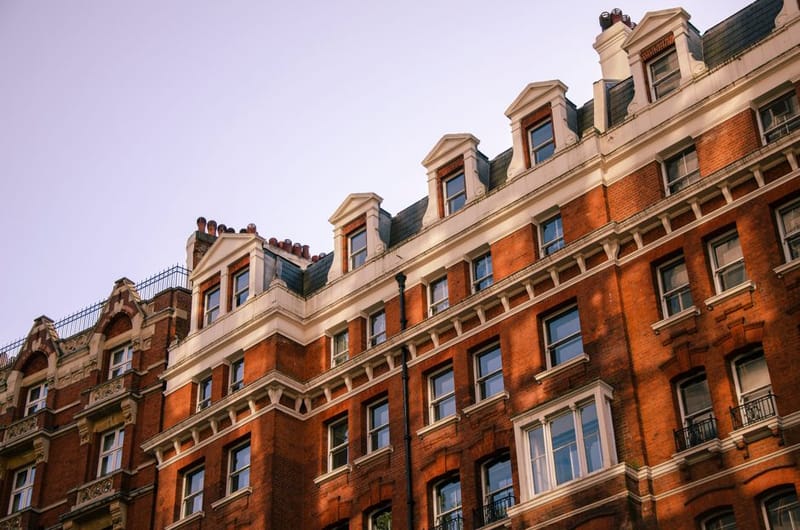
UK Edwardian houses (~1.5 million properties) share many heat pump install considerations with Victorian but with notable differences. This guide covers Edwardian-specific construction features, envelope upgrade priorities, and the realistic install + cost picture for these distinctive UK properties.
Edwardian construction overview
What distinguishes from Victorian + 1930s.
UK Edwardian houses (Edward VII reign, 1901-1910 + extending to 1914 pre-WW1) share these construction features:
- Solid brick walls (200-280mm), typically uninsulated; sometimes brick + render in coastal / rural variations.
- Suspended timber floors over ventilated subfloor void on ground floor (similar to Victorian).
- Slate or clay tile pitched roofs, often with decorative ridge tiles.
- Original wooden sash or casement windows with single-glazing; often replaced 1990s-2010s with UPVC double-glazing.
- Decorative cornicing + ceiling roses + ornate fireplaces (some functioning).
- Larger room sizes than Victorian terraces typically.
- Larger gardens + side passages on many Edwardian properties.
- Distinctive bay windows common on principal elevation.
Distinctive vs Victorian:
- Better build quality on average (Edwardian construction standards higher than late-Victorian).
- Larger floor plates - 3-bed Edwardian typically 110-150 m2 vs 80-110 m2 Victorian.
- More standardised construction methods (industrial-era housing).
- Often has rear garden access + outbuilding (coach house, workshop).
Distinctive vs 1930s:
- Solid walls (no cavity); 1930s typically cavity wall.
- More decorative interior features.
- Smaller windows in non-principal elevations (Edwardian) vs larger metal-framed windows (1930s).
Solid wall insulation priority
Same as Victorian - high-impact envelope upgrade.
Edwardian solid brick walls have very poor U-value (~2.0 W/m2K, vs modern 0.18). Solid wall insulation is the highest-impact thermal upgrade:
External wall insulation (EWI):
- ~100mm rigid insulation + render or board finish externally.
- U-value to 0.30 W/m2K (good).
- Visual impact significant - may need planning permission in conservation areas.
- Cost: GBP 8,000-15,000 for typical Edwardian 3-bed.
Internal wall insulation (IWI):
- ~50-80mm rigid insulation board on inside walls.
- U-value to 0.35 W/m2K (good).
- Reduces room dimensions; risks interstitial condensation if poorly installed.
- Cost: GBP 6,000-12,000 typical.
- Preferred for conservation areas + listed buildings where facade preservation matters.
Edwardian properties in conservation areas often require IWI due to facade restrictions. Listed Building Consent + conservation officer engagement adds 12-20 weeks to project timeline.
Bay window considerations
Heat loss + heat pump implications.
Edwardian bay windows are decorative + functional features but create heat-loss hotspots:
- Large glazed area - typically 40-60% of bay's surface is glass.
- Single-glazed original = U-value 4.5-5.5 W/m2K (very poor).
- Multiple sides exposed - 3-sided bay = ~2x heat loss of equivalent flat window.
Upgrade options:
- UPVC double-glazed replacement: GBP 1,500-3,500 per bay window. U-value improves to 1.4-2.0 W/m2K.
- Hardwood double-glazed (sympathetic to character): GBP 3,500-7,000 per bay window. U-value ~1.4 W/m2K.
- Secondary glazing inside existing sash window: GBP 800-2,000 per bay. U-value combined ~2.0 W/m2K. Best for listed buildings where original windows must be preserved.
Heat pump implications:
- Bay window heat-loss-hotspot rooms need oversized radiators OR underfloor heating to compensate for high heat loss.
- Standard radiator under bay window often insufficient for low-temp heat pump operation - upgrade to K2 double-panel + fins typically required.
- Consider bay-window seat with integrated radiator + plinth for both heat distribution + character preservation.
Suspended floor + roof insulation
Two high-impact upgrades.
Suspended floor insulation: identical to Victorian (see our 1930s + Victorian guides). Mineral wool batts between joists via subfloor access. Cost GBP 800-1,800 for typical 3-bed Edwardian. Saves ~1 kW heat demand + GBP 100-150/year running cost.
Loft insulation upgrade:
- Edwardian lofts typically accessible with hatch + ladder; insulation usually upgradeable to 270mm without structural work.
- Cost: GBP 400-1,000 for typical 3-bed (often free via ECO4 or GBIS for eligible households).
- Saves ~1.5-2 kW heat demand + GBP 200-300/year running cost.
Combined floor + loft insulation often the highest-value envelope upgrades for Edwardian properties - relatively low cost vs solid wall insulation but significant SCOP + running cost benefits.
Outdoor unit siting - typical Edwardian opportunities
Larger gardens + side access make Edwardian friendlier than mid-terrace Victorian.
Edwardian houses often have advantages over Victorian terraces for outdoor unit siting:
- Larger rear gardens: typically 8-15m deep vs 5-10m for Victorian terraces. Easier 4m+ neighbour separation.
- Side passage access: many Edwardian semis have side passages enabling alternative siting + pipework routing.
- Coach house / outbuilding: some Edwardian properties have detached outbuildings ideal for outdoor unit + sympathetic siting.
- Concrete pad mounting: straightforward in rear garden; less aesthetic concern than period-feature elevations.
Listed Edwardian considerations:
- Grade II listed: Listed Building Consent required; outdoor unit usually acceptable in rear garden with sympathetic screening.
- Grade II* or I: stricter requirements; may need detached outbuilding siting.
- Conservation area: planning permission required regardless of permitted development; rear garden siting usually acceptable.
Cost framework - typical Edwardian heat pump install
Realistic UK 2026 numbers.
Standalone heat pump install (envelope already upgraded):
- Heat pump unit (7-9 kW R290): GBP 6,500-9,500.
- Indoor cylinder + plumbing: GBP 1,500-2,500.
- Radiator upgrades (3-5 radiators): GBP 800-1,500.
- Pipework + electrical + commissioning: GBP 1,500-2,500.
- BUS grant: -GBP 7,500.
- Net: GBP 2,800-8,500.
Full retrofit (envelope + heat pump together):
- Window upgrade (if still single-glazed, ~6-8 windows): GBP 5,000-12,000.
- Solid wall insulation (IWI or EWI): GBP 6,000-15,000.
- Loft insulation upgrade: GBP 400-1,000.
- Floor insulation: GBP 800-1,800.
- Heat pump install (as above): GBP 10,500-14,500.
- BUS grant: -GBP 7,500.
- Combined envelope grants (ECO4 / GBIS where eligible): -GBP 2,000-8,000.
- Net total: GBP 13,200-29,300.
For properties already partly modernised (double glazing done, loft insulated): focus on remaining envelope gaps (solid wall, floor) + heat pump install. Total typically GBP 8,000-15,000 net.
Realistic SCOP for Edwardian properties
What to expect post-install.
- Unimproved Edwardian (single glazing, solid walls, original radiators): SCOP 2.5-3.0. High flow temp + significant aux heater contribution.
- Partial improvements (double glazing + loft): SCOP 3.0-3.5. Reasonable performance; bills competitive with gas combi on smart tariff.
- Cavity-equivalent insulation (IWI or EWI + windows + loft + floor): SCOP 3.5-4.0. Excellent for the property age; bills 20-30% lower than gas combi.
- Full envelope upgrade + UFH + oversized radiators: SCOP 4.0-4.5 (rare but achievable). Approaches new-build performance.
For Edwardian properties, envelope upgrade is the primary determinant of heat pump economics. Skipping envelope upgrades delivers mediocre SCOP + running cost; doing full envelope work makes Edwardian heat pump install genuinely cost-competitive vs gas.