Heat Pump for Converted Church or Chapel UK 2026
Heat pump converted church / chapel UK 2026: listed building constraints, vaulted ceilings, stone walls, large volumes.
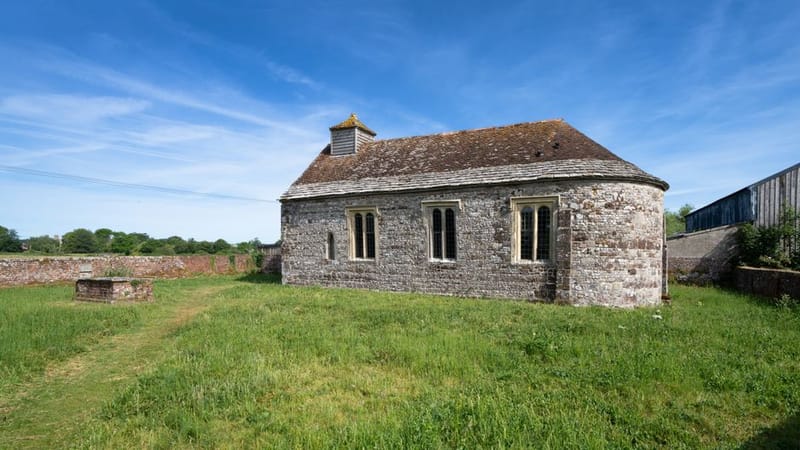
UK converted churches and chapels are one of the trickiest heat pump retrofit segments. Estimated 8,000+ such properties exist (4,000+ converted residentially, 4,000+ as offices/venues). This guide covers the install path.
What makes ecclesiastical conversions distinctive
Building characteristics.
Common features of converted UK churches / chapels:
- Original 12-19th century construction: solid stone or brick walls 300-600mm thick.
- Vaulted or open-timber roof: 6-12m apex height typical; large heated volume.
- Original windows preserved: leaded lights, stone-tracery glazing, single-pane glass (U-value 4-5+).
- Suspended timber floor over crawl space (Victorian onwards) or stone-flag floor on ground (medieval).
- Grade II listed status (~80% of UK converted churches).
- Permitted development restrictions: listed status removes most PD rights.
Heat-load implications:
- Thick stone walls = high thermal mass (50-200 kWh/K thermal storage).
- High ceiling = warm air stratification problem (heat rises away from occupants).
- Large windows = significant heat loss + difficult to upgrade glazing on listed buildings.
- Original floor often has minimal insulation - large heat loss path.
Heat-load calculation - bigger than you think
15-30 kW typical.
Standard heat-loss methods (BS EN 12831) for ecclesiastical conversions:
- Small chapel (~150m2 footprint, 5m apex): ~12-18 kW.
- Medium church (~250m2 footprint, 7m apex): ~18-25 kW.
- Large country church (~400m2 footprint, 10m apex): ~25-35 kW.
- Listed cathedral / abbey conversion: 35-50 kW (rare).
What inflates the load:
- High internal volume × ventilation losses (1+ air change per hour).
- Stone wall U-value 1.5-2.0 W/m2K (typically vs modern 0.18-0.30).
- Single-glazed leaded windows U-value 4-5 W/m2K.
- Uninsulated ground floor often 1-2 W/m2K.
Heat pump sizing + cascade systems
When single unit is not enough.
Single heat pump approach (most common):
- 14-18 kW R290 air-source heat pump unit.
- Suitable for chapels + small churches with heat load < 18 kW.
- Cost: GBP 12,000-15,000 unit + install.
Cascade approach (for large churches):
- 2-3 outdoor units linked to single heat distribution system.
- Total output 18-30 kW combined.
- Better turn-down ratio - modulates between 30% to 100%.
- Useful for very-cold-snap full output without one giant unit short-cycling.
- Cost: GBP 20,000-32,000 unit + install.
Ground-source heat pump (GSHP) option:
- For very large heated volumes where ASHP isn't enough.
- GSHP via borehole or open-loop ground array.
- SCOP 4.5-5.0 (vs 3.0 for ASHP at these heat loads).
- Cost: GBP 25,000-45,000 including borehole drilling.
- Practical for buildings with significant outdoor land + budget.
Listed building consent + planning permission
Process for ecclesiastical conversions.
Heat pump install in Grade II listed converted church:
- Listed Building Consent required for outdoor unit placement (visual impact on protected fabric).
- Planning Permission required for outdoor unit (no permitted development on listed buildings).
- Conservation Officer consultation: ~6 weeks typical decision time.
- Possible objections: visual prominence, fixings into stone fabric, vibration through structure.
- Successful applications typically include: outdoor unit positioned behind existing wall or hedging; acoustic enclosure; mounting on independent base (not directly on listed fabric).
Costs:
- Listed Building Consent + Planning fees: GBP 250-450.
- Conservation officer time: free for first consultation; chargeable for detailed advice.
- Specialist heritage architect: GBP 1,500-3,500 if needed for the application.
Outdoor unit siting on a listed conversion
Concealment + acoustic mitigation.
Successful outdoor unit placements in listed church conversions:
- Behind existing porch / vestry wing: visual screening, often acceptable to conservation officer.
- Within a vegetation screen: hedging or evergreen planting around base.
- Acoustic enclosure: low-profile timber-clad housing matching surroundings (purpose-built, ~GBP 1,500-3,000).
- Concealed within original outbuilding: e.g. converted boiler house if present.
Unacceptable placements:
- Directly on the church facade or exposed nave wall.
- Visible from primary public viewpoint (consecrated churchyard, public road, listed garden).
- Without acoustic mitigation in dense churchyard / cottage neighbouring context.
Cost framework
Pre-BUS + net cost.
Typical small-chapel install:
- 14 kW R290 heat pump unit: GBP 9,000-12,000.
- 300L unvented cylinder: GBP 2,000-2,500.
- UFH retrofit (200m2): GBP 8,000-12,000.
- Pipework + commissioning: GBP 2,000-3,000.
- Listed building consent + heritage architect: GBP 2,000-4,000.
- BUS grant: -GBP 7,500.
- Net total: GBP 15,500-26,000.
Larger church install (with cascade):
- 2x 14 kW cascade: GBP 20,000-26,000.
- 400L cylinder + UFH retrofit + planning: GBP 18,000-26,000.
- BUS grant: -GBP 7,500.
- Net total: GBP 30,500-44,500.
Realistic SCOP expectations
Lower than typical homes.
Converted churches/chapels rarely achieve SCOP > 3.5 due to thin envelope (single-glazed windows, uninsulated walls):
- Pre-improvement listed church: SCOP 2.5-3.0. Mediocre.
- With UFH + improved windows + insulated floor: SCOP 3.0-3.5. Good for building type.
- Full envelope upgrade where possible (secondary glazing approved on listed; insulated floor; loft insulation): SCOP 3.3-3.8.
- Ground-source heat pump with borehole: SCOP 4.0-4.5 achievable despite thin envelope.
This is one of the few building types where ground-source heat pump justifies its premium - the higher year-round COP recovers the borehole cost over 8-12 years.