Heat Pump for Converted Barns + Outbuildings UK 2026
Heat pump for UK converted barns and outbuildings: stone-wall heat loss, high ceilings, ground-source viability, and BUS eligibility nuances.
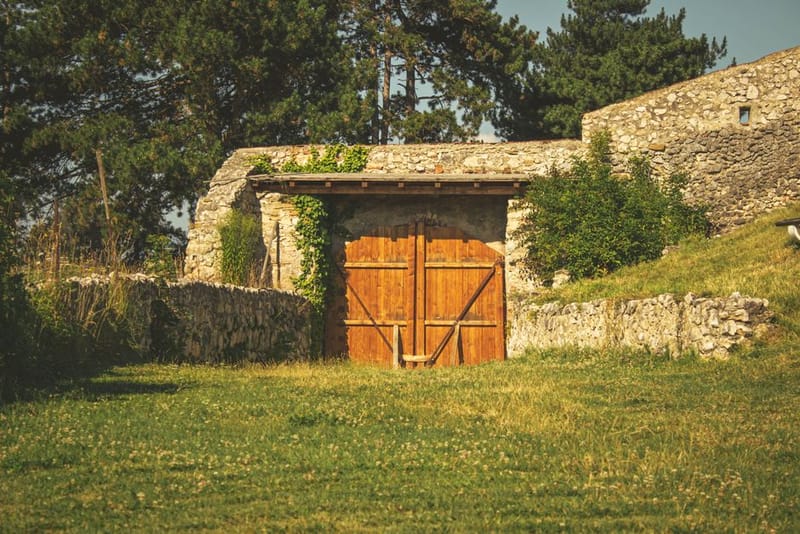
Converted barns + outbuildings are popular UK rural homes but have specific heating challenges that bricks-and-mortar guides don't address: stone or solid-masonry walls, very high ceilings, complex roof structures, and often planning constraints. This guide covers heat pump options + BUS grant treatment for converted properties.
Stone-wall heat loss reality
Traditional solid masonry has 3-5x higher U-values than modern walls.
Most UK converted barns retain their original solid stone or solid brick walls (insulating them often requires planning permission for listed conversions). Typical U-values:
- Solid stone (300-600mm thick): 1.5-2.0 W/m²K - 3-5x higher than modern cavity walls (0.3-0.4 W/m²K).
- Solid brick (215mm thick): 2.0-2.2 W/m²K - among the worst-performing wall types.
- Internally insulated solid wall (with 100mm rigid PIR): 0.30-0.35 W/m²K - dramatically improved but reduces internal floor area.
- Externally insulated solid wall (rendered system): 0.25-0.30 W/m²K - best performance but requires planning permission + changes external appearance.
Heat pump sizing must account for the actual wall U-values + insulation status. A 200 m² converted barn with uninsulated solid walls typically needs a 12-16 kW heat pump; the same floor area in a modern build needs 6-8 kW.
High ceiling impact
Volume heated matters more than floor area in barn conversions.
Standard UK property heat-demand calculations assume ~2.4m ceiling height. Converted barns typically have:
- Original cart-shed barns: 4-5m ceiling height with exposed beams.
- Dutch barn conversions: 5-6m ceiling height with vaulted ceiling.
- Threshing barn / stable conversions: typically 3-4m ceiling.
Higher ceilings mean larger air volume + more heat needed to maintain comfortable temperatures. Rule of thumb: heat demand scales roughly with volume (not floor area), so a 4m ceiling adds ~67% to heat demand vs 2.4m for the same floor area.
Practical implications:
- Underfloor heating is much more effective than radiators in high-ceiling spaces (heat rises; radiator-heated air sits at ceiling level).
- Destratification fans (ceiling fans running on low speed) help redistribute heat back down to occupant level - cost ~GBP 150-400 + reduce heat demand 5-10%.
- Mezzanine floors + partial ceilings reduce the heated volume + improve effective system performance.
Ground-source heat pump viability
Often the better fit for converted-barn rural properties.
Ground source heat pumps (GSHP) are typically a better fit for converted barns than air source (ASHP) for three reasons:
- Land typically available for ground loops. Rural converted barns usually have 0.5-2+ acres of land - enough for horizontal trench loops (8-12 trenches, 30-50m each, 1.5m deep) or vertical bore holes (1-2 bore holes, 100-150m deep).
- Better efficiency at high heat demand. GSHP SCOP is typically 4.0-4.8 vs air-source 3.5-4.0. The advantage compounds at the high heat demand typical of converted barns (savings = SCOP × demand).
- No outdoor unit visual impact. ASHP outdoor units can look incongruous on a heritage-style converted barn. GSHP keeps everything underground + indoors.
Trade-off: GSHP install cost is 2-3x ASHP (~GBP 25,000-40,000 vs GBP 12,000-18,000 pre-grant). The £7,500 BUS grant applies to both. For converted barns, the longer-term efficiency + visual benefits often justify the higher upfront cost.
BUS grant eligibility for conversions
Once classified as residential with utility supply + council tax, BUS applies.
The Boiler Upgrade Scheme grant treatment for barn / outbuilding conversions:
- Completed conversions (residential use, full council tax, utility supply): qualify for BUS the same as standard residential property. £7,500 grant for air-source or ground-source.
- Conversions in progress (still classified as non-residential): heat pump install can be designed-in but BUS application typically processed after the property is classified residential. Time the BUS application to coincide with council tax registration.
- Conversions to commercial use (offices, holiday-let, agricultural): typically don't qualify for BUS. Some commercial heat pump schemes apply (Public Sector Decarbonisation Scheme, Industrial Energy Transformation Fund) but with different rules + lower per-property amounts.
Confirm classification with your local planning authority + Ofgem before signing the install contract. Conversion status sometimes lag the actual residential occupation by months - patience pays off if you can wait for full residential classification.
Practical install considerations for barns
Five things that differ from standard residential installs.
- Outdoor unit siting on heritage properties. Recessed positioning, screening, or detached outbuilding siting often required to preserve building character. Talk to the heritage / planning officer early.
- Pipework routing through stone walls. Cutting through 300-600mm solid stone requires diamond-tipped tools + careful structural assessment. Cost adds GBP 200-500 vs standard wall penetration.
- Hot water cylinder space. Converted barns often have unconventional layouts; finding the right space for a 200-300L cylinder may require minor structural changes.
- Cold-spot management. Solid stone walls can produce localised cold spots that need specific radiator / UFH sizing. Don't accept a 'one-size-fits-all' calculation for a barn conversion.
- Electrical supply assessment. Rural properties often have long service cables + may need upgrade for heat pump load. DNO consent + upgrade work adds 4-8 weeks to install timeline.