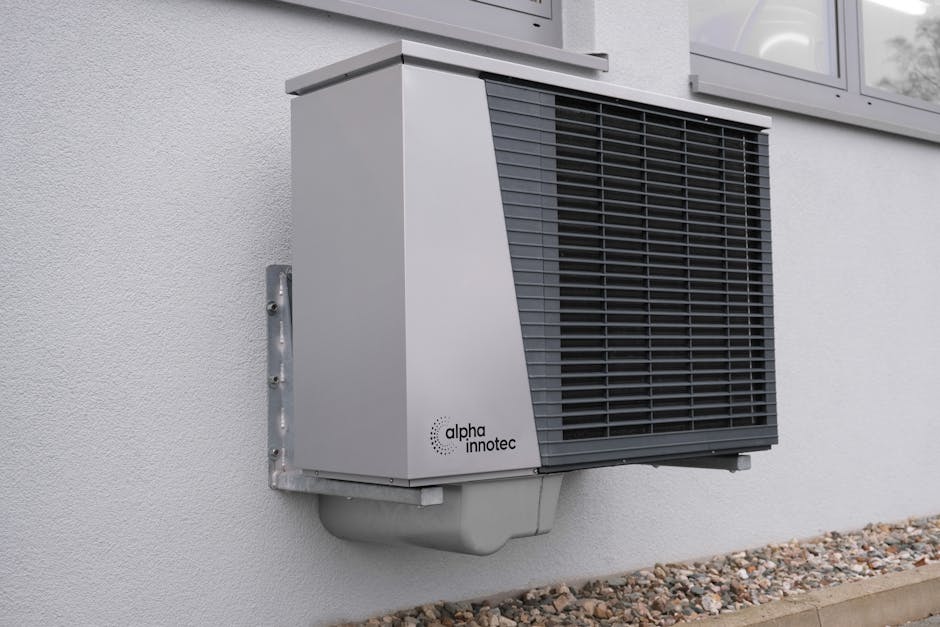
Heat Pump Cost UK 2026: What Installation Actually Costs
Heat pump cost UK 2026 — typical £8,000–£14,000 ASHP, £20,000+ GSHP, what you pay after the £7,500 BUS grant, running costs, and payback scenarios.
Cost is the question that decides whether a heat pump happens. Most other questions — which brand, which installer, when to buy — only matter once the headline number looks survivable. This guide walks through what UK heat pump installations actually cost in 2026, where the variation comes from, what you pay after the Boiler Upgrade Scheme grant, and how the long-run economics compare with sticking with a gas boiler.
We work from the published figures: Energy Saving Trust modelling, Nesta's heat-pump cost research, the MCS Data Dashboard for typical installed costs, and the BUS grant amounts in force under Ofgem's v5 guidance from 28 April 2026. Quotes vary widely between installers — three MCS-certified quotes is the floor, not the ceiling. Last reviewed: 8 May 2026.
What a heat pump installation actually costs in 2026
Typical before-grant figures by technology
Three numbers do most of the work in any UK heat-pump cost conversation: the headline install cost, the BUS grant, and the running cost. The install cost is the only one that varies meaningfully by property and installer — the grant is a flat figure, and the running cost mostly depends on which electricity tariff you're on.
The ranges below are typical for residential retrofits in 2026 and are drawn from Energy Saving Trust published guidance, Nesta cost research, MCS Data Dashboard medians, and the visible price ranges from major UK installers. They assume a like-for-like replacement of an existing wet heating system, not a new build.
Typical 2026 UK heat pump install cost — before grant
| Specification | Value |
|---|---|
| Air-to-water (air-source) heat pump | £8,000–£14,000 |
| Air-to-water — large or complex retrofit | £14,000–£18,000+ |
| Ground-source heat pump (horizontal collector) | £20,000–£28,000 |
| Ground-source heat pump (borehole) | £25,000–£35,000+ |
| Air-to-air heat pump (residential, no hot water) | £3,500–£6,000 |
| Exhaust-air heat pump | £5,000–£8,000 (niche, MVHR-style homes) |
| Hybrid heat pump (HP + gas boiler kept) | £6,000–£10,000 — not BUS-eligible |
What drives the variation
Heat-loss size dominates everything else
Heat pump pricing in 2026 is dominated by the property, not the kit. A 5 kW Daikin or Vaillant outdoor unit costs broadly the same as a 12 kW one in capital terms — but a property requiring 12 kW will need bigger radiators, a larger cylinder, possibly a mains-supply upgrade, and substantially more pipework. The kW figure on your heat-loss survey is the single most important cost driver in the whole project.
Below are the variables that explain almost all of the gap between a £9,000 quote and an £18,000 one for properties that look superficially similar.
MCS-certified installers run a room-by-room heat-loss calculation to set the heat pump's design output. A well-insulated three-bed semi might come in at 5–7 kW; a poorly insulated four-bed detached can be 10–14 kW. The unit price tracks the kW rating, and so do most of the downstream costs.
Heat pumps run at lower flow temperatures than gas boilers — typically 45–55 °C versus 70–80 °C. To deliver the same heat output at a lower flow temperature, radiators usually need to be larger. Expect £200–£500 per upgraded radiator, with 4–6 commonly upgraded in a retrofit. Some installers price this as a separate line; others bundle it.
Most UK gas heating is combi-boiler-based with no cylinder. A heat pump needs an unvented hot-water cylinder, typically 200–300 litres, costing £600–£1,500 fitted. If you already have a cylinder, it may need replacing for one rated for heat-pump flow temperatures.
Some properties need an electrical upgrade to handle the heat pump's load — particularly homes still on 60–80A single-phase supplies. A DNO supply upgrade can cost £500–£2,000 depending on what's required.
Weather-compensation controls, smart thermostats, and zoning gear add £500–£1,500. Heat pumps benefit substantially from weather-compensation — running at the lowest viable flow temperature for outside conditions — so this isn't optional kit; it's part of getting the running-cost numbers to work.
Routing pipework from the heat pump's outdoor unit to the indoor cylinder and through the radiator circuit can be straightforward or fiddly. Older properties, solid-wall construction, and awkward access all push the price up. Most installers absorb this within the headline figure but flag complex jobs at survey stage.
Ground-source heat pumps need either a horizontal collector field (around 600–1,000 m² of dug-up garden) or a borehole (50–150 m drilled). Borehole drilling is the single biggest cost line in any GSHP install — typically £8,000–£15,000 of the total. That's why GSHP installations cluster at £20,000+ before any other line item.
Building Control notification is needed for the heating-system replacement. MCS-certified installers handle this as part of the BUS process. If you go outside MCS for some reason — and you can't claim BUS if you do — a separate Building Notice fee applies.
After the £7,500 BUS grant: what homeowners actually pay
Net cost in England and Wales under v5 of the scheme
The Boiler Upgrade Scheme is the main reason heat pumps are affordable for retrofit homeowners in 2026. It is administered by Ofgem and applies to England and Wales; Scotland and Northern Ireland have their own schemes (see [our guide to the four UK schemes](/blog/boiler-upgrade-scheme-2026/) for the equivalents). BUS is an installer-claimed grant — the MCS-certified installer applies on your behalf and deducts the grant from your invoice as an upfront discount, not a rebate.
The grant is a flat amount per qualifying install. It is not means-tested. The net figures below assume the grant is applied; the up-front design work is wrapped into the install price; and no additional regional uplift is in scope.
Net cost after BUS — England and Wales, May 2026
| Specification | Value |
|---|---|
| Air-to-water heat pump — typical retrofit | £500–£6,500 net (after £7,500 grant) |
| Air-to-water — large retrofit (12 kW+) | £6,500–£10,500 net |
| Ground-source — horizontal collector | £12,500–£20,500 net |
| Ground-source — borehole | £17,500–£27,500+ net |
| Air-to-air heat pump | £1,000–£3,500 net (after £2,500 grant) |
| If the £9,000 oil/LPG uplift applies | Reduce ASHP/GSHP net cost by a further £1,500 |
Running costs: heat pump versus gas in 2026
What it actually costs to heat the house
Running costs are where most of the long-run economics live. The install cost is a one-off; the heating bill repeats every year for the lifetime of the system. Heat pumps work fundamentally differently from gas boilers — they move heat from outside air or the ground into the home rather than burning fuel — which means the cost-per-kWh-delivered logic is unfamiliar to anyone used to thinking in gas-boiler terms.
The number that drives heat-pump running costs is the Seasonal Coefficient of Performance (SCOP) — how many kWh of heat the unit delivers per kWh of electricity consumed, averaged across a full heating season. A well-designed installation in a typical UK home will deliver a SCOP of 3.0–3.5; an excellent one can hit 4.0+; a poorly designed or oversized system can sit closer to 2.5. The SCOP your installer commits to in writing matters more for your bills than the headline kW rating of the unit.
Gas boilers, by comparison, are 88–94% efficient at converting gas to heat. There is no SCOP-equivalent leverage — burning a kWh of gas gives you 0.9 kWh of heat, end of story. That makes the comparison cost-per-kWh-of-heat-delivered:
Cost per kWh of heat delivered — May 2026
| Specification | Value |
|---|---|
| Gas boiler (90% efficient) | ~7.6p/kWh heat at typical Ofgem cap rate |
| Heat pump (SCOP 3.0, standard electricity tariff) | ~9.3p/kWh heat |
| Heat pump (SCOP 3.0, heat-pump tariff off-peak) | ~5p/kWh heat |
| Heat pump (SCOP 3.5, heat-pump tariff blended) | ~4.5p/kWh heat |
| Heat pump (SCOP 4.0, heat-pump tariff blended) | ~3.5p/kWh heat |
The big variable in this table is which electricity tariff the heat pump runs on. On a standard variable tariff at the Ofgem cap rate, heat pumps are about even with gas for cost-per-kWh-of-heat — sometimes marginally cheaper, sometimes marginally more, depending on SCOP. On a dedicated heat-pump tariff like [Octopus](/compare/aira-vs-octopus-heat-pump/) Cosy, Intelligent Octopus Flux, EDF Heat Pump or OVO Heat Pump Plus, off-peak units come in well below the gas rate, and a heat pump with a good SCOP is materially cheaper to run than a gas boiler.
This is why the running-cost case for heat pumps in 2026 is largely a case about being on the right tariff. The Energy Saving Trust modelling typically puts a well-installed air-source heat pump at £100–£300/year cheaper than a gas boiler in a typical three-bed semi when paired with a heat-pump tariff, and roughly even when not. Older modelling figures circulating in 2022–2023 are out of date — gas prices have come off the 2022 peak, electricity rates have moved with them, and the dedicated heat-pump tariffs that now exist did not in their current form.
Hidden costs that catch first-time buyers
Things that often aren't on the headline quote
Most air-source heat pumps qualify for permitted development in England, Wales, and Scotland — but only if they meet the size, location, and noise rules. Listed buildings and conservation areas typically need full planning permission. Permitted development limits were relaxed in 2023, but check with your local authority before assuming you're clear.
Part L (energy efficiency) applies to the install. MCS-certified installers handle compliance and notification as part of the BUS process; if you go outside MCS you can't claim BUS and must arrange Building Control notification yourself.
Permitted development requires the heat pump to be installed at least 1 metre from the property boundary and to meet a noise limit at the boundary. Most modern units comply easily; awkward installations or boundary-line constraints can force a planning application. Quiet Mark certifications help here.
Heat pumps work best in well-insulated homes. Cavity-wall and loft insulation is normally checked during the heat-loss survey. Substantially under-insulated homes may need insulation work before the heat pump is commissioned, which is a separate cost line — but also one BUS does not pay for.
Reputable installers include a commissioning visit, performance verification, and a follow-up after the first heating season to retune flow temperatures. Cheaper quotes sometimes strip these out. Ask explicitly what's included and for how long.
Heat-pump tariffs typically require a smart meter and may require a specific export/import meter configuration. The switch itself is free but can take 4–8 weeks to fully provision — worth lining up before the heat pump is commissioned so you don't run on the standard variable tariff for the first heating season.
Payback: when does a heat pump pay for itself?
Honest scenarios — not all of them break even
Payback is the most over-hyped number in the heat-pump industry. It is also the one most likely to disappoint, because the financial case depends heavily on three variables that are different in every house: the SCOP the system actually achieves, the electricity tariff it runs on, and what gas would have cost over the lifetime of comparison.
The honest answer is that heat-pump payback against a like-for-like gas boiler over the heat pump's 15–20-year design life is rarely fast and is sometimes negative. The financial case typically rests on three things at once: the BUS grant cutting the install cost, dedicated heat-pump tariffs producing genuine running-cost savings, and the avoided cost of replacing a gas boiler in ten years' time. Below are three scenarios that bracket the realistic range, using May 2026 prices.
Payback scenarios — heat pump vs gas boiler replacement
| Specification | Value |
|---|---|
| Best case: SCOP 3.5, heat-pump tariff, £3,000 net cost after BUS | 5–7 years payback |
| Typical case: SCOP 3.0, heat-pump tariff, £5,000 net cost after BUS | 10–14 years payback |
| Sluggish case: SCOP 2.7, standard tariff, £6,500 net cost after BUS | 20+ years — may not pay back within design life |
| Oil/LPG replacement case (if £9,000 uplift applies) | 3–6 years payback — running-cost gap vs oil/LPG is much larger |
What this changes for your decision
The practical implications of the 2026 cost picture, for a homeowner thinking about a switch in the next twelve months:
- If you're on gas in England or Wales: Expect £500–£6,500 net out of pocket for a typical air-to-water install after BUS. Run the running-cost numbers on a heat-pump tariff, not the standard variable.
- If you're on oil or LPG: Wait for the formal £9,000 BUS notice to land if your timing is flexible — see our [£9,000 uplift guide](/blog/bus-9000-oil-lpg-grant/). The running-cost gap against oil and LPG is much larger than against gas, so payback is faster regardless.
- If you're in Scotland or Northern Ireland: BUS doesn't apply — see the relevant scheme in our [BUS 2026 guide](/blog/boiler-upgrade-scheme-2026/) for what does.
- If you live in a poorly insulated home: Get the insulation done first or in parallel. Heat-loss size is the dominant cost driver, and reducing it before sizing the heat pump can cut several thousand pounds off the install.
- If you want certainty: Get three MCS-certified quotes, compare the heat-loss calculations as well as the bottom-line prices, and check the [installer landscape](/blog/best-heat-pump-installers-uk-2026/) before signing anything. Brand and installer choice matters less for the unit cost than for the design quality.
Frequently asked questions
How much does a heat pump cost in the UK in 2026?
What's the cheapest heat pump option in 2026?
Are heat pumps cheaper to run than gas boilers in 2026?
What is SCOP and why does it matter?
How long does a heat pump installation take?
Do heat pumps add value to UK homes?
What's the typical heat pump lifespan?
Can I install a heat pump myself to save money?
Related guides
Boiler Upgrade Scheme 2026: Complete UK Grant Guide
The £7,500 BUS grant in detail — eligibility under v5 from 28 April 2026, how the installer-claimed model works, and the equivalents in Scotland, Wales, and Northern Ireland.
Read the BUS guideBUS Guidance v5: What Changed on 28 April 2026
Line-by-line summary of the v5 changes — EPC rule removal, air-to-air eligibility, MCS language tightening, and the upfront-discount requirement.
Read the v5 summary£9,000 BUS Uplift for Oil and LPG Homes
What the announced uplift covers, the formal grant-change-notice mechanism, and how it interacts with the standard £7,500 grant.
Read the uplift guideBest Heat Pump Installers UK 2026
Comparison of the major MCS-certified installer networks — fixed-price vs survey-led, warranty terms, regional coverage, and how to spot a poor heat-loss calculation.
Read the installer guideSources: Energy Saving Trust heat pump cost and running-cost guidance; Nesta heat pump cost research; MCS Data Dashboard published medians; Ofgem Boiler Upgrade Scheme Property Owner Guidance v5 (in force from 28 April 2026); DESNZ £9,000 oil/LPG uplift briefing (21 April 2026); GOV.UK permitted development rules for air-source heat pumps; Octopus Energy, EDF, and OVO published heat-pump tariff documents. Last reviewed 8 May 2026. Quotes and grant rules change — always verify current figures with Ofgem and at least three MCS-certified installers before committing to an installation. This guide is editorial research, not regulated financial or installation advice.