Heat Pump for Georgian Period Property UK 2026
Heat pump for Georgian (1714-1830) UK property 2026: solid stone walls, tall sash windows, listed building consent, sympathetic siting.
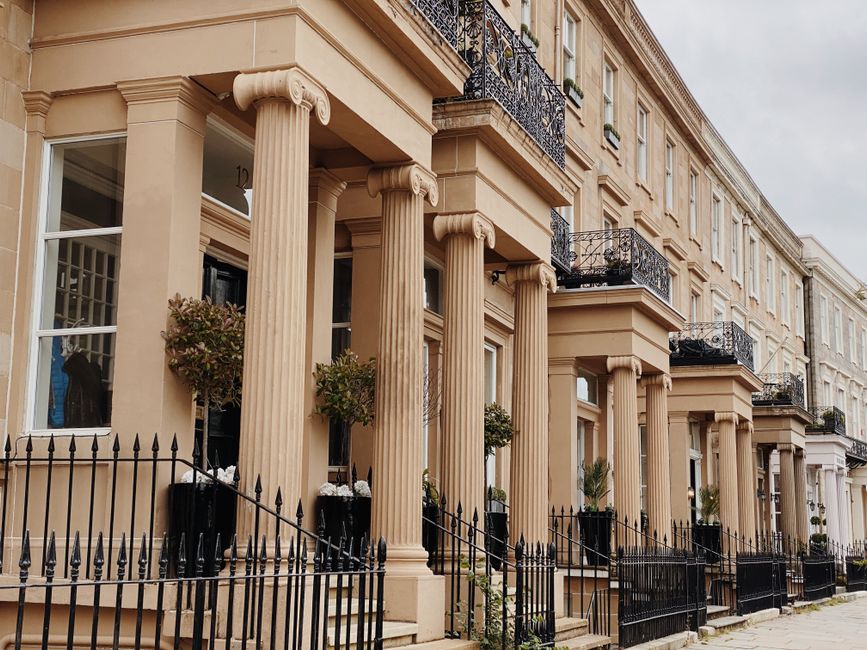
UK Georgian properties combine the toughest UK heat pump install challenges - solid stone walls, original sash windows, Grade II listed status. This guide covers Listed Building Consent, the envelope upgrades that make heat pump install cost-effective, and realistic cost + SCOP expectations.
Georgian construction overview
What makes these the toughest heat pump retrofit.
UK Georgian houses (built 1714-1830 typically) share construction features that make heat pump install distinctive:
- Solid stone walls (400-600mm typical): often Bath stone, Cotswold stone, granite (Edinburgh), or brick variations. Uninsulated; U-value ~1.7-2.2 W/m2K (very poor).
- Original sash windows: tall (often 1.5-2.5m), 6-12 pane configuration, wooden frames, single glazed (~U-value 5.5 W/m2K - very poor).
- Suspended timber floors over ventilated subfloor void.
- Slate or clay tile pitched roof, original Welsh slate common.
- Tall ceilings (often 3-4m vs modern 2.4m) - high volume per m2 floor area.
- Original fireplaces + chimneys in each principal room (often decommissioned but retained as character).
- Cast-iron radiators in many properties (Victorian retrofit; sized for 70-80C flow).
Listing status:
- ~85% of Georgian properties listed (Grade II typical, Grade II* + I rarer).
- ~95% in conservation areas.
- Both Listed Building Consent + planning permission required for heat pump install.
Combined: very high heat loss + strict change restrictions + multi-month consent process = heat pump install possible but complex.
Listed Building Consent process
12-26 weeks; specialist conservation architect helpful.
Georgian properties almost always need Listed Building Consent (LBC) for heat pump install. Process:
- Pre-application discussion with heritage officer: 2-4 weeks. Identifies concerns + acceptable siting + bespoke design requirements.
- LBC application submission: includes architectural drawings, design + access statement, manufacturer specs, acoustic data, heritage impact statement. Specialist conservation architect typically prepares (~GBP 1,500-4,000 fee).
- Council heritage officer review: 8-12 weeks. May require revisions.
- Historic England consultation: often required for Grade II* + I; adds 4-8 weeks.
- LBC decision: typically 12-20 weeks for Grade II; 16-26 weeks for Grade II*/I.
Common LBC conditions for Georgian heat pump installs:
- Outdoor unit sited in detached outbuilding, recessed alcove, or rear-most garden position.
- Bespoke screening matching property character (timber slat panel in oak/larch; or stone wall matching property; not standard fencing).
- No facade penetrations on principal elevation.
- Internal pipework routed via service voids only.
- Reversibility - all install must be removable without permanent damage to historic fabric.
Cost framework for LBC:
- Conservation architect: GBP 1,500-4,000.
- Application fee: GBP 0 (free for LBC).
- Heritage officer pre-application: GBP 100-500.
- Historic England statutory consultation: free but extends timeline.
- Total: GBP 1,600-4,500 for consent process.
Internal wall insulation - the only viable insulation upgrade
External would damage Georgian facade.
Georgian solid stone walls have very poor U-value (~1.7-2.2 W/m2K) but external wall insulation (EWI) is NOT viable - would destroy property character + planning-blocked.
Internal wall insulation (IWI) for Georgian:
- Hemp + lime plaster (breathable): 50-100mm; U-value to 0.40-0.50 W/m2K. Best for damp / breathability concerns; specialist install. Cost GBP 100-180/m2.
- Wood fibre board (breathable): 60-100mm; U-value to 0.35-0.45 W/m2K. Good for character preservation; specialist install. Cost GBP 90-150/m2.
- Rigid foam board (PIR / EPS): 50-80mm; U-value to 0.30-0.40 W/m2K. Cheaper + standard install. Cost GBP 60-100/m2. Risk: interstitial condensation in old porous walls if vapour control inadequate.
For typical Georgian 3-bed (150-200 m2 wall area):
- Hemp + lime IWI: GBP 15,000-30,000.
- Wood fibre IWI: GBP 13,500-25,000.
- Rigid foam IWI: GBP 9,000-18,000.
Specialist installation critical: Georgian wall fabric porosity + breathability means standard modern IWI methods can cause condensation issues. Use breathable systems (hemp+lime, wood fibre, lime-based) for best long-term outcome. Conservation officer often requires breathable approach as LBC condition.
Window strategy - secondary glazing preferred
Preserving original sash + improving thermal performance.
Georgian sash windows are character-defining features. Replacement typically planning-blocked. Three viable approaches:
- Secondary glazing (preferred): separate glass panel inside existing window frame. Cost GBP 800-2,000 per window. Combined U-value ~1.8-2.5 W/m2K (vs 5.5 original). Original sash preserved + reversible.
- Sash refurbishment + draught-proofing: GBP 500-1,500 per window. Brush draught-strips + sash cord renewal + minor sash repair. Reduces infiltration ~50% without glazing change.
- Slim-profile double glazing in original sash: very specialist install - replace single glass with slim 8-12mm DGU within original wooden sash. Cost GBP 1,500-3,500 per window. Visual change minimal; thermal improvement significant. Requires conservation officer approval.
For typical Georgian 3-bed (8-12 large sash windows):
- Secondary glazing all windows: GBP 6,400-24,000.
- Sash refurbishment + draught-proofing all windows: GBP 4,000-18,000.
- Slim-profile DGU all windows: GBP 12,000-42,000.
Secondary glazing typically the best cost-benefit for character preservation + thermal improvement.
Outdoor unit siting strategies
Sympathetic siting per LBC conditions.
Georgian properties often have specific outdoor unit siting requirements:
- Detached outbuilding (coach house, mews): ideal - completely separates outdoor unit from main property. Refrigerant pipework runs underground to property. Additional cost ~GBP 1,000-3,000 for extended pipework + trench.
- Recessed alcove: some Georgian properties have service alcoves or basement light wells - outdoor unit recessed below sightline. Bespoke screening matches property character.
- Rear-most garden position: outdoor unit at far end of garden, screened by walls / hedging / outbuildings. Maximum distance from main property + neighbour windows.
- Below-ground GSHP option: ground-source heat pump via borehole - no visible outdoor unit at all. Indoor manifold in basement plant room. Cost GBP 25,000-40,000 install but eliminates visible outdoor equipment + delivers excellent SCOP (4.0+).
For Grade II* + I Georgian: GSHP often the only LBC-approvable option. Cost premium justified by access to property + heritage compliance.
Realistic install cost - full Georgian retrofit
Itemised typical UK Georgian 3-bed.
Full retrofit envelope + heat pump for typical UK Georgian 3-bed:
- Conservation architect + LBC: GBP 2,000-5,000.
- Internal wall insulation (breathable): GBP 13,500-25,000.
- Secondary glazing all windows: GBP 6,400-24,000.
- Suspended floor insulation: GBP 1,000-2,000.
- Loft insulation upgrade: GBP 400-1,000.
- Sympathetic outdoor unit siting + bespoke screening: GBP 1,000-3,000 (or GSHP borehole GBP 15,000-25,000).
- Heat pump install (10-14 kW R290; or GSHP equivalent): GBP 12,000-18,000.
- Radiator upgrades (5-8 radiators for typical room count): GBP 1,500-3,000.
- BUS grant: -GBP 7,500.
- Combined envelope grants (ECO4 where eligible): -GBP 0-5,000 (most Georgian properties not eligible due to non-fuel-poverty owner profile).
- Net total: GBP 30,300-83,500 depending on scope + GSHP vs ASHP choice.
Realistically GBP 35,000-50,000 for typical Grade II Georgian 3-bed full retrofit.
Realistic SCOP for Georgian properties
What's achievable post-improvements.
- Unimproved Georgian (single glazing, uninsulated stone, original radiators): SCOP 2.0-2.5. Very high aux heater contribution; bills barely better than oil. Not viable economically.
- Partial improvements (secondary glazing + some IWI): SCOP 2.8-3.2. Modest improvement; bills competitive with oil but not dramatically better.
- Full envelope (IWI + secondary glazing + floor + loft): SCOP 3.2-3.8. Solid performance for Georgian; bills 30-40% lower than oil.
- Full envelope + GSHP + UFH where possible: SCOP 3.8-4.5. Excellent given property age; approaches modern build performance. Highest cost approach.
For Georgian properties, envelope upgrade IS the heat pump install economics. Skipping envelope = mediocre SCOP + running cost barely better than oil = poor lifetime ROI on the GBP 12-18k heat pump install premium.