Heat Pump for Log Cabin or Timber-Frame UK 2026
Heat pump log cabin / timber-frame UK 2026: solid wood vs timber-frame, air-tightness, small heated volume, sizing.
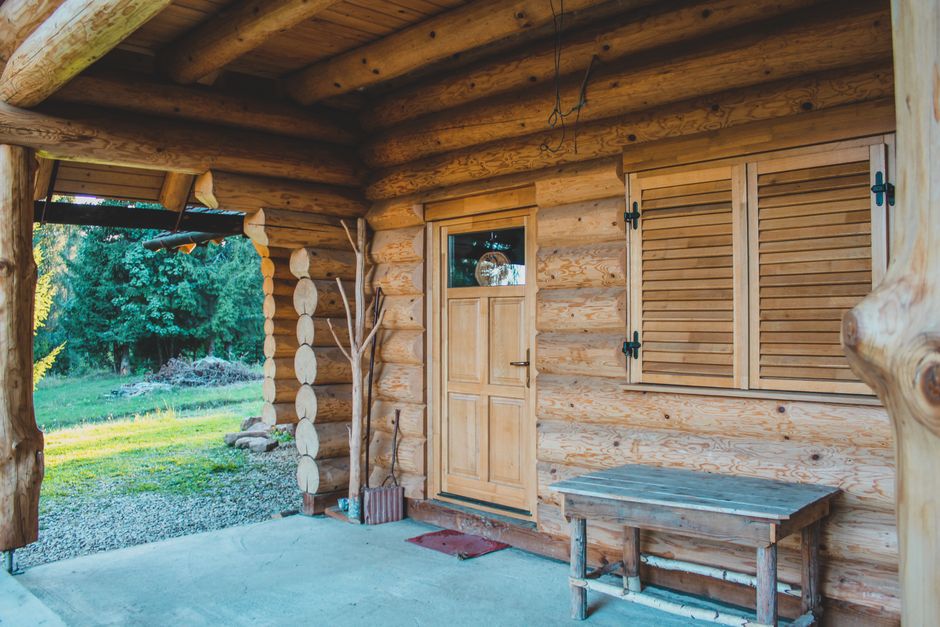
UK log cabins (Scotland, Wales, Cornish holiday market) + timber-frame new-builds + Scandinavian-style homes are an under-served heat pump segment. Estimated 50,000+ such homes exist in UK. This guide covers the install path.
Solid log walls vs timber-frame - thermal performance
Different construction patterns.
'Wooden home' is a broad category - thermal performance varies hugely:
Solid log wall (Scandinavian / Cornish holiday cabin):
- 70-150mm solid pine/spruce/cedar.
- U-value 0.4-0.6 W/m2K (mid-tier - similar to filled cavity but worse than modern build).
- Thermal mass effect: stores heat slowly, releases slowly.
- Common in: holiday cabin park homes, Scottish forestry-built homes, garden offices.
Timber-frame with rockwool insulation:
- 50mm structural studs + 150mm rockwool cavity + plasterboard.
- U-value 0.18-0.25 (excellent - matches modern Building Regs).
- Lower thermal mass than masonry; faster heat response.
- Common in: modern self-builds, post-1990 Persimmon / Barratt suburban estates.
Half-timber + masonry infill (mock Tudor):
- Treat as masonry home (no special timber-frame considerations).
Air-tightness - the bigger variable
Where wooden homes vary.
Log cabins range from very leaky to very tight depending on construction quality:
- Original 1970s-80s log cabin holiday park: 8-15 air changes/hour at 50Pa. Significantly leaky.
- Mid-quality 1990s-2000s log cabin (pre-EPC): 5-10 ACH. Moderate.
- Modern Scandinavian-imported log cabin (2010s+): 2-5 ACH. Reasonable.
- Modern timber-frame home Building Regs compliant: 3-5 ACH. Standard.
- Passivhaus timber-frame: 0.6-1 ACH. Very tight.
Heat-loss impact of air leakage:
- 1 ACH increase = ~20% more heat load.
- Pre-install blower-door test (~GBP 300-500) reveals air-tightness; informs heat pump sizing.
- Air-tightness improvements (sealing joints, caulking penetrations, replacing window seals): GBP 500-2,000.
Heat pump sizing for wooden homes
Small footprint = small heat pump.
Solid log cabin sizing matrix:
- 40-60m2 cabin (1-2 bedroom): 3-4 kW heat pump.
- 60-100m2 cabin (2-3 bedroom): 4-6 kW.
- 100-150m2 cabin (3-4 bedroom): 6-8 kW.
Timber-frame home sizing matrix:
- 80-120m2 timber-frame (2-3 bed): 4-6 kW.
- 120-180m2 timber-frame (3-4 bed): 5-7 kW.
- 180-250m2 timber-frame (4-5 bed): 7-9 kW.
Oversizing risk:
- Small heated volume + good insulation = low heat load.
- Installing 6 kW where 4 kW is needed = short-cycling + SCOP drop to 2.5-3.0.
- Smallest commercially-available modulating heat pump (Daikin Altherma 3 4 kW, Vaillant aroTHERM plus 5 kW R290) often the right choice.
Cylinder + DHW sizing
Same household pattern.
Cylinder size depends on occupants, not on home construction:
- 1-2 occupant log cabin: 150-200L unvented.
- 3-4 occupant cabin / timber-frame: 200-250L.
- 5+ occupant timber-frame: 250-300L.
Cabins/timber-frame homes often have less roof/wall space for cylinder installation than masonry homes - check airing cupboard or utility room dimensions before specifying.
Outdoor unit + acoustic considerations
Cabin locations are usually rural.
Log cabins are typically in rural / semi-rural locations:
- Acoustic noise less critical (no close neighbours usually).
- Outdoor unit can go on any wall side without distancing concerns.
- Wall-mounted bracket common (less ground space needed).
- Pipework run typically short (5-10m max for compact cabin).
Permitted development:
- Permitted development applies to non-listed log cabins.
- Conservation Areas (e.g. Lake District National Park): planning consent may be required for visual impact.
- Holiday park cabins: park rules supersede planning (check terms of pitch with operator).
Cost framework
Wooden home install scenarios.
Scenario A - Modern timber-frame Building Regs home:
- 5 kW heat pump unit: GBP 7,500-9,000.
- 200L cylinder + install: GBP 1,500-2,500.
- Pipework + commissioning: GBP 1,200-1,800.
- BUS grant: -GBP 7,500.
- Net: GBP 2,700-5,800.
Scenario B - Older log cabin, air-tightness work needed:
- Blower-door test + air-tightness improvements: GBP 800-2,500.
- 4 kW heat pump unit: GBP 7,000-8,500.
- 200L cylinder + install: GBP 1,500-2,500.
- Pipework + commissioning: GBP 1,200-1,800.
- BUS grant: -GBP 7,500.
- Net: GBP 3,000-7,800.
Realistic SCOP for wooden homes
Modern timber-frame matches masonry.
- Modern timber-frame Passivhaus: SCOP 4.0-4.5 achievable.
- Modern timber-frame Building Regs: SCOP 3.5-4.0.
- Modern log cabin (Scandinavian-imported, tight build): SCOP 3.2-3.6.
- Older log cabin with air-tightness improvements: SCOP 3.0-3.4.
- Older log cabin uninsulated: SCOP 2.7-3.0. Mediocre.