Heat Pump for New-Build UK 2026
Heat pump for UK new-build 2026: design integration, Part L regs, MMC compatibility, costs vs retrofit, and why new-build is the easiest install.
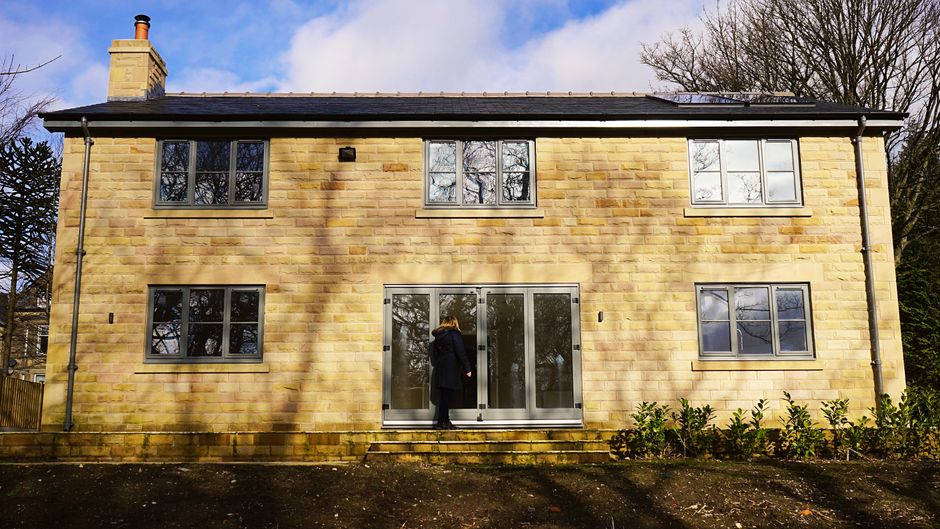
New-build UK properties are the highest-fit market for heat pumps: low heat loss, designed-in distribution, adequate electrical supply, no decommissioning of old systems. This guide covers what designed-in heat pumps cost in 2026, how Part L + the Future Homes Standard shape the choice, and the few situations where a new-build still defaults to gas.
Why new-build is the easiest heat pump install
Three structural advantages over retrofit.
1. Low heat loss from current insulation standards. New-build properties built to current Part L building regs typically have U-values around 0.18-0.22 W/m²K for walls (vs ~0.45-0.60 for unrefurbished pre-1990 properties). Total annual heat demand for a typical 3-bed new-build is ~6,000-8,000 kWh - vs ~12,000-14,000 kWh for a 1980s-era equivalent. Smaller heat pump = lower install cost + lower running cost.
2. Distribution sized for low flow temperatures from day one. Heat pumps deliver best SCOP at low flow temperatures (35-45°C). In retrofit, existing radiators are often undersized for these temperatures + need upgrading. In new-build, underfloor heating (typical) or oversized radiators (occasional) are designed in from the start - no upgrade needed.
3. Electrical supply sized for the heat pump load. New-build electrical supplies are typically rated for 100A+ single-phase (or 3-phase for larger properties), with the heat pump's ~32A draw planned for at the design stage. No DNO consent hassles + no fuse-upgrade costs.
Part L + Future Homes Standard impact
Heat pumps are increasingly the default new-build heating choice.
UK building regulations have been steadily tightening heating-system requirements:
- Part L 2021 (current): sets ambitious U-values + maximum allowed primary energy use. Gas boilers can meet the standard with renewable supplements (solar thermal, PV) but heat pumps are the most-cost-effective compliance path.
- Future Homes Standard (2025 onwards): proposed regulation requiring new-build properties to be designed for ~75% lower carbon emissions than 2013 standards. Effectively makes heat pumps the default heating choice (gas is achievable but requires expensive renewable supplements).
- Local authority planning rules: some councils (Camden, Hackney, Bristol, Manchester) require zero-carbon-ready heating on new-build planning permission - which means heat pump or direct electric.
For a developer building 50+ unit estates, heat pumps simplify Part L compliance + future-proof for the Future Homes Standard transition. For self-builders + small-scale developers, heat pumps avoid having to install + later replace gas systems before 2035.
Cost comparison: new-build vs retrofit
Designed-in installs run 25-40% cheaper than retrofit equivalents.
Typical UK 2026 install costs for a 3-bed semi (~7kW heat pump):
- New-build (designed-in):
- Heat pump unit + indoor cylinder: GBP 4,500-6,000
- Pipework + electrical (designed-in): GBP 1,500-2,500
- Commissioning: GBP 500-800
- Total: GBP 6,000-9,000 (no BUS grant typically)
- Retrofit (typical):
- Heat pump unit + indoor cylinder: GBP 4,500-6,000 (same)
- Pipework + electrical (retrofit complexity): GBP 3,500-5,500
- Radiator upgrades: GBP 1,000-2,500
- Decommission gas boiler: GBP 300-600
- Commissioning: GBP 500-800
- Total: GBP 10,000-15,000 - £7,500 BUS = ~GBP 3,000-7,500 net
Net cost is similar (~GBP 3,000-9,000) but new-build avoids the BUS-grant uncertainty + the retrofit risks of finding hidden problems (asbestos, undersized supply, awkward pipework routes).
MMC + timber-frame considerations
Modern methods of construction change the install pattern.
Modern Methods of Construction (MMC) - factory-built timber frame, light gauge steel, modular - are increasingly used on UK new-builds. Heat pump integration considerations:
- Pipework routing needs to be planned at factory stage - retrofitting hydronic systems through factory-finished panels is invasive + expensive.
- Outdoor unit location needs to consider factory-constructed wall cladding (no easy retrofit of mounting brackets).
- Thermal mass in timber-frame + MMC properties is lower than traditional masonry, so the property responds quickly to heat pump output changes. This favours weather-compensation controls + frequent small adjustments rather than burst-on/off operation.
- Underfloor heating in MMC properties needs to be designed-in at the factory stage - very difficult to retrofit through engineered subfloors.
If you're commissioning an MMC new-build, raise the heat pump install with the developer at the design stage - not after handover. Retrofit work in MMC properties typically costs 2-3x what equivalent retrofit work in traditional construction costs.
When gas still happens on new-build
Three specific scenarios where gas is still the default in 2026.
Despite Part L pressure + the Future Homes Standard, some UK new-builds still default to gas heating:
- Large estate developments under existing planning permission. Permissions granted 2018-2021 may still be on the developer's books with gas heating as the planned spec - changing the spec requires re-engineering + can be cheaper to build as-planned.
- Apartment blocks with communal heating systems. Some developments still use centralised gas boilers feeding individual apartments via heat-interface units (HIUs) - a heritage design choice that's slowly being phased out for centralised heat pumps or air-source-per-unit.
- Rural developments without gas grid access. These default to heat pump or oil/LPG. If oil/LPG is chosen (typically on cost grounds during construction), retrofitting to heat pump within 5-10 years is straightforward + BUS-grant eligible.
For self-builders + small custom-build projects, opting for gas in 2026 is rarely the right call - it locks in a system that will need replacing before 2035 + misses the lower running costs of heat pumps from day one.